Needed: Editors with balls

I've been meaning to write on this for a while. This whole balderdash about slapping defamation notices on media outlets that write a story which don't toe any company's given line. The latest to join the bandwagon is the "venerable" Infosys co-founded by the "man who can do no wrong" NR Narayana Murthy. Two odd weeks ago, Infosys issued legal notices to BCCL and Indian Express for "defaming the company". For the life of me, I couldn't quite figure out what was "defamatory". If anything, Infosys ought to have been hauled over coal for how the company has been run last couple of years. That it needed a new management is obvious and employee morale is at an all time low. 

But that aside, after having spent twenty odd years in journalism, most editors I know of quake each time a legal notice lands on their tables. Loaded with jargon, insinuations, and casting aspersions on an editor's character, it is inevitably the kind of stuff that ought to be shoved into the rubbish can. It can rot there for all you care and nothing is going to come of it.

But the way things are, most editors, bite the bait. They hurriedly call the "aggrieved party", a reconciliatory meeting is organized, much backslapping takes place, and at the next award function organized by the media entity, a trophy is handed to them for "Outstanding contribution to (put your choice of award here)". The next day, the publication puts out pictures of how their annual award function or whatever else is it, is the biggest and brightest corporate India has seen; and how everybody who matters was in attendance to applaud the "winners". Everybody goes home to live happily ever after.

The problem on hand is most corporate houses in India have figured this is a ruse that works.

What most editors in India haven't figured is when somebody indulges in chest thumping, give it back as good as it gets. I can count on the fingers of one hand in India who have the gumption to stick it up and tell the "aggrieved party" to go take a walk. If they did that often enough, I have seen from close quarters, the chest thumping subsides and people toe the line. 

Not just that. Contrary to popular perception among timid editors and their hare brained counterparts in marketing, whether or not a legal notice is in place, each time an "award function" is organized, all of these parties make it to the event. They go out of their way as well to figure out in surreptitious ways if their name figures on the list of winners. If their name is not on the list, they try to bully their way to tables on the front to prove how higher up they are on the hierarchy. That way, they stand a better chance of figuring in post event pictures the title will put out. If they don't, the poor public relations functionary handling the job gets the wrong end of the stick.

From a publication's perspective, what you're left with is a demoralized edit team that has the bark, but lacks the bite, because their editors don't have the balls. I suspect that is pretty much why a lot of young kids I know who get into the business with starry eyes and idealism get out of it or hit the bottle. 

An argument against censorship

Image sourced from deviantart.com. Labelled for non commercial use without modification

Image sourced from deviantart.com. Labelled for non commercial use without modification

I discovered this letter from Charles Bukowski on the Farnam Street Blog by Shane Parrish.

7-22-85
Dear Hans van den Broek:

Thank you for your letter telling me of the removal of one of my books from the Nijmegen library. And that it is accused of discrimination against black people, homosexuals and women. And that it is sadism because of the sadism.

The thing that I fear discriminating against is humor and truth.

If I write badly about blacks, homosexuals and women it is because of these who I met were that. There are many “bads”–bad dogs, bad censorship; there are even “bad” white males. Only when you write about “bad” white males they don’t complain about it. And need I say that there are “good” blacks, “good” homosexuals and “good” women?

In my work, as a writer, I only photograph, in words, what I see. If I write of “sadism” it is because it exists, I didn’t invent it, and if some terrible act occurs in my work it is because such things happen in our lives. I am not on the side of evil, if such a thing as evil abounds. In my writing I do not always agree with what occurs, nor do I linger in the mud for the sheer sake of it. Also, it is curious that the people who rail against my work seem to overlook the sections of it which entail joy and love and hope, and there are such sections. My days, my years, my life has seen up and downs, lights and darknesses. If I wrote only and continually of the “light” and never mentioned the other, then as an artist I would be a liar.

Censorship is the tool of those who have the need to hide actualities from themselves and from others. Their fear is only their inability to face what is real, and I can’t vent any anger against them. I only feel this appalling sadness. Somewhere, in their upbringing, they were shielded against the total facts of our existence. They were only taught to look one way when many ways exist.

I am not dismayed that one of my books has been hunted down and dislodged from the shelves of a local library. In a sense, I am honored that I have written something that has awakened these from their non-ponderous depths. But I am hurt, yes, when somebody else’s book is censored, for that book, usually is a great book and there are few of those, and throughout the ages that type of book has often generated into a classic, and what was once thought shocking and immoral is now required reading at many of our universities.

I am not saying that my book is one of those, but I am saying that in our time, at this moment when any moment may be the last for many of us, it’s damned galling and impossibly sad that we still have among us the small, bitter people, the witch-hunters and the declaimers against reality. Yet, these too belong with us, they are part of the whole, and if I haven’t written about them, I should, maybe have here, and that’s enough.

may we all get better together,
yrs,

I'm not sure if I've articulated this earlier on these pages. But I think Farnam Street one of the best reads online. And the weekly digest that originates from there is one of the rare ones I wait for to catch up on all I may have missed out on. The context in which the letter was written is here.

While on the blog, if you think the content worth your while, may I suggest you donate whatever you think appropriate in the tip jar? Creating good content is hard work and few people appreciate it. It isn't fair to whine on the dumbing down of good content and decline in the same breath to pay for what is good. That is hypocrisy.

How to commit Internet Suicide

Photo: Priyanka Parashar/Mint

Photo: Priyanka Parashar/Mint

First a caveat. I love the Internet. But I’m committing Internet suicide. Puritans may argue what I’m doing doesn’t quite qualify; it’s actually putting my online presence on life support. I guess they’re right. Be that as it may, I put my actions down to one overwhelming reason. I need to be in control. The way things are, I’m not. Allow me to put that into perspective.

Ranjit Nair is chief executive at Germin8.com, a big-data analytics firm. By way of example, he told me of how companies like his get routine requests from public relations (PR) firms to mine information on where a journalist’s inclination lies. With information of that kind on hand, they know what pitch to make and to whom.

Then there are firms who ask the Internet landscape be trawled to identify people who speak well of them. Once identified, these people can be incentivized to behave as brand ambassadors.

The human resource (HR) function at large corporations now deploys trawlers to pick up as much as they can about a potential recruit. This data is used to scrutinize candidates. That is why, oftentimes, before a candidate has appeared for an interview, the interviewer’s mind is made up.

Practically everything is out there. My political affiliations, my religious beliefs, people I agree with, brands I like and dislike. “The lines between our online and offline presence have blurred,” Nair says.

These are not unusual activities. But it makes me uncomfortable. By way of analogy, he describes mob behaviour in the offline world. After an attack, they disappear into the aftermath. Contrary to public perception, in the online world, there is no anonymity. Each footprint can be tracked.

There are a few ways to look at what this means:

• Resign and accept neither privacy nor controls are in your hands.

• Be afraid and stay away.

• Get proactive and take control of your online identity.

To my mind, the first is a cop-out, the second a compromise and the third pragmatic. That is why I’ve opted for the third. The question is how do you implement it?

Step 1: Limit social media

The sound thing, Nair argues, is to accept that social media is impossible to ignore. “So, I don’t post anything I may be embarrassed to talk about in the offline world.”

But a former colleague Rohin Dharmakumar and I have a rigid stance. We chose to delete our Facebook accounts. Dharmakumar takes his privacy seriously. I find status updates, numbers of likes, comments and cute baby pictures a waste of time.

Then there’s the whole razzmatazz about LinkedIn and how it can help advance my career. While there may be some merit, I find the numbers of people who want to connect with me intimidating. Personal experience also suggests the kind of offers that have come my way on LinkedIn indicates either of two things. Recruiting firms are incompetent, or I have an incompetent resume. I’m still to come to terms with why I maintain a cursory presence on it.

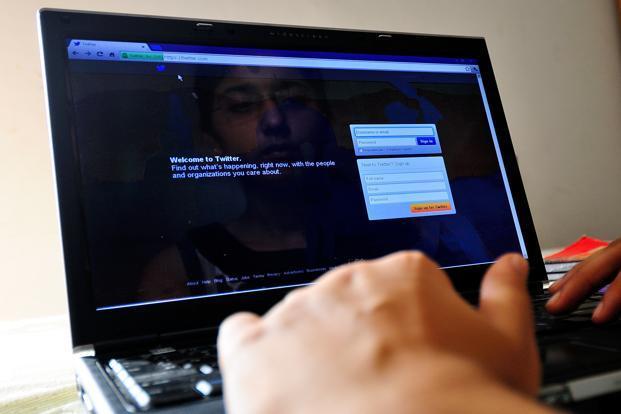
As for Twitter, I don’t want to give it up because I think it is a handy tool to discover useful links from interesting people I follow. But there are tweets I’ve posted in the past I’m embarrassed to admit originated from me. To ensure it doesn’t work against me, I deploy TweetDelete (www.tweetdelete.net). This application deletes my posts from the past at intervals of my choice.

Then there is the big daddy of them all—Google Plus. It sits insidiously and I’m still to figure how the heck did I get there? But I don’t want anything to do with this networking site either. Fortunately, opting out is easy without damaging other experiences on Google.

Early adopters may have created accounts on sites that don’t exist anymore. I recommend deleting your identities from there as well. It can be tedious.http://justdelete.me is a good place to begin identifying all of where you have a presence. It offers pointers on how to get out of it. That’s also when it hits you that there are places you can’t get out of—like Pinterest. By signing up with them, you have signed away your rights to delete. You can deactivate, but your data remain on their servers.

Step 2: Create a personal website

First question: Why have a personal website?

• I don’t want to be part of masses on social media.

• I want to be in control of the impression I convey online.

• I believe in a few things, personal and professional. I want all of those values conveyed in a distinct, ad-free environment, in a voice that is uniquely mine.

• My identity ought not to be tied to my workplace. I need to future-proof myself and this is a tool I can deploy to my advantage—even if it were just to showcase my resume.

Is building a personal website intimidating? No. It isn’t.

Some research and conversations with friends in the know later, the toss-up was between WordPress (www.wordpresss.com) and SquareSpace(www.squarespace.com). I chose the latter.

Why? Think of it as the difference between Android and Apple. Android offers freedom. Apple offers convenience. But what use is the freedom if I don’t know what to do with it? I’d much rather take the convenience and get my job done.

I’m no designer or developer, neither can I afford one. I’m just a regular bloke who wants a classy site optimized for the desktop, tablet and smartphone. SquareSpace allows me do just that with drag and drop options, and a personalized domain name thrown in. Their customer support is super as well and each time I pinged them for help, they’ve responded in minutes.

WordPress is good if you have time on hand and patience to tinker. A few years ago, I may have. But right now, I don’t.

Step 3: Get a personalized email address

For much the same reasons articulated above.

Pay and get an ad-free, customized experience. I don’t want any email service provider serving me ads on the back of some algorithm analysing what kind of emails hit my inbox. Zoho Mail (www.zoho.com) is among the better ones.

After trying it out though, I settled on hosting my email on Google. This, after I had grandly announced to Dharmakumar I’m settling on Zoho. Like I said earlier, he’s big on privacy and thinks their policies less intrusive. I agree. But three things tilted my decision in favour of Google. The interface is the one I’m familiar with, I can pay in Indian currency, and the setup was easier. That said, customer support for both are outstanding. But I must confess the friendly Irish accent of the gentleman who called me from Google’s call centre in Ireland to clarify some doubts I had, which flummoxed me for a bit.