Making a strong case to live the learned life

KV Kamath, Photo: Mint

What does Ramsey Musallam, a prominent chemistry teacher in the US, and K.V. Kamath, an acclaimed Indian banker, have in common? Short answer—they believe in life-long learning. “Else, I fear rapid change will make me obsolete,” says the 66-year-old Kamath. “To stay relevant, I have to learn all the time.”

Musallam teaches at various institutions across the US. His stated mission is to “promote inquiry, critical thinking and inspire a love for learning”. In May 2010, he was diagnosed with an aneurysm at the base of his thoracic aorta. As much as he “freaked out” on reading the report, his surgeon remained remarkably calm. It prompted him to engage in conversations with his surgeon on the prognosis and potential outcomes. It put him at peace and he went through a successful surgery that tackled the life-threatening situation. Through all of this, the teacher in him picked three lessons on what it takes to learn.

Lesson #1: Curiosity comes first.

Lesson #2: Embrace the mess. Learning is ugly.

Lesson #3: Practise reflection. What we do is important. It deserves our care, but it also deserves our revision.

He shared these learnings at a TED conference last year. The talk can be viewed on mintne.ws/1uAce3V . Built on the back of his experience, these are lessons Kamath subscribes to as well.

Curiosity compels Kamath to take 10 days off every year and devote them to learning at universities that offer courses removed from banking. “People don’t place a premium on interdisciplinary thinking and learning,” he says. And curiosity compelled him to look closely at models deployed by Jet Airways (India) Ltd and the Ritz-Carlton chain of hotels.

In building ICICI Bank Ltd into the entity it is today, Kamath remembers engaging in a conversation with a colleague many years ago. They wondered why is it a stewardess on Jet Airways greets each passenger who gets on board with a smile?

For that matter, why is it if a guest asks for directions at any Ritz-Carlton property, they aren’t directed, but led to where they want to go? Everybody, from the bellboy to the hotel manager, follows the rule.

The stewardess at Jet Airways told Kamath’s colleague their research on passenger behaviour indicated that when greeted with a smile, people lower their guard. For instance, if a flight is delayed or the meal they expect is not on board, as a thumb rule, most people take it in their stride. In the absence of a smile, even minor deficiencies are viewed as offensive, people get boorish, and their behaviour permeates to others on the flight, making it a harrowing experience for the crew. At Ritz-Carlton, the key Kamath observed is empowerment. A bellboy is empowered to take time off from whatever it is he has been assigned to do if a guest walks up to him with a request.

Having studied both these cases closely, Kamath took a call and introduced the idea of lobby managers at all ICICI Bank branches. Trained by professionals from the hospitality business to greet customers with a smile, they ask around if anybody needs assistance, and help make their dealings at the bank easier. “It’s a soft skill we picked up because we were curious about the workings of those in the hospitality business,” says Kamath.

In much the same way, he is on the same page as Musallam is on Lesson #2 that learning is messy and ugly. To reiterate, Kamath talks of the time when the Internet was in its infancy. In 1997, McKinsey had invited him to a conference in the US to discuss this animal and how it could disrupt the future. On the trip, he met young people hacking furiously into the online world, thinking up ideas and hitting the market with products at warp speed. Often times they’d fail. At others they’d strike gold. How, he wondered. Close examination later, Kamath saw there were three traits similar to all of them.

1. They just got into the game. It didn’t matter whether or not they had a chief technology officer in a technology-powered landscape. They just figured things out as they went along.

2. All of them worked under severe constraints.

3. Everybody was clear their ideas had to translate into products in 90 days on the outside.

Kamath called up headquarters, summoned the team working on ICICI Direct, a trading engine which the bank then planned to roll-out two years down the line. The team was told start-ups in the US work out of garages under constraints of all kinds and manage to deliver in 90 days. “Why can’t you? You’ve been at it for 30 days already. You’ve got 60 days more to do it,” he recollects telling them.

The team was astounded at the audacity of the demand. Left with no choice though, they got down to the task and delivered the engine. It wasn’t to specification. There were flaws, deficiencies, compromises and issues to be sorted out. “But we discovered ways of doing things we wouldn’t otherwise have,” says Kamath. ICICI Direct is now among the world’s busiest trading engines.

And like Musallam, Kamath speaks on the significance of reflecting and revising. There was this once he came across a article in a magazine on how the Tatagroup was creating a brand identity for itself. “I asked myself, what is identity?” he says. To understand the idea and the implications, he took the pedal off everything else and immersed himself in it for six months.

Much reading, conversations and introspection with people later, he started asking hard questions. If I were to look around all of my offices, the people working there, the communications that emanate from them, including minutiae like fonts people use in official correspondence, are all of it bound by a common thread? Much to his dismay, the answer was no.

Kamath went a layer deeper and asked people around what is the core value they think ICICI Bank stands for? Pretty much everybody said aggressive. Seventy-five per cent of the company’s workforce thought it negative. As he asked the question to people higher-up the hierarchy, they thought it positive. This saddened him further.

To put the house in place, Kamath did two things. On the one hand, he engaged the services of an Ahmedabad-based branding agency to create a unifying personality for the company. On the other hand, he got in behavioural researchers into the organization to study how the bank functioned, and help them transform from aggressive to gentle and understanding.

“It was a conscious process. We saw the benefits of it later because we were seeking answers, didn’t assume we knew everything, learning all the time from people who knew more than us, and introspecting,” he says.

Because Musallam thinks how to learn all the time, he is among the most sought after chemistry teachers in the US. And because Kamath expends most of his time learning from various disciplines, ICICI Bank is now the largest private bank in the country.

Between the stories both these men tell, a strong case emerges to live the learned life. What makes the case stronger still is that we live in a connected world where massively open online courses are available to anybody with access to the Internet. You don’t have to travel to a premier university to earn a premier degree.

Instead, log online to places like www.coursera.org, www.edex.org or www.udacity.com among the many learning platforms, sign up for free to study at a time and place of your choosing. And if it is to further your career, these platforms have relationships with various universities to offer certified degrees on completion of their courses by paying a nominal fee.

Per chance you think the fees aren’t worth your time, spare a moment to whatDerek Bok, former president of Harvard University, famously said: “If you think education is expensive, try ignorance.”

This article was first published in Mint on November 7, 2014. All copyrights vest with the newspaper and it cannot be reproduced without permission from the publisher

How Google Works

Today we all live and work in the Internet Century, where technology is roiling the business landscape, and the pace of change is only accelerating. 

In their new book How Google Works, Google Executive Chairman and ex-CEO Eric Schmidt and former SVP of Products Jonathan Rosenberg share the lessons they learned over the course of a decade running Google. 

Covering topics including corporate culture, strategy, talent, decision-making, communication, innovation, and dealing with disruption, the authors illustrate management maxims with numerous insider anecdotes from Google’s history. 

In an era when everything is speeding up, the best way for businesses to succeed is to attract smart-creative people and give them an environment where they can thrive at scale. How Google Works is a new book that explains how to do just that. 

This is a visual preview of How Google Works. 

On the joys of working from home

It's been a year and a half since I was compelled to move out of my last assignment under less than favorable circumstances.  In hindsight, it was perhaps one of the best things that has ever happened to me.

A few weeks of hand wringing on what to do later, the answers made itself obvious. Twenty one years of working without a break later, I'd earned the right to take a break. That done, I had to keep myself gainfully employed as well. As things stand, I am working on my first start up. Technically though, this is my third start up.

The first was when I set up the Indian edition of CHIP. The second was setting up the Indian edition of Forbes magazine. The difference between both of these assignments and what I'm doing now is that in the past I had air cover that comes with being part of a large entity. Both of these ventures went through their fair share of teething troubles. But to be fair to the promoters, they backed me with all the resources I needed.

This time around though, things are different. There is no godfather. Everything is being built ground up. I've had to tighten my belt and have gone through my fair share of hiccups. A few weeks from now, the venture will make its debut. I'll talk what it is all a few days from now on these pages.

In building this out though, I've discovered some simple joys. For instance, when my first daughter was born, I was part of the senior team at the Times of India. Running operations at a daily newspaper isn't easy. You're on call all the time. Unlike most people, public holidays and weekends aren't meant for you. Because of that, I missed out on something incredibly precious. Watching my first born grow. It was left to my wife to tend to her because I'd be working late nights. And after after having put in all those hours, would need a couple of stiff drinks. I have no idea how time passed. But she's grown up into a fine nine year old. 

This time around though, thanks to the divorce from Forbes, I had the pleasure of watching my second born grow. She's a little over two now and I now know how to handle babies. I had no freakin' idea of bloody tough it can be. I had no freakin' idea either of how much joy it brings.

The gentle cooing when you hold her close, the happiness that accompanies the first words that tumble out of her mouth, having her hug you tight. Then there's the bonding that was missing with my older daughter, it is now in place, the stories she tells me of her days at school and friends, her exhortations on how I ought to be, the little fights we have..... I could go on and on on the joys of fatherhood. But it's well worth not having a formal office space to go to.

There are other pragmatic joys that come in as well. You work at a time and pace of  your choosing. You choose the people you work with and the assignments you want to work on. You work because you "want" to work, not because you "have" to work. Then there is the daily commute time that is cut to zero. Time spent negotiating traffic now becomes "me-time" and leaves a little for an occasional nap when you need it. You discover facetime with people isn't always necessary. Between telephone calls for one-on-one interactions and assistance for technology using tools like Google Hangout and Facetime for conference calls, it's as good as being in the same room. All of this translates into both time and money saved.   

But this calls for a certain amount of discipline as well. It is tempting to sack out at home and do nothing. My friend Achyut pointed me to a neat little trick he uses. For many years now, he has worked out of home for an MNC. He's clear in his mind that he'll work eight hours, no more, no less. He works by hour and for every hour he clocks in, he rewards himself $2. End of the day if his account doesn't add up to $16, he knows he has been rather incompetent.

Another way to look at it is, what if you've got 86,400 seconds each day and how should you use them?  Some simple things.

“Say no”: Don’t be afraid to use the word. It doesn’t mean you’re a bad person if you turn down an invitation that will pull your focus away from a task at hand—it just means you are prioritizing and that is a necessary element of getting things done.

“Kill notifications”: Emberton writes, “Modern technology has evolved to exploit our urgency addiction: email, Facebook, Twitter, Quora and more will fight to distract you constantly.” The answer? Turn of your notifications. And if you can’t do that, then mute your phone—turn it off if you have to. “Choose to check these things when you have time to be distracted,” says Emberton.

“Less volume, more time”: Your to-do list may tempt you into thinking that you can kill two birds with one stone, or three or four. In other words, multi-task. But Emberton suggests a different approach: choose 1-3 items on your list and no more. “Focusing your all on one task at a time is infinitely more efficient than multi-tasking and gives you time to excel at your work.”

“Schedule your priorities”: If your goal is to get a certain amount done in one day—or even to introduce work/life balance into your day—then you must carve out time for the items you’ve committed to tackling. Writes Emberton: “Treat your highest priorities like flights you have to catch: give them a set time in advance and say no to anything that would stop you making your flight.”

Management guru Ram Charan on the nature of Indian business

If you are an Indian company in a large, free India, you have to be prepared for external factors like government policy that could be unstable

Ram Charan says the most important part for any company to succeed is to be externally oriented. Photo: Getty Images

Ram Charan says the most important part for any company to succeed is to be externally oriented. Photo: Getty Images

Ram Charan is one of the most influential chief executive officer (CEO) coaches; a consultant; a best-selling author of 15 books that have sold over two million copies in a dozen languages; a resident of Thinkers50, a listing of the people with the most potent ideas; a teacher; and a public speaker. In 2012, he teamed up with Sadhguru Jaggi Vasudev of the Isha Foundation to co-create a programme called Insight: The DNA of Success, which merges tools for professional and personal empowerment and was received to acclaim from an audience comprising entrepreneurs and CEOs. This year’s edition of the programme starts on 27 November (details at ishafoundation.org). Over the phone, his voice comes across as paternal and succinct as he took questions on the programme and the nature of Indian business. Edited excerpts from the interview:

What is it about Sadhguru Jaggi Vasudev that gets your attention?

You know his background. He is not only spiritual, he is practical and down to earth. He can talk on the same wavelength as business people. And his motive is very clear. It is to help, to do something useful and practical for the country, and young people. That is important to business people and connects very well with them.

Many of the participants at the programme you facilitate at the Isha Foundation come from family- managed businesses (FMBs). In your consulting experience, what kind of pain do these entities go through as they transition into professionally managed outfits?

In the first instance, no two families are the same. The founders need to come to terms with whether they want to, and if they do, how to pass ownership to the next generation. They need to plan that while they are alive. There are several ways to think about it.

One model is to train their children in professional schools and have them come back to run their business.

The second model is to have professionals run it. The children might need to be on the board. But to be there, they need an investors’ orientation. Then they can spend their time looking at the future of the business, managing its course, get actively involved in the board, selection of its members, and development of the executive team.

The key here is that the existing patriarch must come to terms with what is the real talent each of his children possesses. And how is that talent relevant for the future. He has to get that feedback and find the right fit. For those who do this, the company will perpetuate. For those who don’t, it will decline.

Recently a newspaper editor made an astute observation. His point was in the media business people have good instincts. But institutional frameworks are not in place. Is this an observation you can extrapolate across other Indian businesses? And as a corollary, are decisions made by Indian FMBs instinct-driven as opposed to the data-driven decisions of their Western counterparts?

I would like to turn the question to what is useful to the reader going forward. As you look at the next five years, what is more useful for decision-making in the executive suite in India.

I am very optimistic about the Narendra Modi government. I am beginning to see decisions moving. I see he has a broader vision. When it comes to the executive suite and making decisions, there are four things leaders need to practice. No matter whether you are in India, Thailand or China, these four things are imperative.

The first is, they have to be in tune with changes on the outside. If the speed of change is higher and you are unwilling to change, it will hurt. If you’re willing to keep pace, you will succeed.

But when it comes to predicting what happens in the future, not much data exists. You have to be perceptually very good. You need to be in the external circuit to know what is happening. You have to read a lot about what is causing the change. There are some factual data like demographics. But the most important part for any company to succeed is to be externally oriented.

Item number two is they have to set realistic goals. And if you are an Indian company in a large, free India, you have to be prepared for external factors like government policy that could be unstable. What would you do in an unstable regime? There are no facts on this.

There was no way for us to know the Supreme Court would annul coal licences. You have to have a balance sheet that can withstand such a shock. We did not have the facts that Prime Minister Modi would be elected, that he would move fast to Japan and come back with a high possibility of $35 billion investments into India. So you have to be on the move, on the attack to know what is happening. You can’t wait for a lot of facts or data on these things.

Number three, you have to have the right people in the right jobs. This rule is 10,000 years old. But it is violated quite a bit. Giving the right people the right job requires some data. But it also requires a lot of judgement, a lot of instinct.

And number four, how do you allocate resources. For this you need a lot of data and a lot of analysis. When you launch a product, you need data. You need research to look forward. So you must see what is the task, what parts require data and what parts you cannot get data for.

When it comes to professionals who want to plunge into entrepreneurship, do you see any difference in the way they conduct business as opposed to second- and third-generation entrepreneurs who have been groomed by their patriarchs?

I think there are no general rules. It is up to the individual. If a family wants to give charge to an individual, you have to allow the person to take the plunge and test it out. Some of them may succeed and some may not. So you allow people to take chances. There have been many, many cases in the world where someone did not succeed until they finally did.

The founder of McDonald’s did not succeed until he was 48 years old. He tried many times. You have to allow people to test their abilities. Today you can be an entrepreneur with very limited resources. You have lots of examples in India I am sure.

There seems to be a perception in India that if you have succeeded beyond a certain boundary, then you’ve perhaps bent some rules. And everybody looks at you with a degree of suspicion.

No. I don’t think so. Sunil Mittal is a world-class entrepreneur. His company has succeeded in India, Bangladesh, Sri Lanka and 23 countries in the African continent. He is a role model. Entrepreneurs do not complain about the environment.

Let me give one more example. Kumar Mangalam Birla inherited the company when he was young. But he took it from $3 billion to $45 billion and went global. Look how well he has done. Or Kishore Biyani for that matter. We have entrepreneurs like him who are persistent and wired to win.

Another observation on Indian small and medium businesses and FMBs. They come across as insular and view partnerships suspiciously. What has your experience been when you have interacted with this community?

This is a sweeping generalization and it doesn’t help anybody. I would go case by case and suggest what to do. India has some very fine traditions of courageous entrepreneurs.

Sure, but let’s take the e-commerce space as a case in point. It seems like the kind of business where it is possible to make a general statement. It seems every retailer’s business model in this space is built on the back of price discounting.

Let me take you through some very important and simple items. Anything that is digitized and that is using analytics, the initial cost is high. Its replication cost is close to zero. And so those who are able to scale up very fast can capture the customer very fast. They have the advantage of setting a lower price because the replication cost is close to zero. That is how this business works.

Are there to your mind common sets of lessons an entity ought to keep in mind when scaling up after their start-up years, particularly in the Indian context?

Once again, it is difficult to generalize. There are nuances. Scaling up needs to be thought through from industry to industry and country to country. There are nuances. But that said, a few commonalities come to mind.

First, the CEO of an organization must learn to scale. If they cannot scale their personal outlook and capabilities, they are likely to stumble.

Second, internal systems must scale up. Most people scale up just one system. But they fail to see the whole picture of which systems need to be scaled up, particularly information technology (IT), the organizational structure and decision-making mechanisms.

And third, in the scaling-up process, attention must be paid to allocation of financial resources. In many cases, this is not done well. If you are a company that needs a lot of capital to scale up, you need to do the financing, talk to funders and figure out the sequence in which you scale up.

You spoke of Sunil Mittal, Kumar Mangalam Birla and Kishore Biyani. Looking forward, which Indian businesses or which sectors do you think have the most potential and who would you be willing to bet on?

We have very positive momentum in India. You have Japan coming in with $35 billion. The Chinese are coming in with $20 billion. I have no doubt the Americans will be coming here. The Koreans will be coming. Foreign direct investment has to increase.

We already have our software outsourcing business really growing. Almost 70-80% of their business is not from India. We are highly regarded. And we are profitable. So this is a new era for India, and the opportunity is there for anybody who can put a deliberate strategy in place and execute it. Look at each sector. It can be just about any sector.

The point you made about executing well. What does it take to do it well?

It is a basic discipline. You go from 50,000 ft to 50 ft. You focus on details. You assign people accountability and follow through.

Do you see a lot of people with that kind of discipline?

There are very good companies doing it in India. TCSWiproCognizant, they do it very well. These are the jewels of India. They are globally very good. Infosysdoes well, but it has some problems now. Outside the IT business, Bharti Airtelhas done very well. Birla’s Idea has done well. Hindalco is excellent in execution.Jaguar has excellent execution by the Tatas.

Is there something specific to their DNA that makes them special?

No, I think it is the simple things that I spoke of earlier. There is no rocket science here. Just like athletes practice, you practise. Just like football teams do, you execute.

How do you think the Indian experience has panned out compared with China or emerging economies in other parts of the world?

I don’t make such comparisons. China is not one place. The people in Sichuan are very different from the people in Beijing. It’s the same thing here. These comparisons are for academics, not business people. Don’t make these comparisons. It loses the practical focus.

What will it take to foster scientific entrepreneurship in much the same way that the IT services and software space has taken of?

The whole thing got big with the private sector. If the private sector moves into the defence industry, you will get scientists. If they move into pharmaceuticals, people will come. If the private sector becomes big, you will have entrepreneurs coming in.

The average Indian scientist takes home $1,000 per month compared with the West where they take home multiples of that. Would you agree these disparities have a negative impact on science-driven entrepreneurship in the country?

Don’t go there. As private businesses grow, it will attract appropriate talent and provide appropriate rewards.

This interview was first published in Mint on October 15, 2014. All copy rights vest with the newspaper & no parts may be reproduced without explicit permission

Sadhguru Jaggi Vasudev highlights the danger of individualism in business

In our country, we largely depend on doing the right things using individual values, morals and ethics, which is dangerous

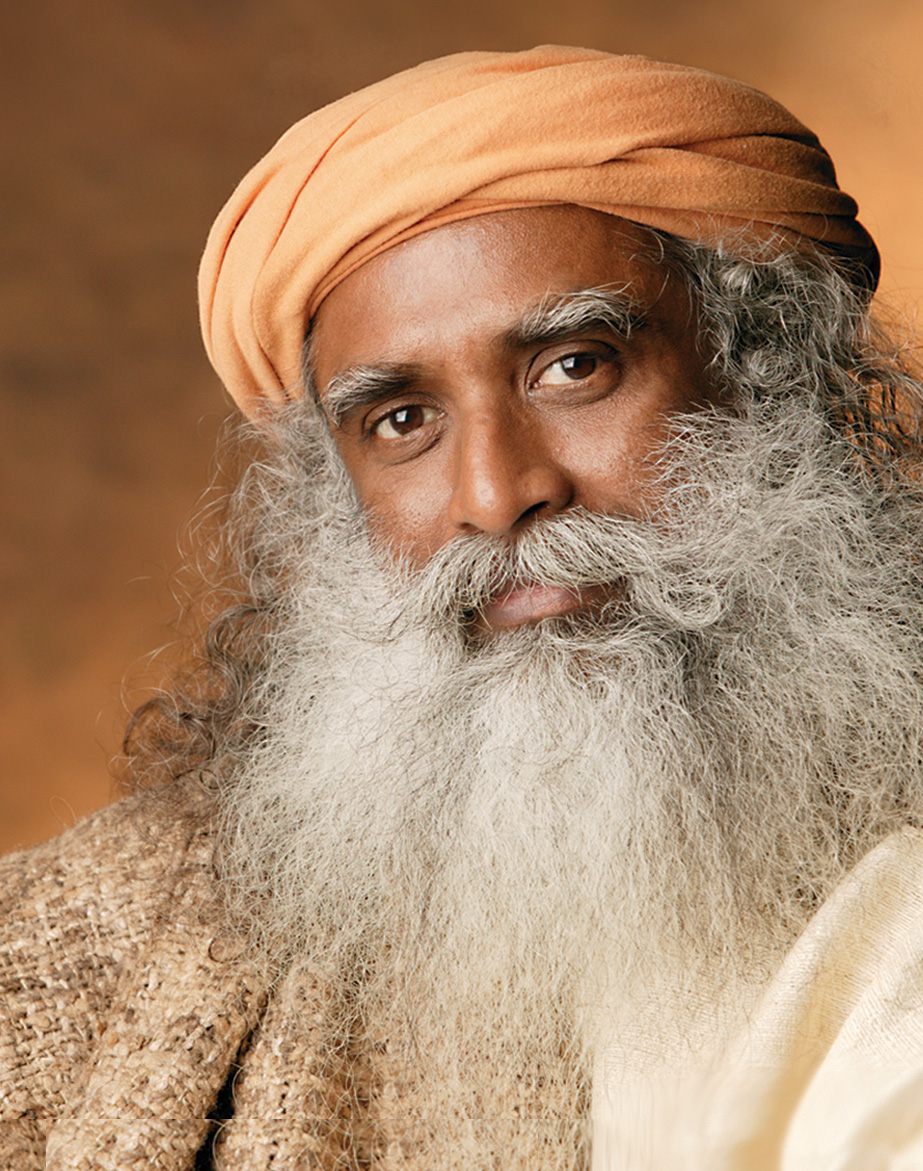
Sadhguru Jaggi Vasudev

Sadhguru Jaggi Vasudev

Companies, chief executive officers (CEOs), wannabe-CEOs, just about everyone is in search of a purpose. Every year, Sadhguru Jaggi Vasudev’s Isha Foundation conducts a leadership programme for entrepreneurs and CEOs at its ashram in Coimbatore. Conceptualized and conducted by him, and facilitated by people like Dr Ram Charan, an acclaimed CEO coach to Fortune 500 companies, the residential programme hosts entrepreneurs and CXOs in search of meaning. They learn from other CEOs and leaders who serve as mentors or share their stories. Over the years, the programme and Vasudev himself have become destination points for CXOs looking for meaning. This interviewer attended one of Isha Foundation’s first such programmes two years ago and was impressed. One, the programme offered deep insights into the nature of the self and business. Two, it combined wisdom and pragmatism of the kind I hadn’t encountered at a B-school. Ahead of the next such programme, which will be held between 27 and 30 November (details at ishafoundation.org), this writer interviewed Vasudev. Apart from Vasudev and Charan, Tata Sons’ chairman emeritus Ratan Tata and Dr Reddy’s Laboratories Ltd’s co-chairman and CEOG.V. Prasad are key “resource leaders” for the programme. Edited excerpts:

As an entrepreneur, how should you measure your life? What is the value you bring to the table as an entrepreneur?

Some entrepreneurs take to entrepreneurship as a mission and others because nobody is willing to employ them—not necessarily because of incompetence, but because they are not structured to fit in as an employee. Employment is a way of boxing somebody into something to produce results. There may be people who cannot be boxed or are not shaped to fit a box. They choose self-employment. They may become big employers depending on their levels of success.

Eventually what begins as an economic activity becomes a passion. If you are employed in a company, you may work 8-10 hours. If you are self-employed though, you may have to put in 18-20 hours. You might as well learn to deploy this time into your growth and well-being.

There is a certain heady feeling about being an entrepreneur. That you are successful by your own means gives a man a sense of pride. But I am not interested in that. It is the sense of involvement that comes with being an entrepreneur that is transformative.

Are you suggesting here it is difficult for somebody who is not an entrepreneur to get the same heady feeling of being involved?

I am not suggesting that. You can be a volunteer at the Isha Yoga Center. Volunteers have nothing to gain. But they are involved. To be a volunteer means to be willing. There is nobody to whip you to run at full speed. You go at full speed because you said a big “Yes” to life.

I am not saying an employee cannot feel that way either. But unfortunately many don’t because there is no sense of belonging. This is one thing I am always trying to instil in people. If you want to do something, do it. But don’t shift your focus every other day. If you put your heart and soul into what you are doing, that is a great thing to do. Is it the best thing to do? No. But it is a great thing to do.

Why do you say it is not the best thing to do?

If I say there is a best thing, then what I do is better than what you’re doing. That is not a good way to approach life. What I am doing is a great thing to do in my experience. It can become in your experience as well if you give yourself totally to what you are doing. Entrepreneurs do that because of the atmosphere they live in.

In the past, you’ve spoken of compromises an entrepreneur has to make. We all agree it is not easy to be idealistic. But being idealistic may not be wise either. How do you be pragmatic, do the right thing and still do good business?

All of these are unnecessary. In our country, we largely depend on doing the right things using individual values, morals and ethics. That is dangerous because all of these can be bent and reshaped to fit your situation.

This is because the laws that govern business in our country are not clear. People know that within the boundaries of law, they can do many wrong things and then fix them with their own morals and ethics. This is not a reliable way of doing business. My values are for my own aesthetic, not for business.

Law should govern business. It is like playing football. You can kick the ball any which way you want to. But you can’t touch it with your hands.

Because laws have not been framed properly, people never thought of a nation as an entrepreneurial venture. We thought by agitating we can build a nation. Only now we are figuring out that if we are to flourish, we need business and need proper legislation. If laws are enforceable, I don’t have to worry whether you are good or bad. That’s not my business. There should be no question of personal reliability. The laws must be clear that if somebody breaks them, they must pay for it. Then all this talk of values will go away.

What kind of people ought to be framing these laws?

People with business sense! Not idealistic people. You can’t do business with that. Who can conduct any business in India without paying somebody something? Even a beggar pays somebody to squat at a prime location. In a temple, people bribe the priest to get a ringside view.

Is it morally imperative for business to grow? Growth can benefit the most number of people. But growth and greed are seen as partners.

When you grow, it is growth. When somebody else grows, it is greed. It’s time we acknowledge that when somebody else grows, that is also growth. There is no room for greed.

Because our values are driven by economics, we think of growth in economic terms. If you thought of growth as human consciousness, human capability and economic growth, then growth wouldn’t be a problem. Right now, growth is unipolar. This is the first generation where conversations around dinner and tea are about the economy. Nobody ever did that 25 years ago, except the Americans.

Growth has to be multi-dimensional. Then greed is good. I want all spiritual seekers as greedy as possible, as lustful if you ask me. I use the word lust because people don’t understand the word “desire” strongly enough. That is why we are trying to bring spiritual processes into business. If they can see something valuable in it, then they will pursue it as well.

In family-managed businesses (FMBs), is there a breakdown of trust between generations? The younger generation wants a Google kind of culture, while the patriarchs see it as an infringement. How can this chasm be crossed?

I won’t bring trust into this. The younger generation inherited a business that got successful by using certain methods. The patriarchs trust that method because it produced results. As you get older, you don’t want new things. This is because there is a certain depletion of the mind and a lack of integrity in the body.

The younger generation is usually trying to imitate someone else’s success. You said “of the Google kind”, but at Google, fun is on the surface. Else it is dead serious. For instance, Chade-Meng Tan there is formally designated as the Jolly Good Fellow of Google. He is a jolly guy who talks to you about nothing around work. But this is to soften you up before you go in for a meeting.

Being cool is fashionable. Whatever is fashionable in America becomes fashionable everywhere. But in America the “Thank God it’s Friday” culture pervades. That means nobody likes the five days they work. The culture of “weekend is life and the rest of the week is torture” has gone deep into the American psyche. This culture is growing in cities in India.

So if the younger generation tries something for the sake of it, it can be disastrous. But if they really have a better way of doing things, they must be allowed to do it. They will either transform their parents, or themselves or perhaps just quit their inheritance and find some ways to do things that work for them.

If there were a tool kit that you could offer the older generation at FMBs, what would it be?

There are no formulas to success. What has worked in one situation will not work in another. As an entrepreneur, you must show interest not just in your business, but everything. You pay attention indiscriminately to everything and provide the same level of attention to everything you see. It is very important if you want to craft something of significance.

If you have to become a successful entrepreneur, this is something you have to cultivate. Only then are you an unprejudiced being. If you have different levels of attention to what is yours and what is not yours, you’re gone. Yes, there are some you have to do more with and some you have to do less with. But in terms of attention, there should be no discrimination. That is when your life will be a continuous process of growth.

When FMBs come to you for advice, what strikes you the most?

Don’t forget, entrepreneurship is an economic activity. It need not be raised to Heaven. It must be conducted on Earth to the extent it is necessary for you and me. That is why I say no entrepreneur should become unipolar.

I have met enough people from the older generation who have worked hard to get to where they are. So those who created have a different sense of everything from those who landed into comfort. Therefore, it is very important that the older generation seeks sensible cooperation from the younger generation.

There is always the risk they may fail. But the risk that you could have failed also existed when you started. It’s just that you succeeded. But if you don’t create a challenge, they will not understand what you are talking about. Only then, they will become entrepreneurs. Else, they will become landlords. They need to be on their toes, not on their backsides.

Is there a uniquely Indian way of doing things for FMBs that we have not looked at?

How business transitions in India is very different. In the West, it transitions from the first generation to professionals. In India, it generally moves to the second generation whether they are fit for it or not. They don’t know how to professionalize because they don’t trust anybody other than their blood. So the purity of pedigree creates certain problems. This is a very small resource you are looking at. If you have two or three children, you are trying to find a leader within the three instead of looking at 500 and picking up the best.

In the past, Indian families used to groom them in-house, at least the boys, when they were as young as 7-8 years old. They’d start writing accounts and observe everything, but never get to touch the money until they turned 18. By then, they understood the ins and outs of business. These are not processes that can be written down in a book because every business is run secretively in India. It is changing now. It is being corporatized.

How does an individual know what kind of a leadership style to adopt in any given situation?

There is no such thing as leadership style. If you are a true leader, you don’t think you are a leader. People think you are one. You just do what you have to do. The style of functioning today is according to the reality of today. If today people are sensitive, you operate accordingly. Tomorrow if you are dealing with a bunch of donkeys, you can’t operate in the same way. But whatever you do, do it in style.

Where do ideas like philanthropy and corporate social responsibility (CSR) stand in your scheme of things?

What CSR means is that the government expects a business to do what it is failing at. Non-governmental organizations would not exist if the government works at its best. If we are playing a game, the rules should stay in place. It can’t change in the middle of the game.

You said 30% income tax. If I am paying that, leave me alone. Don’t tell me I must start a school, a hospital, etc. Don’t try to make me feel guilty about my success. That is not good for a market economy.

How do you develop a strategy to learn from others on the one hand and go with your gut on the other?

The gut is not the most important part of your body. It’s full of shit. It’s a fact. This feeling from your gut comes because when faced with indecisiveness, fear accompanies. When fear comes, it begins to function in your gut because fear and bowel movement are connected. That’s why you say “shit scared”. So when indecisiveness, trepidation and a little bit of fear enter you, there will be movement in your belly. Don’t think it is an intelligent movement. But at the same time when fear comes, you perceive danger. That’s when you become alert. When danger is there, people experience more alertness than they ever know in their whole life. Because of that you may see better than what you may otherwise. So that is how this gut thing has come.

But I would much rather use my brain. When you use your brain, there is a certain level of intelligence that tries to work through a situation and there is information from others.

After weighing these inputs, you decide whether to use your intelligence or information. Choosing one over the other in every situation is foolish. To what extent is your intelligence better than the information you have on hand is a judgment you arrive at. When I am driving in a strange country, I just listen to the lady’s voice on the global positioning system. I don’t use my intelligence. So that’s a judgment you make.

This interview originally appeared in Mint on October 14, 2014. All copyrights vest with Mint