• About
  • Body Hacks
  • Blog
  • my book
  • Connect
  • Menu

charles assisi

  • About
  • Body Hacks
  • Blog
  • my book
  • Connect

Get out off Facebook, Twitter and LinkedIn, please!

March 21, 2016

That I hate Facebook and chose to opt out of it because I thought it is making me dumb is something I have articulated earlier. I’m happier for it. Quite honestly, I am not interested in knowing how people spend their vacations, their frustrations at work, nor will I bother to hit a like on their “oh-so-cute” family pictures. Add to that Facebook’s privacy polices that milk every ounce of you that it may make the billions of dollars it is sitting on.

But as recently as last week, in this series, I posited that I continue to remain on Twitter because of the news feeds it offers. And on LinkedIn because it allows me to look up the backgrounds of people.

But that said, a part of me continued to argue there is a larger problem that I was unable to put my finger on. This debate with the self ended when I stumbled on two interesting arguments on what is the problem with Twitter. May I point you to “The End of Twitter” in The New Yorker and “Why Twitter’s Dying” on Medium? I couldn’t agree more with the sum and substance of both the arguments.

Twitter has an existential crisis on hand because it is struggling to remain relevant in a world being overrun by social media platforms of all kinds. The fine minds who thought up Twitter are leaving in hordes in order to create newer platforms. And the folks coming in to replace them are trying to figure out how can they continuously reinvent the platform so that they stay on top of the game. Cash is not an issue. With the kind of valuations it currently commands, Joshua Topolsky points out in the New Yorker article that it can continue to exist in its current avatar for 412 years.

So, what is the crisis really? And why is it being overrun? Umair Haque argues eloquently on Medium that over time, most social media platforms have morphed into platforms for abuse. And Twitter is the one that amplifies abuse the most.

“The social web became a nasty, brutish place. And that’s because the companies that make it up simply do not just take abuse seriously... they don’t really consider it at all. Can you remember the last time you heard the CEO of a major tech company talking about... abuse... not ads? Why not? Here’s the harsh truth: they see it as peripheral to their ‘business models’, a minor nuisance, certainly nothing worth investing in, for theirs is the great endeavor of... selling more ads,” he writes.

And damn right he is.

For a moment, consider how things are in India now. Twitter has degenerated into a place occupied by three warring tribes—“bhakts”, “libtards” and “presstitutes”.

“Bhakts” have come to mean anybody who is on the political right and supports the current ruling coalition. On their part, “bhakts” describe anybody who doesn’t agree with their world view as “libtards”—short for liberal retards. And finally, “presstitutes”, a term contemptuously thrown by both “bhakts” and “libtards” to describe people like journalists, writers, filmmakers or anybody, for that matter, who belongs to a tribe that may not subscribe to either school. I confess I have fallen victim to the crossfire, have indulged in name calling with both “bhakts”and “libtards” and am now labelled a “presstitute”.

When I think about it, this isn’t what I had signed up for. Twitter was intended to be a worldwide community of people who shared thoughts, links and ideas, all in 140 characters. And what a lovely place it was!

The easiest thing to do now is just get out of Twitter because it is no longer what it was intended to be. But that would be a cop-out and giving in to the warring tribes. So, what am I to do? Because at the end of the day, there is no taking away from the fact that when you dig deeper, meaningful conversations can be had on Twitter.

On my part, I have started out by giving up on the theory of reciprocity, which meant that if somebody started to follow me, I followed them back as a gesture of acknowledgement to their existence. When I think about it, it makes no sense.

Add to this the fact that I am seen as an influencer of sorts on Twitter by many folks—not because I have accomplished anything significant, but because it is terribly easy to be seen as an influencer, and because I had deployed some devious techniques and a few hundred rupees to be seen as one. The network effect kicked in and now people of all kinds follow me for whatever reason.

By falling into the “follow back” trap, the voices of people who really matter to me get drowned. This is because Twitter moves incredibly fast. By the time you finish reading this sentence, back-of-the-envelope calculations indicate 40,509 tweets will be published. And by Twitter’s acknowledgement, half a billion updates are posted every day. So, the chances of me finding what I am looking for is lower than that of looking for a needle in a haystack.

So, I have started on a painful exercise that will take a while to complete—to start unfollowing people who don’t add value. The easiest way to get out of this trap is to start out by unfollowing everybody I follow right now. On Chrome, my browser of choice, this can be done by using a plugin called Twitter Unfollow. Every browser has similar tools that allow you to do it.

I have chosen to take the longer and more tortuous path. When I have time on hand, I review the profile of people I follow and slot them into lists. A list, on Twitter, is a curated group of accounts. You can create your own lists or subscribe to lists created by others. Viewing the timeline on a list will show you a stream of tweets from only those accounts present on that list.

In my case, for instance, themes I am interested in include media, psychology, medicine, philosophy, books, entrepreneurship and politics among others. So, I have started looking up people interested in these themes and am convinced are on top of their game.

Each time I feel the need to look a theme up, which is pretty much every day, I go to the relevant list and look at what resource they have pointed to or what comment they may have to make on a theme. What it offers me, in turn, is a completely personalized experience. Everything else that exists is noise and opinion that gets filtered out. To put it politely, everybody has an opinion. And opinions are like orifices at the bottom end of your rear. Everybody has one.

Over time, my intent is to follow nobody but those on the lists I am interested in. Whether or not I choose to make these lists public is something I haven’t made my mind up about. I am inclined to keep it private because a public list that others can subscribe to tells everybody what my interests are. The downside to a private list, though, is that it goes against the principle of sharing, which Twitter, or any social media platform for that matter, as it was originally intended is based on.

This isn’t a technique I thought up. But something social media wonks such as Luis Suarez have perfected over the years. The outcome of the many years of his experience and how he got to mastering Twitter that it may be leveraged for maximum impact is . I owe Harold Jarche, whom I had written about last week in this series, a hat tip for the pointer to this hack.

Then there is LinkedIn. At the time of writing and preparing this dispatch, I have deleted my LinkedIn account. I don’t see any value in it any more. All of its default settings are intended to spam my personal account. My initial position was that I stayed on LinkedIn since it allowed me to look up backgrounds of people. But when used effectively, Google is such a sneaky tool, it allows me to get into pretty much wherever I want to.

And heck no, LinkedIn is not where I go to look for career opportunities or make fresh acquaintances. Nor do I fancy posts from self-styled “thought leaders” no editor would touch with a bargepole. The only reason most people put their posts there is to tom-tom their accomplishments or congratulate people for something as trivial as moving from being an assistant manager to manager, show off to idiotic recruiters and human resource people how wide and deep their networks really are. How much more daft can organizations get?

I don’t really know most of the people I am linked in on LinkedIn. Nor do I care for them. Add to all of this the fact that premium users who subscribe to LinkedIn can view all of my personal details. Unacceptable! What firmed my mind up are two snarky provisions I noticed in the Terms of Service under the provisions for Privacy.

2.2: We offer a premium service to recruiters and others, which can be used to search for, organize, and communicate with potential candidates or offer business opportunities. In some cases we allow the export of public profile information. You can control how your information is exported by changing which parts of your public profile are accessible to search engines.

2.5: We may share your personal information with our affiliates (meaning entities controlled by, controlling or under common control with LinkedIn) outside of the LinkedIn entity that is your data controller (for example, LinkedIn Corp. may share your information with LinkedIn Ireland, or other LinkedIn operating entities) as reasonably necessary to provide
the Services. You are consenting to this sharing.

We combine information internally across different Services. For example, SlideShare may recommend better content to you based on your LinkedIn content preferences and the articles you read on Pulse, and LinkedIn could present you a better tailored network update stream based on your SlideShare activity, whether or not you tied your SlideShare, Pulse and/or LinkedIn accounts (e.g. by signing in SlideShare or Pulse with your LinkedIn account), as we may be able to identify you across different Services using cookies or similar technologies.

Plainly put, all of my personal information does not belong to me. The sharks at LinkedIn can trade me for a few dollars and I don’t have a say in it because by accepting their terms and signing in to use their service, I have given all of my rights away to them.

Thank you. But no thank you. I would much rather spend quality time with my little girls who are curled up by my side, waiting for me to wrap this piece up, so that I may entertain them with magic tricks and share the warmth of a few giggles and laughs I bring with my faux magic tricks that can only impress little girls who look up to their dad with awe. The joy, I suspect, will last only a few years before some joker tries to woo them, while I look back wistfully at the years they worshipped me. I might as well spend all of my time doting on them.

This piece was originally published in Mint on Sunday
Tags: Social Media, Twitter, LinkedIn, Facebook
Comment
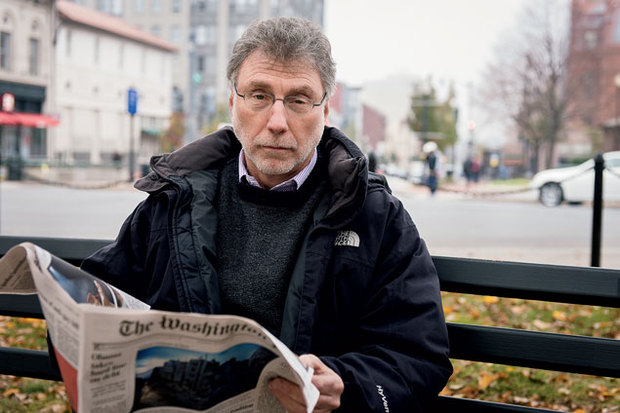
Marty Baron, former editor of The Boston Globe

Marty Baron, former editor of The Boston Globe

The Spotlight on Incest

February 27, 2016

That the 2015 movie Spotlight, a taut thriller that recounts the story of an investigation by the reporters of the newspaper The Boston Globe into the sexual abuse of children by clerics of the Catholic Church is a front-runner for the Oscars is secondary. What is primary is the accompanying shame that hits viewers in the gut.

And that is because contrary to what you would imagine, this isn’t a movie about journalism in its finest traditions—but about looking at truth dispassionately, leadership against the odds, the gumption to question fondly held notions, acknowledging frailties and acquiring wisdom to set all of what is wrong, right. These are traits that aren’t acquired easily. That the setting is the newsroom of a popular newspaper is completely incidental. Think of it as a metaphor if you will of how countries, organizations and individuals behave instead.

The film is yet to be released in India but most cinema aficionados perhaps already know the plot. The Boston Globe is a hugely successful and widely respected newspaper in a predominantly Catholic community. The rolls of the newspaper include Spotlight, a team of four reporters who spend all of their time and energies on investigative journalism. They are hugely successful at what they do.

When the editor retires, everybody at the organization takes it for granted somebody from the system will be elevated to take his role. But the management in a moment of epiphany thinks it may just be appropriate to bring an outsider. Marty Baron, a man brought up in the Jewish faith and a rank outsider to Boston, finally gets into the system. Liev Schreiber powerfully and subtly etches the role.

As is the wont in most organizations, when a new leader takes charge, they look at what their predecessors have done, evaluate it, and try to figure if there are better ways to do things. In any which case, that is what good leaders intend to do. And as is often the case, their intent is met with hostility—overt at times, covert at others.

When the new editor gets down to the job on hand, a sparsely reported news item catches his eye. Buried in the pages of the newspaper, he sees sporadic reports of children being sexually abused by priests in the Catholic Church. Why, the “outsider” in the new system wonders, and asks that in as many words to the “insiders”.

The first response is that the newspaper has already reported on it, the concerned authorities at the Church have taken appropriate action—and that these are perhaps one off episodes that don’t need further investigation. He declines to buy the argument.

Some moments of debate and tension later, the argument resonates across the room and the team galvanizes into action. It is pertinent to pause here for a moment and ask why did the new editor turn to a small four-person team to lead change? Why didn’t he mount a frontal attack on the larger system that was in need of an even bigger overhaul?

When looked at from a thoughtful leader’s perspective, it makes sense in the longer term to go after potential areas where the chances of acquiring wins are higher. Most leaders, who come in from the outside, in desperate attempts to make their presence felt, go into slash and burn mode. This is the kind of thing that can backfire dramatically and is very often a point of no return.

That is why, with some convincing, a team most likely to buy into his ideas seemed the wisest thing to do. Months of meticulous investigation later, they blow the lid off one of the Catholic Church’s darkest secrets—that it actively connived to protect the worst kind of offenders.

Boston Globe Tony Fischer  Creative Commons

Boston Globe Tony Fischer  Creative Commons

The story got The Boston Globe many accolades including the much-coveted Pulitzer Prize for Public Service Journalism in 2003, exposed a series of child abuse scandalsin churches across the world, and it eventually took a man like Pope Francis, the current head of the church and an outsider to the system that is the Vatican, to muster the courage to apologize. “Before God and his people I express my sorrow for the sins and grave crimes of clerical sexual abuse committed against you. And I humbly ask forgiveness,” he said at a private mass in Vatican City.

That is one among the many reasons why Spotlight is a movie not just every journalist, but everybody in leadership positions ought to put on their list of mandatory viewing. It begs that we ask of ourselves where our moral compass lies.

Let us consider a set of simple questions. Why does pretty much everybody believe Indian media houses are compromised entities? Why does everybody think Indian businesses get to where they are because they are inherently corrupt? Why does every Indian believe business cannot be a force for good?

Spotlight offers an answer: Incest.

When the team at The Boston Globe finally got down to investigating the scandal, what stunned them initially was that their findings weren’t new. The Church knew about it all along. A medieval code of honour though compelled its leaders to deny any wrongdoing. Instead, they went out of their way to not just eliminate traces of incriminating documents, but protect the perpetrators as well. From an editor’s perspective, this was as damning as it gets. It was an astonishing story to be told.

When the publisher got wind of what the editor had in mind, he paused. Perhaps, he was wondering what the consequences could be. After all, 53 percent of the newspaper’s readers were Catholic—just the kind of audience advertisers in the newspaper reached out to. If a story as damning as this were carried, it could antagonize readers and in turn advertisers on whom The Boston Globe depended for sustenance. Marty Baron, though, is one of the rare editors that holds his ground and insists on having his way.

And the only reason he can do that is because he is an outsider who has the advantage of distance to understand a story like this will not alienate the community it caters to. Instead, it addresses the reader’s unstated need that they know the underbelly of the system they blindly believe in.

Turn the gaze now to India. Speaking off-the-record, business tycoons of impeccable pedigree talk disdainfully of the media houses and journalists that feature them. They make no attempt to conceal the contempt they hold journalists in; who are grateful for having gotten a sound byte or an exclusive interview on a good day; and their counterparts on the business side for having wrangled some money in advertising spends. They speak disdainfully of people in the government as well. That said, they have the gall as well to believe they are demi-gods whom the masses worship because of the monies they control.

Those in government think of business people as obliged objects. Behind their backs, they speak disdainfully of their “ill-gotten” wealth that accrued to them on the back of pleas for favours.

As for Indian journalists, when the day’s job is done, often they congregate to exchange notes on how aware they are that they are being used as tools both by the publishers of the title they work in and the folks whom they deal with in desperate attempts to get stories that may please their editors.

Journalist Hartosh Singh Bal in the most recent issue of Caravan magazinebrilliantly captures these incestuous relationships. Writing on the relationship between the current finance and information & broadcasting minister Arun Jaitley and journalist, he recounts an anecdote that sums it all up:

“I can still remember a story he related at one of the evenings I attended. Jaitley was explaining why he felt India Today, under its then editor Prabhu Chawla, was gunning for him. The story, that involved columnist Swapan Dasgupta and Chawla was scurrilous and unprintable. But I do recall being taken aback by the ease with which Jaitley could betray the confidences of even those such as Dasgupta—who continues to be considered close to him—to a complete stranger. Four years later, I met Jaitley again at the BJP office in Ahmedabad where I had gone to cover the 2007 Gujarat Assembly elections. As I spoke to Jaitley, Dasgupta sat at his feet taking dictation for a press release. By then I had spent a few years in Delhi, and nothing that Lutyens’ insiders put themselves through in their need to be close to power could surprise me.”

As much as all of these creatures think of each other as spineless, nobody has the spunk to rock the boat. Because at the end of the day, everybody needs the other. They are all insiders locked in with each other.

Kavi Arasu, a leadership and talent development professional and a professional certified coach with the International Coaching Federation has an interesting hypothesis on the insider versus outsider debate.

“There is a certain rhythm, or cadence, to how we think and how we behave,” he says. So long as the both of these are in synch with each other, it is a comfortable place to be in. For any individual or organization to develop though, this rhythm ought to be challenged. But development in any form is painful because the rhythm they are used to work in comes under scrutiny. The most convenient thing to do then is to turn a blind eye and imagine there is no problem.

But disturbing a rhythm is only one part of the problem.Pretty much everybody gets it that if they are to be better at what they do, they have to seek development out proactively. That explains the clamour to get into programmes that promise to change lives or how an entity works. Having gone through the programme and when the initial euphoria wears out, everybody settles back into the rhythm they are accustomed to.

This is because the psyche of every entity is such that after having gone through a development programme, it compels them to look at the past. When done honestly, often it repudiates all of what was in the past. Almost overnight, you begin to look silly. That becomes one more reason to go back to the familiar cadence.

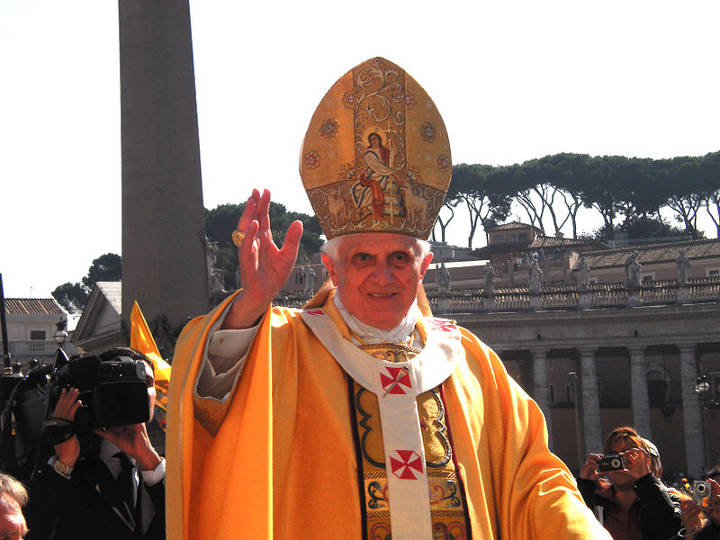
Pope Benedict by Rvin88 under  Creative Commons license

Pope Benedict by Rvin88 under  Creative Commons license

Then there is wilful blindness. To understand this, consider Pope Benedict XVI, the predecessor to the current Pope Francis. He was the classical insider. Of European descent, when he was known as Cardinal Ratzinger, he issued a secret edict in 2001to all bishops in the Catholic Church, that the interests of the church be put ahead of child safety. When he finally resigned, many were relieved because he was accused of not doing enough to contain the damage. Instead, critics insist he led the charge to protect those who ought to have been prosecuted. As some people put it, “I see it, I know it, but I hope somebody else will manage it.”

This raises another question. If it was so blindingly obvious to everybody Pope Benedict was practicing wilful blindness, why didn’t anybody who believes in the Catholic faith raise a red flag? Sacha Pfeiffer, one of the four persons in the Spotlight team at The Boston Globe, summed it up succinctly: “When you have powerful, beloved institutions, it’s possible it can be too powerful or too beloved for people to want to ask them questions. And I think you have to.”

Into all of this, an insider is impeded by the fact that a large part of their actions are embedded in the past they come from. When challenged, they carry the burden of having to explain why they did things in a certain way. In Spotlight, the brilliant Michael Keaton essays the role of Walter "Robby" Robinson, who heads the Spotlight team. He was part of the system and knew it inside out.

Marty Baron, the outsider, does not have to carry the burden of history. He is inherently oriented to plant new flags and change things. This is not to suggest that insiders cannot do the job. There was this one instance at one of India’s most respected firm’s when a member of the senior team was elevated to the CEO’s role. It was met with much applause internally.

Overnight though his persona and actions changed. It was only a matter of time before all of the insiders in the system rebelled against him. They argued that they were doing things as he had envisioned it would be when he was part of the senior team. Why, then, was he compelling them to change? “Because my role as CEO demands that,” he shot back unapologetically. Such leaders who emerge from the inside are rare.

That said, it is not easy being an outsider either. This is because they see things differently. When insiders to a system see the kind of changes like Baron brings in to the newsroom, it has a bearing on the insider’s past as well. It makes sense to some people. In Spotlight, there are those like the intrepid reporter Michael Rezandes, played by Mark Ruffolo, to whom the changes make sense and are willing to transition.

But to others, like Michael Keaton in the movie, they are willing to play along because they see an end point to the change. They reckon it may last a year or two, the changes will be pointless, and the cadence at which they worked at in the past will come back to normal. So they’re willing to give it a shot.

But when people embedded in the system don’t see an endpoint to the changes on hand, the system they represent and the world they operate in, gets violent. To give but one more instance from an Indian context, a large Indian professional firm got in an American executive with a mandate to create a charter for change. It was made obvious to everybody in the organization that he is here to question assumptions and bring change. Almost immediately, he ran into hostility—not vociferous because everybody knew he had the management’s backing. So each time a meeting was called for, everybody in the room would confer in Hindi just so that they may make the new man in charge uncomfortable.

Manu Joseph, a novelist, columnist and the former editor of Open magazine is another case in point. Journalistic circles have it that his exit from Open was on the back of differences between him and the promoter Sanjiv Goenka, chairman of the RP Sanjiv Goenka Group. Apparently, Goenka insisted on having his way on a key hire in the editorial team who would report in to the editor Joseph.

Joseph thought it his prerogative to decide who stays on the team and who doesn’t. Goenka had his way eventually and Joseph chose to exit from the magazine. When contacted, Joseph said, “This, is true. This is why I quit. It is an episode I have not spoken about to anybody in detail. Sanjiv and I continue to be friends.”

But Joseph is seen as the consummate outsider in Delhi. “To be fair Delhi was very welcoming, Delhi did reach out. But I could not respond as graciously as I wanted to because I wished to spend all the time I could on my novel, and often chose to miss late nights to wake up early for a run. Also, I wished to have the freedom to write whatever I wanted to, to get involved in toxic stories that are taboo if you wish to be co-opted into Delhi’s networks.”

When probed on why, by way of example he brings up the curious case of Tarun Tejpal. Tejpal has been accused of raping a former colleague in an elevator in Goa.

“The general opinion in Delhi’s media circle was that Tejpal was guilty. I got access to the footage of CCTV cameras in the hotel where the incident occurred. And I believed it was a genuine journalistic story. The contents of the footage disputed some of the things that the young woman had said. Some people thought my story favoured Tejpal. By touching toxic stories like the one on Tarun Tejpal, I became the outsider. By looking at the CCTV footage, it embarrassed the campaign in the media and I became an outsider by doing what I did,” says Joseph.

But, Joseph wrote in his investigation on L’affaire Tejpal: “For most of his adult life, Tejpal was celebrated as a journalist and a writer by a network of Delhi’s influential cultural elite who transmitted that sentiment to the vast public.”

Does being an outsider extract a toll on you?

“Yes, a writer needs the goodwill of his peers and many times I feel I don’t have it,” says Joseph. “But most days I don’t care.”

Being an outsider takes its toll on the soul as well. Prime Minister Narendra Modi is an outsider to Delhi. Barack Obama was an outsider when he was first elected to office. “But these men have something brazen about them. They couldn’t care less,” says Kavi Arasu. The moral then is that to be a successful outsider you need one of two things: Either a benign system that is willing to tolerate you or a thick skin.

In a benign system, if the outsider comes in and doesn’t do much to shake things up, the system will stay benign. If the system isn’t benign, a thick skin is essential. But above all else, outsiders have to take the effort to build an ecosystem around them that they can converse with. The headwinds that come with being an outsider isn’t easy to handle. It is only human then to feel fragile. The only way out is to turn to the ecosystem and draw from internal resilience.

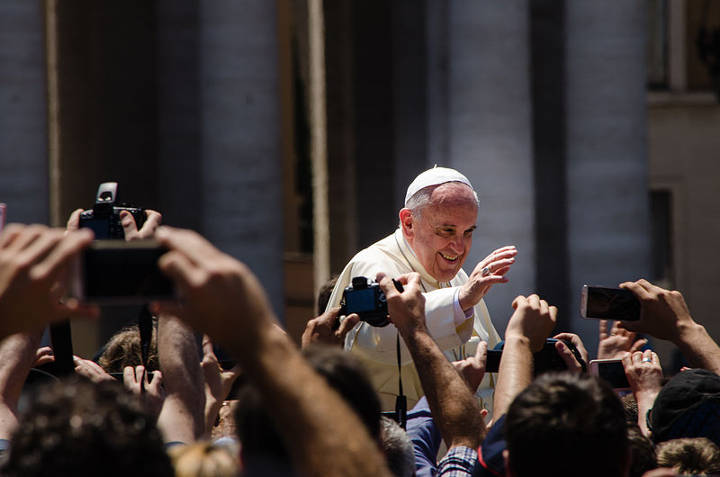
Pope Francis by  Alfredo Borba under  Creative Commons

Pope Francis by  Alfredo Borba under  Creative Commons

And that brings us back to the Vatican and what is it about the incumbent Pope Francis that makes him different from his predecessors. He comes across as a gentle soul who perhaps doesn’t have it in him to take on a powerful system.

“There has to be means of self-renewal,” offers Arasu by way of explanation. “For renewal to happen, you need a certain degree of self-awareness.”

Pope Francis perhaps doesn’t have a thick skin. But he can do things differently because he is an outsider in more ways than one. All of his predecessors were European. He comes from a South American background and grew up in the slums of Argentina.

Has he encountered opposition? He has.

Among the first things he did was to start work on a complete overhaul of a long-standing hierarchy. He asked that bishops be pastors “who smell of the sheep and not be airport bishops that buzz around the world padding their resumes and develop the psychology of princes.”

He has demanded “A poor church, for the poor!” That also means a huge clean up of the Vatican Bank, the machinations of which are shrouded in mystery to most people. But he wants to overhaul the place and make it accountable. It’s a slog. But somebody’s got to do it.

And if all this weren’t enough, he is the first pope to have taken the issue of climate change head on. “We need a conversation which includes everyone, since the environmental change we are undergoing, and its human roots, concern and affect us all,” he said in a speech in the US. Conservative Republicans and devout Catholics were horrified. Why is the head of the Catholic Church getting into things he ought not to be meddling in? Isn’t his mandate a spiritual one?

Jeb Bush, a runner in the race to be American President in 2016, dismissed it with: “Put aside Pope Francis on the subject of any political conversation.” But there is nothing the system can do either to keep him out because systems have their own sets of challenges. The machinations of the Vatican can only be speculated upon. But it is entirely possible that after Pope Benedict XVI resigned, there were a few cardinals who wanted to be the pope. It is entirely possible as well that they could not arrive at a consensus on who takes over. The only palatable option then was to settle for an outsider like Pope Francis and wait it out until the stalemate lasts.

That pretty much explains the sequence in Spotlight when the cardinal at Boston calls on Baron to suggest he stay away from the story for the damage it can inflict on believers. Baron goes back to his office and recounts the encounter to the team at work on the investigation. When they vocalize their concerns around the potential fallouts, Baron quietly shoots back: “I am not asking you to do this. I am telling you to do this.” 

This article was first published simultaneously in Mint & Founding Fuel. All copyrights exist with the publishers

Tags: Charles Assisi, Media, Journalism, Catholic Church, Spotlight, Leadership, Pope Francis, Pope Benedict, Boston Globe, Founding Fuel, Change Management
Comment

Why search for happiness?

February 22, 2016

Pretty much every Saturday afternoon, as a thumb rule, I spend time with Kuldeep Datay, my psychologist. It’s a routine now I’ve followed religiously for a little over four years. Contrary to what most people believe, psychologists aren’t always intended to “cure” you of some mental illness. They’re trained to listen and offer a perspective that may not have occurred to you. To that extent, if you think expensive “Life Coaches” that CEOs have on their side par for the course, psychologists are for the laity like me.

That out of the way, for far too long, productivity is a theme I’ve been obsessed with. Rarely does my day end without my asking a few questions: What have I accomplished today? What remains unaccomplished? How could I have done things better? What do I intend to achieve tomorrow? What will the outcome of all of these be a week down the line? How well do you think can you execute it? And when it’s time to go, what metrics will you use to measure your life?

To do all of these, I deploy tools of various kinds, mental models and gadgets—most of which I have touched upon at various points in this series.

There was this one point in time I thought Timothy Ferris and his best sellers like The 4-Hour Work Week and The 4-Hour Body sacred texts of some kind. Fortunately, my infatuation with Ferris faded and I found solace instead in Alain de Boton—whom I maintain is a deeper thinker.

The reason I bring this up is because every weekend for a while now, my conversations with Kuldeep have been around around how can I get better and faster. “Tell me Kuldeep, how can I be more productive?” I insist of him. If I were him, I suspect I’d be exasperated with me.

But Kuldeep is a gentle kind of soul. And each time I bring the subject up, he asks “Why?”

My answer to that is pretty much a stock one. “There is so much to be done. And there is only so much we can accomplish during our productive years. I need to get all of it done, without compromising.”

To which Kuldeep’s stock response, smile intact, is inevitably, “Why?”

And my, by now clichéd answer is, “I’m running out of time Kuldeep.”

This routine later, often times the both of us then get into the nature of time itself. Is it the fear of mortality why the likes of me obsess over time? Is `running out of time’ why I don’t have it in me to pause and appreciate the moments I live in? What does time mean in the overall scheme of things?

Very recently I stumbled across a post on the Farnam Street (a blog I insist everybody bookmark and visit often for the wisdom it carries). The post drew my attention to a book by Alan Lightman, a physicist, whose many works include one called Einstein’s Dreams. It is a work of fiction and has nothing to do with physics or Einstein. To that extent, it isn’t intimidating.

Lightman imagines himself in Einstein’s shoes and wonders what kind of dreams will a man working on the nature of time have. To that extent, it is a deeply philosophical read. After flipping through a few pages in it on Amazon, I promptly purchased the book on my Kindle.

Shane Parrish, who curates the content on Farnam Street sums up the questions the book raises: “What if we knew when our time would end? What if there is no cause and effect to our actions? What if there was no past? No future? If we could freeze a moment in time, what moment would we choose? And most critically, are we spending our finite allotment of time on this earth wisely?”

To answer that question, Parrish points out to one of the dreams described in the book. Two kinds of people exist—those who like in the “Now”. And those in live in the “Later”.

 “The Nows note that with infinite lives, they can do all they can imagine…Each person will be a lawyer, a bricklayer, a writer, an accountant, a painter, a physician, a farmer. The Nows are constantly reading new books, studying new trades, new languages. In order to taste the infinities of life, they begin early and never go slowly…They are the owners of the cafés, the college professors, the doctors and nurses, the politicians, the people who rock their legs constantly whenever they sit down.”

“The Laters reason that there is no hurry to begin their classes at university, to learn a second language, to read Voltaire or Newton, to seek a promotion in their jobs, to fall in love, to raise a family. For all these things, there is an infinite span of time. In endless time, all things can be accomplished. Thus all things can wait. Indeed, hasty actions breed mistakes…The Laters sit in cafés sipping coffee and discussing the possibilities of life.”

Most people fall into one of these categories. After expending my energies on what kind of a person I am, it occurred I am, unambiguously a “Now” person. That is why I need to be on the move all of the time. So when I look into myself, it isn’t mortality that I am afraid of. I am afraid of “missing out” on all of what is possible.

When I think of it, my argument that I am mortal and need to do all of what is possible in the limited time I have, is a facile one. A pretense, or machismo, to prove to myself I am not afraid of death. And that I will beat death by accomplishing all of what I have set my eyes on.

As for the “Laters”, I confess I don’t understand them. In an earlier avatar, while in college at the campus on St Xaviers, I suspect I was a Later. But I cannot identify with that part of me anymore. Something changed when I got into the workforce. I cannot be with them either. If they don’t bore me to death, death by caffeine will actually get to me.

The problem with “Laters”, Lightman points out, are those stuck in time. They think of the days gone by and weep about what could have been. If not that, they imagine a future where all things will be beautiful. The irony is that both the Nows and the Laters are unhappy. So what gives?

Much thinking through later, the import of what Kuldeep has been trying to tell me fell into place. There is a fine distinction between “living in the now” and “living in the moment”.

What stops me from catching the import of a moment? Why am I obsessed with doing something here and now so I can assure myself I’ve been productive at the end of the day? Why do my Sunday evenings begin with creating a To-Do list for the week that lies ahead? Why does every evening end with ruthless reviews that inflict brutality to push my boundaries? Why the monthly and quarterly reviews with myself to measure “personal progress”? Why the obsession with losing out?

On the back of Kuldeep’s gentle goading and much effort later, I’ve finally come around to believe I am not the most important person in the world. That it is okay to turn my phone off past a certain hour. I’m now an early bird who is up by 4:30 am on the outside. I take my time to brew two mugs of masala chai and potter around.

It’s my time with me. Those hours aren’t used to check e-mails or get on social media. In fact, I’ve gotten off all social media, save Twitter that I use as a newsfeed. Friends still haven’t gotten around to that I am off Facebook and can’t figure why I don’t use instant messaging tools like WhatsApp. My chai in hand, I’ve begun to enjoy staring out of the window into the early morning hours.

Then there are days I walk over to the chai vendor right outside where I live. I take great pleasure in his ramblings about how peaceful life is like at his little hamlet in a corner of Uttar Pradesh where his wife and he can make as much love as they want to with each other because time never ends. “Sex karte hai hum sirji, din raat” he says often as we exchange some bawdy humor.

Chai done, a meditation app called Headspace has begun to embed itself into my morning routine. Created by a man called Andy Puddicombe his voice guides users through the routine. What stared out as an exercise in monotony is now transforming into awareness of the self.

I admit now these are the best hours of the day. But that is not to suggest I have changed. I still have a long way to go. Because as the exigencies of the day take over, whatever it is that transpired in the morning is shoved into the boondocks.

Kuldeep has been pushing me to incorporate newer activities into my life. Much like I’m discovering what joy mediation can infuse, why ought I not wander into more unchartered territory? I don’t know to play a musical instrument. What stops me from spending an hour of my time each day on learning to play something?

For that matter, in spite of having two daughters whom I love hopelessly, I don’t know have a clue what is playing at the back of their minds. What if I were to take an hour out each day, just that I may be with them, and listen to the concerns of a 9-year old and a 3-year old?

Each time I’ve done that, I find myself in a world I now remember nothing about. “Can you come and help me beat Utkarsh up dada?” asks Nayantara.

“Why?”

“Boys think they’re better than girls and he tells me he can beat me up anytime.”

I’m no Gandhian. So it gives me joy to plot with her on what it takes to take on a boy naturally built to be stronger than a girl her age. And it fills me with perverse pleasure when I pretend to accidentally whack him on the head after which Nayantara and I high five each other.

I can’t begin to describe what it is like to debate with Anugraha what a signature is. I know of it only as a set of inimitable initials unique to each one of us. She insists it ought to be a pink star. We debate endlessly—until she tires, tugs my hair in exasperation, gives up, and asks of me to sing Twinkle Twinkle Little Star that she may sleep on my shoulders.

Shane’s post on Farnam Street and a line he picked from there compelled me to go back to go back and re-read Seneca: “How late it is to begin to live just when we must cease to live. What foolish forgetfulness of mortality to postpone wholesome plans to the fiftieth and sixtieth year, and to intend to begin life at a point to which few have attained!”

Allow me sign out with a quote by great Roman Emperor Marcus Aurelius, that is at once amusing, deeply philosophical and puts into perspective why every moment matters with forceful vehemence: “Alexander the Great and his mule driver both died. And the same thing happened to them both.”

Read More
Tags: Happiness, Charles Assisi, Alain de Boton, Tim Ferris, Life, LifeHacks, Lifestyle, Living, Philosophy
Comment

Reproduced under Creative Commons

Letter to a religious nation

September 19, 2015 in Ideas

Dear Fellow Indians,

Allow me begin with a fervent plea. Abandon your religion and all your god men. They mean nothing and are the bedrocks on which falsehoods are perpetuated. I am an atheist. Allow me reiterate. I am not secular. I am an atheist. I believe all religions you participate in humbug. If I were secular, I’d be compelled to treat all religions on equal footing. But I don’t think it possible. 

This is because the nature of religion demands the so-called truth as revealed in each of its sacred texts is the truth alone. And that all other versions will not stand up to scrutiny. I think that a rather offensive and puerile assumption to make. To the contrary, I think versions of truth as offered by all religions comprise lies and damned lies. 

Why? Because as Sam Harris, a neuroscientist and best-selling author puts it so eloquently in his book Waking Up: "Nothing that a Christian, a Muslim and a Hindu can experience—self transcending love, ecstasy, bliss, inner light—constitutes evidence in support of their traditional beliefs, because their beliefs are logically incompatible with one another. A deeper principle must be at work."

It is tempting then to ask what is so incompatible between all of these faiths? The fact that all of them originated from different parts of the world is the first that strikes me—Christianity from the West, Islam from the Middle East and Hinduism along with its various sub sects from the East. The proselyting natures of Christianity, the intolerance of Islam and the laid back, albeit hydra headed inclusiveness of Hinduism that seeks to embrace proselytization and intolerance as part of the “brahman” or universe; for that matter as an avatar or incarnation of the divine is a case in point.

Then there is the conquest of happiness itself. Every form of organized religion promises happiness. It is pertinent then to ask what is happiness, as we understand it? To the laity, happiness lies in gratification of desire. It could be something as simple as access to good food, or having loved ones within an arm's reach. 

From a philosopher's prism though, the question on hand is, is it possible to happy before one's desires are granted, in spite of life’s difficulties, in the midst of old age, pain, disease and death?

Christianity and Islam promise it in the afterlife. Hinduism demands a life of asceticism to achieve moksha or liberation from the cycle of life and death until happiness can be discovered. 

To my mind, this is asking for too much. I refuse to suffer in the “now” that I may rejoice in the afterlife; or that I renounce all of my “now” that I may be liberated. Fact is, I think these terribly, terribly, stifling. But fact also remains, these are the foundations on which religion in pretty much every form is built on. 

Not just that, Harris argues. The word “religion” is an artifact of language. It is just but a generic term like sport is. To draw an analogy, some sports are peaceful, but extremely dangerous like rock climbing. Some are safer but violent like mixed martial arts. And some like bowling mean you do nothing more than stand in a place like you would in a shower. Therefore, to speak of all sport in the same breath is an impossible discussion to have. We need to understand the nuances of what each sport involves. It is much the same thing with religion. Given these differences, I find it impossible not to laugh at secular shams like inter-faith dialogues to promote harmony.

Into all of this, add the lives we take for granted. Hindus have the gall to believe everything was known of before anybody else in the world knew of it. But truth is, Hindu scriptures know nothing of the biology of cancer, vaccinations, the human genome or aviation. Contemporary medicine and aviation is the outcome of western scientific thought. I am first hand witness as well to the violence blood hungry Hindu hordes unleashed in the wake of the Babri Masjid demolition.

But this does not exonerate Christianity or Islam. How can we forgive the Catholic Church for the trial and conviction to life of Italian astronomer Galileo because he proved the earth revolves around the sun? Contemporary history has it that the brilliant mathematician Alan Turing was prosecuted for admitting to homosexual acts in early 1952. He was subjected to chemical castration through hormone injections until he eventually committed suicide. 

How can any leverage possibly be given to Islam either? It contains the likes of nuclear physicists like the Pakistani Samar Mubarak Mand who told an audience in Balochistan that when he organizing a nuclear test in 1998, he discovered Allah had put a miracle chicken into the pot. Even after 183 people had eaten from it, the pot was still full of chicken.  

On the face of such pig headed assertions, my submission to you is cast religion and secularism in all its forms away. It is riddled with holes and more holes can be punctured into all of what it stands for. That is why I am totally with Sam Harris again when he argues the world’s religions are mere intellectual ruins, maintained at enormous economic and social cost.

Instead, embrace atheism. This is a way of life that understands what you are looking for. Happiness. In the here and in the now. It is what people call a spiritual experience. Allow me add a word of caution here. Religion and spirituality are two different things.

The quickest way to experience spirituality is through a party drug Ecstasy. Pop one of it and what follows is a spiritual experience. You feel a certain oneness with the universe. You experience contentment. You begin to understand what it is to love without expecting anything in return. The line: “I love you because….” holds no meaning then. It morphs into “I love you”. No caveats attached.

I am not suggesting here you pop Ecstasy pills because all of us know of the disastrous consequences that follow. But atheism is a way of life that places a premium on compassion and love. It believes these are skills that can be taught and acquired minus the baggage that accompanies organized religion. That way you engage with life.

Allow me sign this note off with a passage from PM Forni’s The Thinking Life: “The more you value life, the more you engage with it. The more you engage with it, the more you think your way through it. The more you think your way through it, the more effective you are as its trustee. It is then that you finally live out the elemental truth that in life there are no rehearsals and you only play for keeps.”

In anticipation,

An unapologetic atheist

Tags: Religion, Atheism, Christianity, Hinduism, Islam, India, Sam Harris, Happiness
Comment

Doctoral Dissertations from a tea stall

August 24, 2015

In Kerala, chaya kadas (tea stalls) are all over the place. They dot university campuses abundantly. These are hopelessly ingenious places as well—all thanks to a hugely literate population that cannot find suitable jobs to match their skill sets. What is this population to do but loiter around chaya kadas and hunt for younger folks who can do with their “wisdom”?

As a modus operandi, theirs is an interesting one. Assume you want a doctoral degree. But you don’t have the bandwidth or the energies to invest. So you visit one of these chaya kadas where you strike a deal with some highly literate, unemployed bloke. Deal struck, usually for chump change, they start working on a doctoral dissertation for you.

Their service includes everything from getting the primary research material in place to framing a thesis, writing it in the appropriate language, and even sitting in as part of the audience to ask questions when you defend your thesis. It is apparently a thriving business that works very well both for the seller and the buyer. The poor seller, in any case, stands no chance of finding a decent job in a hugely literate state. The buyer wants the prestige that comes with a PhD. But the business is under threat from altogether unexpected quarters and prices are being driven down.

To understand this first-hand, you ought to hang around with kids in their late teens and early 20s. Before I put that into perspective, may I suggest you start by reading the italicized text below—ad verbatim?

CapGemini will take over iGATE a New Jersey based Consultancy firm and also turned the spotlight on the future of mid-sized software services companies squeezed between cash-rich larger rivals and nimble start-ups.

With this Merger CapGemini became the largest Consultancy, the combined Group strengthens CapGemini’s position as a leading company in IT services, outsourcing and consulting, with an estimated combined revenue of €12.5 billion, combined operating margin above 10% and around 190,000 people serving clients worldwide.

With a 30% share in the North American Market, CapGemini can easily look to compete with all the big fishes in the pond. This merger gives the French IT Company a major foothold in the North American Market. This will help CapGemini to cross a 50,000 employee mark and earn an estimated $4 Billion.

This by far has been the biggest market for the French Company, and iGATE will help CapGemini fill the holes in its portfolio, most notably a more powerful presence in India, a stronger portfolio of US enterprise clients, and a deeper foothold in financial services.

Industry experts are also saying that merger of these companies will be crucial for the success. Integration will be challenging with two very different cultures. It has recent experience gained from the successful acquisition of Kanbay and a growing Indian presence. Over all this is a nice move but will require Capgemini to move quickly to successfully integrate iGATE and stem any talent losses.

Now that you’ve read it, pause and ask yourself: How different is this from anything you read in business newspapers every morning? For that matter, how different is this from the so-called research reports that come out of broking firms?

Now, allow me to put that in context.

Two weeks ago, I was in Delhi to conduct a writing workshop at a consulting firm. As part of the pre-workshop exercise, I’d asked all of the participants, mostly freshers, to write a piece of not more than 500 words on what they thought of CapGemini’s acquisition of iGate Technologies. The extract reproduced above is from one of the assignments that came in.

After having read it carefully, I passed my feedback to the young bloke who wrote it. I told him this is exactly the kind of writing that has commoditized wire services and business newspapers across the world. It’s driving into a funk editors across the world who want value-added material.

My argument was simple. As this kind of news breaks out, tickers and anchors on television along with those clued into social media belt news out by the minute. By the time it hits print, folks who follow news know all about it. So what they have on hand is a rag attempting to regurgitate what has already been said. But somehow, most journalists don’t seem to get it.

For a moment I thought he looked crestfallen. The cheeky fellow, fresh out of college and in his first job, looked me in the eye and told me I ought not to take a call on his capabilities on the back of this assignment. And why not, I asked him.

Because, he smiled vicariously, he didn’t write it. Not just that, he told me he doesn’t understand crap about business, doesn’t know what CapGemini or iGate does, and can’t tell an acquisition from his elbow. But because the workshop was thrust on him, and he had to complete the assignment, he copied and pasted a few keywords from my brief into Spinbot (spinbot.com)and had his assignment ready in a few seconds.

I looked incredulously at him. It’s pretty much routine practice in most colleges, he said as a matter of fact. Why work on mundane assignments when it can be outsourced to artificial intelligence? Thechaya kada economy is under threat.

For the uninitiated, Spinbot is an online tool that generates original content on the back of keywords. The algorithms that power it draw from the tonnes of content available online to create material that looks authentic and passes all plagiarism tests. Some looking up later, I discovered that if you’re willing to dish out a few dollars, hundreds of pieces of software exist to create compelling content around pretty much anything you can think up.

For instance, I stumbled on a tool called SCIgen (see here).

Developed by three graduate students at the Massachusetts Institute of Technology (MIT), it is a program that churns out academic papers on the computer sciences. The damn thing is so bloody good at what it does that some enterprising folks have actually used it to generate gobbledygook that got published in prestigious titles.

That such crock exists was made public last year when Nature, the international weekly that writes on all things scientific, reported that prestigious publishers of scientific literature like the Heidelberg-based Springer and the Institute for Electrical and Electronic Engineers (IEEE) based out of New York were compelled to withdraw 120 papers generated by algorithms. This was after the pranksters who thought up the software thought it worth their while to admit what they were up to.

If you think that ridiculous, may I point you to the screenshot below with a paper generated in my name, citations and all?

My limited point is: We’ve come to a point where content of all kind is now a commodity. It doesn’t matter whether you’re a journalist, a scientist, or a mid-career professional in any business trying to work up the corporate ladder.

But there are people who place a premium on substance. They are the ones who make it to the top. Old timers at ICICI Bank speak of how K.V. Kamath, who built the bank into the powerhouse it is now, would blow his lid if somebody passed him a note with no original intent or content. His bullshit detector, they say, is on high alert pretty much all of the time. That is why mediocrity never gets past him.

More recently, I had the privilege of previewing a book by Arun Maira, former member of the Planning Commission. It is sharp, insightful and contains a voice and wisdom that is uniquely his. No algorithm or chaya kada professional could possibly have created it.

In sharp contrast to this, what I see at workshops I conduct and are attended by people half their age is writing that appals and thinking that is incoherent. Most of it is of the kind that, as the cheeky young man demonstrated, can be generated like sausages in a factory—or outsourced to chaya kadas. And that is precisely why most of theses mid-career professionals will not make it past the likes of Kamath or Maira.

Kamath is headed to a larger role as president of the $100 billion BRICS bank in Shanghai. (BRICS is short for Brazil, Russia, India, China and South Africa.) Maira has just put the finishing touches to a compelling new book that tells the story of an India in transition. Given where they are right now, both of them could well have chosen to play golf on a course of their choice at any place in the world.

But they don’t. They seek challenges. In doing that, they put into perspective how most of us are on the verge of extinction; why we ought to constantly reinvent ourselves; and why we must work our backsides off to stay relevant. Else, we might as well migrate to Kerala and hope to find sustenance at a chaya kada—which too, like I pointed out earlier, is under threat from algorithms of all kinds.

This piece was first published by Mint on Sunday. All copyrights vest with Mint

Comment

Launching a start up

March 17, 2015

Too tired to write what it feels like right now. But heck, launching Founding Fuel Publishing has been such joy. More to follow. For now, do take a look at the pages we collaborated on with Mint and our audio casts with Ping Network. The highlight of the day was a firecracker of a story by my friend and former colleague Rohin Dharmakumar on Micromax.


Tags: Founding Fuel
1 Comment
Prev / Next

about me

I am a co-founder at Founding Fuel, a media and learning platform and co-author of The Aadhaar Effect: Why The World’s Largest Identity Project Matters.

The Polestar Award and Madhu Valluri Awards back my work up.

I am a columnist at Hindustan Times as well. My bylines have appeared at places such as Shaastra from IIT Madras and peer-reviewed journals like ACM that computing professionals look up to.

In earlier assignments, I worked as Managing Editor to set up the India edition of Forbes and as National Business Editor at Times of India.

Then there are my ‘teach- writing’ gigs which is much fun. Doing that with undergrads at St Xaviers College, Mumbai that is one bucket which offers much joy. And then there’s coaching thought leaders in the C-Suite that’s another bucket and is an altogether different ball game. It’s both challenging and sobering.

If you’ve wrapped your head around the idea that writing is a lifeskill, connect with me.


The archives

Featured
July 18, 2026
When AI Makes Everything Else More Expensive
July 18, 2026
July 18, 2026
July 11, 2026
AI Didn't Invent Confession. It Reinvented the Confessor.
July 11, 2026
July 11, 2026
July 7, 2025
When the Pen Slipped from My Hand
July 7, 2025
July 7, 2025
December 7, 2024
Intel Outside
December 7, 2024
December 7, 2024
November 29, 2024
The Kiss
November 29, 2024
November 29, 2024
September 1, 2024
The Happiness Equation
September 1, 2024
September 1, 2024
August 3, 2024
AI images and the 'Diversity Error'
August 3, 2024
August 3, 2024
July 29, 2024
The Fighter Still Remains
July 29, 2024
July 29, 2024
July 28, 2024
The Great Indian Telco Pivot
July 28, 2024
July 28, 2024
July 23, 2024
Why I write
July 23, 2024
July 23, 2024