
What I'd give right now to listen to Leonard Bernstein conduct Beethoven's 9th in Vienna, my favorite city in the world. It's the kind of music one can't fail to be moved by. And Bernstein the kind of conductor who could move a mountain if he wanted to. And after having heard this, I so want to walk the city's lovely streets to the Plachutta Wollzeile and go over a finely cooked Tafelspitz. An apple strudel after all of that would be nice.
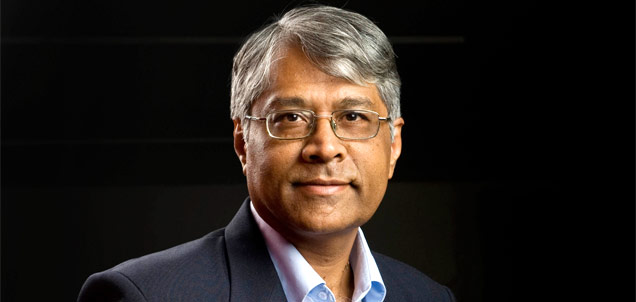
R Jagannathan, Editor in Chief, Network18
Opinions are like assholes
It gives me no pleasure to write this. But R Jagannathan must be told, opinions are like assholes--everybody has one. And today he sounds like just another asshole with an opinion.
What has gotten me riled completely is a piece he wrote on Gandhi versus Godse. Allow me quote from the piece: "So to posit Gandhi as anything other than a hero and Godse as nothing more than a villain, is to try and create black-and-white, cardboard characters, Bollywood style."
The sum and substance of his argument is that Gandhi's assassin Nathuram Godse be accepted for whatever he was and the ideologies he espoused. "Gandhi was as grey, as was Godse," Jagannathan argues.
Before I go any further, I have a few confessions to make. I know Jagannathan as "Jaggi". That's how all of us in journalism know him. The Jaggi I knew was gentle, mild mannered, cerebral and often ahead of his times. A wry humor accompanied him and it always had the newsroom rolling on the floor, laughing their guts off.
I don't know why. I never asked him. And he never told me. But 17 odd years ago, he picked me, then an untested entity in the mid-twenties to edit a supplement he had in mind for the Financial Express, of which he was editor. The dot com boom was beginning to take off. Jaggi had quietly thought up eFE, an eight page daily pull out to go with the newspaper. He asked me to focus exclusively on technology, gave me a free hand, all the resources I needed and turbo charged my career. Along the way, he transformed that ghastly rag the Financial Express was into a newspaper everybody wanted to either be a part of or featured in. He taught me to edit copy, create headlines, appreciate the nuances of design, handle a team and carry everybody along.
I can't think of anybody who ever had an unkind word to say of him. As is usual, he went on to other assignments and I charted my own course.
Our paths crossed again at Network18, where I used to be managing editor of Forbes India, a group publication, until I was compelled to leave under rather unsavory circumstances. Jaggi, who was then my super boss, did not utter a word in my defence. Instead, he acquiesced when he knew all of what had transpired was wrong. But I don't hold that against him. Perhaps, he had his compulsions and in hindsight, I am glad I left.
That said, over the years I've watched Jaggi's trajectory with interest, as anybody would of their mentor. For many years, I thought of him a liberal. But in recent years, he came across as a right winger--a closet Sanghi if you will. Nothing else explains his position on issues, of which the most dangerous and recent one is a rather lame attempt to defend the man who assassinated Gandhi.
Yes, Jaggi is right in that Gandhi has his quirks. But allow me quote Jaggi once again: "...where is our tolerance of dissent and freedom of thought and speech? If someone has the right to eulogise Gandhi, surely others have a right to criticise him or praise his nemesis? If we can today write books giving imaginary versions of Ravana's side of the story (and not Ram's), surely we can live with the ideas of those who think Godse was not pure evil?"
A couple of things come to mind.
- Is Jaggi suggesting dissent and freedom of thought and speech that leads to an assassination ought to be condoned? Surely, surely, he can't couch the act in a line that says "The only thing absolutely wrong about what Godse did was putting bullets through the Mahatma..."
- That he espouses a violent world view is obvious when you read closely what he says next. "At best, complete non-violence can be an individual idea, not something for societies as a whole to emulate." But societies that have eschewed arms exist. Having an army might be practical, but it is not obligatory.
- And then there are those like Martin Luther King who embraced Gandhi's ideals and principles to extract what they wanted. And what of the Dalai Lama and the Tibetan people who have shunned violence in spite of all the atrocities committed on them?
- What of religions like Jainism and Buddhism that have flourished and continue to inspire millions?
- Assuming you buy the Jaggi argument for a moment, you might as well obliterate all history that exists on India's freedom struggle led by Gandhi. For all of their efforts, Bhagat Singh and Subhash Chandra Bose could not deliver what Gandhi eventually did.
- And what exactly is the "imaginary version of Ravana's side of the story?" Are we to believe a 10-headed monster "actually" existed against whom Ram went to battle?
I can go on and on picking holes in Jaggi's rather ridiculous arguments that bat for Godse. I don't want to, because to my mind, Jaggi's world views are emblematic of a larger problem looming over Indian journalism. It is hopelessly outdated and lazy.
What he is churning out doesn't fit the definition of either reportage or informed opinion. Because both of these are built on the back of conversations with people, facts that are checked, and well formed after debates and interactions with those who know more. Jaggi isn't doing any of this.
Instead, I get the feeling he's just pounding his keyboard furiously to churn provocative words, attract eyeballs, valuations, and earn hosannahs on social media from an unwashed army of trolls who cheer anybody with blood on their hands.
I hate to say this again Jaggi. But opinions are like assholes. Everybody has one. You. Me. Everybody. That is why, opinions, particularly uninformed ones, are best kept wrapped under the trousers. Or khaki knickers if you insist.
Astrologers, Homeopaths & Economic Forecasts

Astrologers, homeopaths and economic forecasts can’t be trusted. Because the so-called science they practice is fuzzy at best and hocus-pocus at worst.
Consider, for instance, this delightful anecdote recounted by a senior journalist at a popular Mumbai-based newspaper. Sometime in 1998 or 1999, he wrote a few days ago on his Facebook wall, the hugely popular astrologer Marjorie Orrtook a break. Fearing a backlash from readers, hiseditor suggested that the young man, along with two of his colleagues, should ghost write the column until Orr got back to work. Some trepidation later, he got down to following orders for six weeks until the astrologer got back from her vacation. Not a single reader from the newspaper’s erudite, English-speaking community wrote in with an angry word that his predictions were off the mark.
The post attracted a barrage of amused comments from other journalists who’ve ghosted for popular astrologers like Peter Vidal in Indian newspapers. Vidal apparently recycles his column by replacing the text for one star sign with something he’s written in the past for another star sign. Most people don’t notice. Then there is Panditji from Jaipur who misses his deadlines every once a while and the poor sub-editor at the desk had to think up “good” days of the week, “lucky” colours to be worn and “numbers to bet on” for each star sign. “The trick,” wrote this veteran desk hand at the magazine in response to the Facebook post, “was to make people believe they were on the verge of a quantum leap in life.”
Then there is homeopathy: generous column inches are devoted to it in newspapers and magazines, and practitioners make a pretty damn good living out of it. The premise around which this tub of crock continues to exist—in spite of a mountain of evidence to prove homeopathy is indeed crock—is that water molecules have memory.
But even Class VIII students exposed to elementary chemistry and concepts like Avogadro’s number know water molecules have no memory. This is because by then, they’re taught the mechanics of dilution. Whatever the botanical compound that goes into making a homeopathic drug, it is diluted to an extent that there would be no trace of the molecule left in the drug—except the sugary coating made of powdered lactose, of course.
In homeopathic parlance, on average, most compounds are diluted by 30C. That is 10 , or one followed by 60 zeroes. To understand how much of a dilution that is, imagine a drop of water with a diameter of 150 million km—the distance from the earth to the sun. It takes light eight minutes to travel that distance. Now imagine a drop of water with one molecule of a substance in it. That is a 30C dilution.
It is entirely possible that Samuel Hahnemann, who thought up modern homeopathy, had figured he’d gotten it all wrong in the face of this evidence. That is perhaps why he continued to argue water has memory and that even after dilution of the kind he propagated, water retains a “spirit-like” essence of the original compound that is “no longer perceptible to the senses”.
Ben Goldacre writes sardonically in his superb book Bad Science: “If water has a memory, as homeopaths claim…water has been sloshing around the globe for a very long time, after all, and the water in my body as I sit here typing in London has been through plenty of other people’s bodies before mine. Maybe some of the water molecules sitting in my fingertips as I type this sentence are currently in your eyeball. Maybe some of the water molecules fleshing out my neurons as I decide whether to write ‘wee’ or ‘urine’ in this sentence are now in the Queen’s bladder (God bless her): water is the great leveler.”
Both of these disciplines are similar to another perverted discipline—economic forecasts. It draws from the worst of astrology and homeopathy. While the chances of getting a prediction right using astrology are as good as flipping a coin, homeopathic remedies are no better than placebos where there is no relationship between cause and effect. But economic forecasting relies on both of these to get by and there are suckers by the millions buying into them.
To sift through why economic forecasting is fraught with inconsistencies, Nate Silver’s outstanding book, The Signal and the Noise is a good place to start. He argues that this discipline faces three fundamental challenges: “First, it is very hard to determine cause and effect from economic statistics alone. Second, the economy is always changing, so explanations of economic behaviour that hold in one business cycle may not apply to future ones. And third, as bad as their forecasts have been, the data that economists have to work with isn’t much good either.”
To get a sense of how difficult this really is, let’s consider the most reliable data we have on the US economy (because it is the most closely tracked). The US government puts out 45,000 indicators each year and private data providers track as many as four million statistics. Since World War II though, they have witnessed only 11 recessions. How in the world is anybody to choose 11 outputs specifically from the data on hand that caused these recessions?
By way of example, consider the maxim “co-relation does not imply causation”. What it means is that just because two variables have a statistical relationship with each other, it does not mean one is responsible for the other. For instance, Silver points out, ice cream sales and forest fires are related because both occur more often in summers. But there is no causation. You don’t set off a bush fire in some desert when you buy a tub of ice cream.
On the face of it, there seem to be three reasons why economic forecasts go horribly wrong. The first is arrogance on the part of a large majority of economists. The Economic Cycle Research Institute (ECRI), based out of New York and London, is widely respected. In 2011, the firm predicted double-dip recession, which is a recession followed by a short recovery and leading into another recession.
When quizzed on the prediction, the firm threw up a lot of data that seemed incomprehensible to most people and obfuscated it with jargon that made no sense. Like this: “ECRI’s recession call isn’t based on just one or two leading indexes, but on dozens of specialized leading indexes including the US Long Leading Index…to be followed by downturns in the Weekly Leading Index and other shorter-leading indexes. In fact, the most reliable forward-looking indicators are now collectively behaving as they did on the cusp of full blown recessions.”
Silver tracked their approach to a stance articulated to their clients as far back as 2004: “Just as you do not need to know exactly how a car engine works in order to drive safely, you do not need to understand all the intricacies of the economy to accurately read those gauges.”
When looked at from this prism, the only thing that matters is data and more complex data—and not even an attempt to get to the story. “There were certainly reasons for economic pessimism in September 2011—for instance, the unfolding debt crisis in Europe—but ECRI wasn’t looking at those. Instead, it had a random soup of variables that mistook co-relation for causation,” concludes Silver.
The second reason economic forecasts are notoriously difficult to handle is that the society and the systems they try to predict are dynamic. Nobel Prize winnerF.A. Hayek, in his acceptance speech in 1974, had explained why these systems are difficult to deal with.
Physical scientists can observe and measure the things that drive systems they are studying. But society, and therefore, the economy, is not a physical system. There are millions of variables that cannot be measured or seen. For instance, how will an individual respond to a set of stimuli in a given set of circumstances? There are no universal answers.
But economists, in their attempt to be rigorous, infuse techniques and models used by physical scientists. This is fundamentally flawed because in doing that, they have to ignore that which cannot be measured, in spite of it being integral to economics. The outcomes are incorrect predictions and actions that can harm society.
The third is that humans and the institutions they build are inherently biased. As an experiment, Silver conducted economic polls across organizations that engage in forecasting. Given the same data, he figured that the lower an entity’s reputation, the wilder its predictions. And if your reputation in the markets is higher, chances are your estimates are conservative.
The dichotomy is explained by the fact that if your reputation is on the lower side, you have little to lose. So perchance you hit bull’s eye, the chances of drawing attention is higher. If reputation is high on the other hand, there is an incentive to protect it and you’d much rather err on the side of caution.
Perhaps these are the reasons why Ezra Solomon, an influential US economist and professor at Stanford University, once caustically said: “The only function of economic forecasting is to make astrology look respectable.”
This article was first published in Mint on December 5, 2014 . No parts of this article may be reproduced without permission from the publishers.

Who let the dog out?
As terms go, collaborative consumption sounds fancy. As ideas go, it is ridiculously simple. As a premise on which businesses can be built, it is ingenious. And as a system around which our lives can be lived, it is powerful.
The currency that drives this ecosystem is not the money in your bank account. Instead, it is the reputation capital you earn and your willingness to give up on privacy. By way of crude analogy, think the number of likes and shares on your Facebook posts, retweets and followers on Twitter, and connections on LinkedIn.
Rachel Botsman, founder of the Collaborative Lab (cclab.collaborativeconsumption.com) and a thought leader on the theme, calls it the what’s mine is yours economy. The reason it is taking off, she argues, is because we’re wired to share. “We were doing it for thousands of years, whether it’s when we hunted in packs, or farmed in co-operatives, before this big system called hyper-consumption came along and we built these fences and created our own little fiefdoms. But things are changing, and one of the reasons why is the digital natives, or Gen Y. They’re growing up sharing—files, videos, games, knowledge. It’s second nature to them.”
So how do these models impact how we live? Botsman thinks it will happen in three ways.
• Markets for redistribution like Title Trader (www.titletrader.com) are emerging. After you’re done with using, say a book or a DVD, swap it with somebody who owns something you need. After all, it’s not the book or DVD you need, but the content it contains.
• The emergence of time banks like TaskRabbit (www.taskrabbit.com). You need some errands run at home, but are busy at work. I have time on hand and offer my services at a time banking marketplace. For every hour of my service, I earn time credits. When I’m busy and need somebody to care for my older parent, I can redeem these credits to avail the services of someone on the marketplace. An Indian equivalent is Timesaverz (www.timesaverz.com). But as things stand, the platform offers services for a payment, not time credits. It is only a matter of time though before time makes its presence felt as a currency in India.
• Then there is the product-service system. You pay for the benefit of the product without owning the product. This model has begun to take off in India. Gurgaon-based Rajat Gandhi, chief executive of Faircent—a peer-to-peer lending platform, and Bengaluru-based David Back, co-founder at Zoomcar, India’s first self-drive car company, are die-hard evangelists who’ve built businesses on the back of this philosophy.
Gandhi’s proposition is one he thinks will “disrupt incumbent banks and financial institutions”. While he admits these are early days, Faircent’s (www.faircent.com) proposition is interesting.
Assume you’re an individual sitting on idle funds in the bank, but would like the money to work harder for you. You register as a potential lender on the Faircent platform and look up potential borrowers. Their profiles, credit-worthiness and reasons for borrowing are listed against their names. Person X may be looking for 20,000 and is willing to pay 10% on it. Person Y may be looking for 50,000 and is willing to pay 13% while person Z may be looking for 1.5 lakh and is willing to pay 15% to access the money.
As a lender, you like all three, but want to spread your risks. So you may choose to lend person X 5,000, person Y 8,000 and person Z 10,000—or any permutation and combination of your choice. “Think of it like building a portfolio on the stock markets,” says Gandhi. “But here, instead of stocks, your investments are a portfolio of borrowers.” And like in the markets where you have blue chips, mid caps and penny stocks, borrowers are categorized into class A, B and C after an assessment by Faircent.
Borrowers have the advantage of seeking only as much as they need. Gandhi points out that often times while they don’t state it explicitly, conventional institutions choose not to lend to “small and medium enterprises (SMEs), doctors who practice Ayurveda, lawyers, policemen and members of certain communities.”
On this platform though, because the market is distributed, and information transparent, these barriers hold no meaning and anybody can bid for loans. By way of example, Ayurveda practitioners who had no access to funding can get it here on average at 20%. The only problem, Gandhi says, is “while we’re finding good lenders, there are not enough borrowers.” That said, over the last one year, Faircent disbursed 12 crore. The platform makes money by charging a listing fee from both lenders and borrowers.
David Back (www.zoomcar.com) has an equally compelling proposition. Why own a car when you can rent it by the hour? “Philosophically, it is an obsession with using resources more efficiently,” he explains. The way it works is simple. Need a car? Use the mobile app to find one close to you. Book a car of your choice from a location closest to you and return it when done.
Back argues the opportunity is huge both as a business and to positively impact the environment. By way of illustration, he argues, India has 12 cars for every 100 people and Indians emit on average three tonnes of carbon dioxide (CO2). If the numbers of cars on the road go up, Indians will move closer to the global average of 12 tonnes of CO2 and the “consequences can be disastrous”. Which is why, he thinks collaborative consumption is an elegant solution.
After having been rejected by “at least 500 investors”, Zoomcar managed to convince a consortium of angel investors including Larry Summers, former US treasury secretary, and professors from Wharton and Harvard Law School to pitch in with $2.9 million. “I am proud to have been an angel investor behind Zoom. In a developing, dense country like India, there is even more benefit from automobile sharing,” Summers said.
After having started out from one location in Bengaluru, it is now present at 40 places including Pune with 250 cars in its fleet. Plans include expanding into Delhi, Mumbai, Chennai and Hyderabad. To fund these plans, the company is currently raising $8 million from Sequoia Capital, T.V. Mohandas Pai of Manipal Global Education and Abhay Jain of Manipal University.
Consumption in this universe is a function of sophisticated technology. Gandhi and Back are clear that in the longer term, their operations will have no human intervention at any point. But the way things are, if you need to participate in their models, you need a high credit score. Right now, Faircent relies on theCredit Information Bureau Ltd (Cibil) and Zoomcar on a refundable security deposit of 5,000. Over time though, as all of these models permeate the cloud that is the Internet, the currency will be your reputation.
As Botsman puts it, “In the old consumer system our reputation didn’t matter so much, because our credit history was more important than any kind of peer-to-peer review. But now with the Web, we leave a trail. With every spammer we flag, with every idea we post, comment we share, we’re actually signalling how well we collaborate and whether we can or can’t be trusted.”
If Faircent and Zoomcar are to successfully disrupt the spaces they operate in, they need to keep costs low, which is why their reliance on technology to assess reputation. That engine in place, eventually Faircent may not have to deploy people or rely on Cibil scores to authenticate a lender or borrower’s intentions. Zoomcar may not have to expend time on processing security deposits because they know an individual who borrows a car from their fleet will return it in impeccable condition.
At a time bank, it is possible to imagine high-reputation capital translating into a premium for time credits in your account. And on a re-distribution platform where you’ve earned a reputation for swapping superior content or services, you could swap more for what you have on hand.
The catch here is that reputation is contextual. Just because somebody can care for an older parent does not mean he is necessarily good at housekeeping. That means you need a holistic view of somebody before you decide to collaborate with an individual. “I envision a real time stream of who has trusted you, when, where and why,” says Botsman. “They’ll all live together in one place, and this will live in some kind of reputation dashboard that will paint a picture of your reputation capital.”
Trustcloud (www.trustcloud.com) is a good example of what this dashboard could look like. It works much like a credit card, except that the currency embedded into this virtual card on your browser is your reputation.
“Facebook, Twitter and LinkedIn are versions 1.5 of sharing your life. When version 2.0 goes mainstream and you begin to share your life there, more businesses will evolve and flourish around it,” says Gandhi.
Sure, this means giving up on significant parts of your privacy. But the upside is that as your scores on your reputation index move up, the playing field levels out and people with talents who would otherwise remain undiscovered will move to the top.
Airbnb (www.airbnb.co.in) is one such platform that allows people to rent out their living spaces to travellers from other parts of the world and earn a livelihood. But it isn’t as straightforward as that. Until you’ve gotten enough positive votes as a passionate host, you don’t matter on the platform. Because end of the day, Airbnb is more about people than the spaces they inhabit. So much so that it is now beginning to disrupt the hospitality business.
Then there is Stack Overflow (www.stackoverflow.com), a platform for programmers of all kinds from across the world to showcase their talents and solve problems. Until the time you’ve received enough positive votes from your peers, your reputation doesn’t move up. But when it does, your ability to wrest the most lucrative assignments goes up exponentially.
“In the 20th century, the invention of traditional credit transformed our consumer system, and in many ways controlled who had access to what. In the 21st century, new trust networks, and the reputation capital they generate, will reinvent the way we think about wealth, markets, power and personal identity,” signs off Botsman in her talk at a TEDGlobal conference on the theme.
Moral of the story: To thrive, the only currency you have is reputation. If that means opening up to public scrutiny, so be it. Think your privacy a thing of the past and give it away to the dogs.
This article was published in Mint on November 27, 2014. All copyrights vest with the newspaper and no parts of it may be reproduced without permission from the publisher
"Jugaad is not a good word"
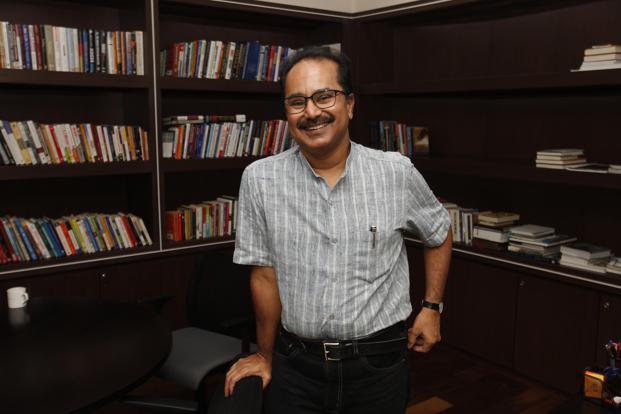
GV Prasad
G.V. Prasad is co-chairman and chief executive officer (CEO) of Dr Reddy’s Laboratories Ltd, India’s largest pharmaceutical company by turnover. The firm he heads has over 16,000 employees across the world, and manufactures 190 medications and 60 drug ingredients, diagnostic kits and other biotechnology products.
Between 27-30 November, Prasad will be a resource leader along with Ratan Tata, chairman emeritus of Tata Sons Ltd; Ram Charan, acclaimed CEO coach; and Sadhguru Jaggi Vasudev, who built the Isha Foundation. At the foundation’s campus in Coimbatore, between the four of them, they will lead a residential programme tailored for entrepreneurs called Insight: The DNA of success. The intended outcome is to explore what comprises the mind of an entrepreneur and how do they go about seeking success. Edited excerpts from an interview with Prasad:
How would you describe yourself outside your role as an entrepreneur?
I am not deeply religious or spiritual. I am not drawn to any particular theology or guru. My biggest passion was the organization and how to take it to a level where it is recognized for its work in innovation, people practices and governance. These are three areas I think we want to be distinctive. Beyond that I am the average Joe.
As an entrepreneur, what have your learnings been over the years?
First, to build a business, you need the best talent. You cannot achieve extraordinary results without extraordinary people. You’ve got to surround yourself with great people.
Second, I believe if you do the right thing, success will follow. That includes doing the right thing for your stakeholders, customers and employees. You don’t have to make trade-offs for any one person’s sake. On the contrary, if you choose to pursue success in terms of financial numbers, you will fall. I have seen many entrepreneurs fail because they have not been holistic about what they do.
Third, every business must have a larger purpose. If you know what problem you are solving, you align all your strategies and resources to that problem.
What is the larger purpose for the organization you lead?
It is quite clear. We are trying to improve the health of people. We do it through innovation and affordability by improving on products that exist or finding new products. Or making them more affordable for that matter, especially products that are difficult to make, which have scientific and technological barriers. We focus on those products to reduce the costs there. In fact, we are improving access to affordability.
In the Indian context, innovation and affordability have been a function of ‘jugaad’, or that is what we have come to believe. What is your take on that, particularly in an industry that is as critical as yours?
In our industry, it is difficult to say jugaad will work. We are dealing with human beings, health, potent systems and hence quality becomes important. Jugaad is not a good word in the pharmaceutical industry. It means “make do”.
In our industry, the pursuit of excellence and the highest element of quality is very important. Look at recent problems people have had to face because of drug sterilization issues. You can see how dangerous it can become if you don’t have a mindset of absolutely high quality.
So what does it take to pursue affordability and innovation both at once? Are there some learnings you’ve had in the pursuit of both these objectives simultaneously? Are there learnings that can be exported?
Absolutely. Affordability is a platform. It does not mean we are looking at making things at the lowest cost. When we mean affordability, we think about competition and how will it be difficult for them to replicate it.
We think about scientific innovation. We innovate to make things more affordable, better and efficacious without allowing room for trade-offs. Sometimes if you look at the success stories of India, like that in the automotive industry, just rushing to affordability has not worked. People want better quality and a better product. You can’t trade-off on these things. Innovation lies in doing both simultaneously.
To your mind, what does it take to be an entrepreneur? Can anybody be one? Can you possibly evolve into one? Or can the traits an entrepreneur requires be acquired?
I don’t have a strong thesis on this. All I can say is that entrepreneurship is an intense journey. You have to be highly motivated with what you are doing. It is not about making money. It is about solving an important problem and doing it innovatively to create value. It demands you be innovative, passionate and tenacious. It takes a long time to make a business work, especially in a country like India where the ecosystem is stacked against you.
I don’t know if an individual is born with these traits or they can be acquired. But when all of these traits come together, magic happens. It could be the context in which an individual becomes an entrepreneur, or that by nature he is very curious and is a problem solver.
If you were to step back and look at the Indian landscape, what is it about small and medium enterprises that stands out as opposed to those in other parts of the world? Are there traits that are uniquely Indian?
Every entrepreneur creates magic. To build an enterprise, or to build a successful business one needs to work passionately, with limited resources, and make it work in a time-bound manner to deliver a product or service that meets a real need. This works differently in different parts of the world. If you take the US, it is an intensely competitive environment, but it is also one where failure is tolerated. You can pursue big ideas, fail and there is no stigma. For Indian entrepreneurs, it is a one-way street. If a guy fails, he doesn’t stand a second chance.
I guess that is why a lot of Indian businesses are not built on the back of innovation, but by getting access to resources, access to government and power, access to land, and so on and so forth. Real innovators are not the thriving majority in India. Only in the recent past the IT industry has shown you can build businesses without patronage. It is the only industry in India that has used manpower as an asset.
To that extent, Indian entrepreneurs are more focused on the cost side of the equation than the innovation side. That is a fundamental difference I see between Indian entrepreneurs and global ones.
How much does that bother you?
I think it is changing. I see a new breed of entrepreneurs trying out new things. There are e-commerce companies coming up and scaling rapidly. We are in the early stages of a revolution.
Are there any specific ones that stand out to your mind?
All the companies that are looking at creating value out of Intellectual Property—you can see quite a bit of them in the IT and biotech industries. Even in the old traditional industries people are reinventing themselves. It is too early though to talk specifics. But what we are seeing is positive.
And what about family-managed businesses (FMBs)? Are there peculiarities you see? Is the patriarch still in charge? Are there conflicts that come to mind?
I see people willing to give up control to professionals. What Infosys did was a remarkable thing. We are seeing families willing to step back and behave more like investors and strategic architects as opposed to operating the business. But there is a long way to go.
What kind of pain points should entrepreneurial entities be prepared for as they begin the scaling-up process?
Sadhguru Jaggi Vasudev makes a point that when a trapeze artist is swinging, he is confident that when he lets go, he will find the next swing, latch on to it and move ahead. Unless you have the confidence that there is a swing out there you can latch on to and move ahead, you cannot let go. This is the biggest dilemma I have seen in family businesses. This prevents them from taking important decisions. They are unwilling to let go with the risks of letting people make mistakes, particularly in FMBs.
If you don’t want to grow and want to be in a corner, and are happy, that is perfectly fine. But if you want to grow, scale up and create large impact, there are certain things you have to do. To do that, you need to grow beyond the Founder’s Syndrome.
Personally, how important is scaling up to you?
We are a company that has let go. We wanted to build a global organization that can sustain itself through changing generations, people and technology. For us it was an easy decision. We are a listed company and are not an SMB (small and medium-sized business). We had to do what was right for us.
What are the challenges that accompany the pursuit of growth and how do you decide the pace at which you grow?
The readiness of your people and their capacity and the imagination of the leadership in your enterprise—these are the limiting factors. You need to have a big vision, and the people to execute them. Both of these are like Yin and Yang. Without great people, you cannot execute. And without great vision, you cannot have great people aligned.
How easy or difficult was it to let go and what did it take to come to that point when you took the call that we have to do it now if we are to grow?
You realize it quickly when the organization around you is falling into a rut and are not able to execute fast enough, meet the demands of growth and understand where the constraints are. Often times the constraint is the leader himself. His ability to think, get people on board and get them to deliver. It is not an event. It is a process. You don’t do it suddenly. You do it by preparing your people, organization and gradually change the questions you ask of people. You stop taking all the major decisions
Can you give some sense of what kind of questions you would ask people in this process?
When you are in the operative mode, you look at what problems to solve, identify the problem and offer solutions. As you become bigger and have a better team, you don’t ask what problem to solve, whether your people can see the problem or understand what is coming. You look at people and their capabilities. So the nature of questions you ask are very different.
In the early days when you are trying to survive, you look at the profit and loss statements very closely. Later on, you look at what capabilities are you building and how are you doing things? Are they sustainable? Do you have a pipeline of people? That’s how the kind of questions you ask changes.
What is the point at which an entrepreneur calls it quits or are entrepreneurs the kind of people who have to persist no matter what the odds are?
In an enterprise, there are many phases of growth. In the initial days, the viability of your product and business is essential. There you need a close-knit team and be on top of everything. As you become viable, build and expand, you have to transition your leadership. I am not saying an entrepreneur has to quit, but he has to constantly reinvent himself. And at some point, if he is unable to reinvent, he must move on. The entrepreneur’s role is very context specific. I don’t think he has to quit for an organization to succeed. There are many cases of entrepreneurs leading brilliantly to the end of their lives. They are the ones who are always learning and growing.
From your personal experience, how often have you been compelled to reinvent yourself? Do any instances come to mind when you have had to change yourself dramatically?
I can’t call it dramatic change as much as constant evolution. With each change in the organization, I have had to change myself and the work I do. Initially I used to be running a business and used to know everything that is happening everywhere. From there we reached a point where we had to build end-to-end business units for everything. As time passed, I started to look at strategy, talent and culture as opposed to performance. At each stage in the organization’s evolution, one has to adapt.
When it comes to intrapreneurs within an organization, what differentiates them from entrepreneurs?
They are the same. These are people who see the same issue and think up different ways to do things that can add greater value. They look at the same set of resources and make the organization more productive or solve a significant problem.
Are the two interchangeable?
I would think so. If an organization allows space for people, they should be the same.
You mentioned you are not a particularly spiritual person. But assume for a moment there is conflict in an entrepreneur’s life when he has to straddle the domain of spirituality and pragmatism. How does he do it?
I don’t know what the meaning of spirituality is. I have never understood that fully. But do I reflect on things, do I have a strong value system, would I do anything that goes against my value system of what I believe in? On these, I am clear I will not do anything that goes against my value system. I wouldn’t call it pragmatism. I would call it the wrong thing to do. Those are convictions we carry. I don’t know if that is spirituality. But if it is, then we won’t compromise.
What if you were faced with a situation where you have to stand up for your value system on the one hand and growth on the other hand? Do situations arise when both of these are mutually exclusive and are there ways to resolve it when they are?
I have one answer for this. If you look at the long term and not the immediate or short term, in the long term it is always more attractive to follow your values.
Can you think up an instance when you were compelled to take a call and stay put on the long term and give up on growth in the short term?
Right now we are spending 11% on research and development. It is a lot of money. I could cut these costs down and increase both my profitability and share price. But the long term would be compromised. Similarly, I could cut back on investments in quality, safety and environmental protection. But that is not sustainable. The answer to all these ethical dilemmas is to look at the long term 10 years down the line, or even 30 years, and you won’t trade-off for the short term.
How do you explain that to shareholders who want immediate returns?
Shareholders understand if you tell them. But you have to be performance-oriented. You cannot always hide behind the shield of long term. Show them progress and give them enough, so they trust you are investing in the long term. It is difficult, but not impossible.
Most of us tend to be one-dimensional and focus only on one part of our lives as humans, which takes precedence over the other parts. What has your personal experience been like?
In the initial days of my career, I was also one-dimensional. I realized that as a result, I was not a complete package as a leader. So it became important to seek out people with contrarian points of view because they guard you against biases. They shine a light on your lack of perspective and expand it.
I sought out experiences, friends and advisers to become more complete. I found inspiration from speakers at conferences, books, and over the long term, developed more interests that have helped me become a better businessman.
For example, I like wildlife. My visits to forests made me more environmentally sensitive. I use what I’ve gained there to make the organization more effective in formulating environment-friendly policies.
If I go to an event, for instance the F1 Race where I ran into Sadhguru, watching the pit stops and the wheels change, you understand that you can reach impossible levels of performance if you focus down and set yourself targets. Something like that can help an organization do work that is time-sensitive in a very effective way. And all these experiences are portable across various contexts.
What is the one belief that you used to hold close to your heart that you have now changed?
I don’t know if I have changed any fundamental belief. I think I have become a better and more effective leader. But I can’t think of any belief that I have had to discard.
This interview was published in Mint on November 25, 2014. All copyrights belong to the newspaper & it may not be reproduced without permission from the publishers

A whiff of fresh air
Yesterday, sometime during the day, I got a received a call from a Mumbai-based called centre. The lady at the other end said she was from Policybazaar and that she was following up because I had visited their site a few days ago. I told her I haven't and hung up. But I was outraged, thought this a spam call and tweeted about it. A few friends latched on to it and re-tweeted.
A few minutes later, a gentleman called Naveen Kukreja latched on to my timeline, texted, said he is from the company, and when can he call. We agreed to speak the next day. I looked him up and turned out he is chief marketing officer and a director at the company.
That I was pleasantly surprised is an understatement. Earlier today morning, he called me up as promised. We had a brief chat during which he first apologized for the intrusion. He then told me the call hadn't originated from his call centre. All of their calls, he told me, originate only from Gurgaon near Delhi. Not just that, he had the courtesy and honesty to tell me that until June 2014, they used to share details of people who'd visited their site with insurance companies. But following customer complaints of spam calls, they discontinued the practice. And that in hindsight, they thought it was the wrong thing to do. He was also honest enough to admit they perhaps ought not to have. Naveen added it is entirely possible somebody from some insurance company who'd gotten my details from PolicyBazaar.com in the past may be responsible and how they behave now is outside his control.
Be that as it may, I was impressed because I can't think of too many companies that would have behaved as promptly, acknowledged a mistake, apologize, and tell the truth without mincing words. They could have chosen to ignore a few tweets. But taking it up seriously and addressing it just earned PolicyBazaar.com goodwill on my part and a promise that in the future for all of my insurance needs, I'll look them up first.