The mistrust of science

If this place has done its job and I suspect it has—you’re all scientists now. Sorry, English and history graduates, even you are, too. Science is not a major or a career. It is a commitment to a systematic way of thinking, an allegiance to a way of building knowledge and explaining the universe through testing and factual observation. The thing is, that isn’t a normal way of thinking. It is unnatural and counterintuitive. It has to be learned. Scientific explanation stands in contrast to the wisdom of divinity and experience and common sense. Common sense once told us that the sun moves across the sky and that being out in the cold produced colds. But a scientific mind recognized that these intuitions were only hypotheses. They had to be tested.

When I came to college from my Ohio home town, the most intellectually unnerving thing I discovered was how wrong many of my assumptions were about how the world works—whether the natural or the human-made world. I looked to my professors and fellow-students to supply my replacement ideas. Then I returned home with some of those ideas and told my parents everything they’d got wrong (which they just loved). But, even then, I was just replacing one set of received beliefs for another. It took me a long time to recognize the particular mind-set that scientists have. The great physicist Edwin Hubble, speaking at Caltech’s commencement in 1938, said a scientist has “a healthy skepticism, suspended judgement, and disciplined imagination”—not only about other people’s ideas but also about his or her own. The scientist has an experimental mind, not a litigious one.

As a student, this seemed to me more than a way of thinking. It was a way of being—a weird way of being. You are supposed to have skepticism and imagination, but not too much. You are supposed to suspend judgment, yet exercise it. Ultimately, you hope to observe the world with an open mind, gathering facts and testing your predictions and expectations against them. Then you make up your mind and either affirm or reject the ideas at hand. But you also hope to accept that nothing is ever completely settled, that all knowledge is just probable knowledge. A contradictory piece of evidence can always emerge. Hubble said it best when he said, “The scientist explains the world by successive approximations.”

The scientific orientation has proved immensely powerful. It has allowed us to nearly double our lifespan during the past century, to increase our global abundance, and to deepen our understanding of the nature of the universe. Yet scientific knowledge is not necessarily trusted. Partly, that’s because it is incomplete. But even where the knowledge provided by science is overwhelming, people often resist it—sometimes outright deny it. Many people continue to believe, for instance, despite massive evidence to the contrary, that childhood vaccines cause autism (they do not); that people are safer owning a gun (they are not); that genetically modified crops are harmful (on balance, they have been beneficial); that climate change is not happening (it is).

Vaccine fears, for example, have persisted despite decades of research showing them to be unfounded. Some twenty-five years ago, a statistical analysis suggested a possible association between autism and thimerosal, a preservative used in vaccines to prevent bacterial contamination. The analysis turned out to be flawed, but fears took hold. Scientists then carried out hundreds of studies, and found no link. Still, fears persisted. Countries removed the preservative but experienced no reduction in autism—yet fears grew. A British study claimed a connection between the onset of autism in eight children and the timing of their vaccinations for measles, mumps, and rubella. That paper was retracted due to findings of fraud: the lead author had falsified and misrepresented the data on the children. Repeated efforts to confirm the findings were unsuccessful. Nonetheless, vaccine rates plunged, leading to outbreaks of measles and mumpsthat, last year, sickened tens of thousands of children across the U.S., Canada, and Europe, and resulted in deaths.

People are prone to resist scientific claims when they clash with intuitive beliefs. They don’t see measles or mumps around anymore. They do see children with autism. And they see a mom who says, “My child was perfectly fine until he got a vaccine and became autistic.”

Now, you can tell them that correlation is not causation. You can say that children get a vaccine every two to three months for the first couple years of their life, so the onset of any illness is bound to follow vaccination for many kids. You can say that the science shows no connection. But once an idea has got embedded and become widespread, it becomes very difficult to dig it out of people’s brains—especially when they do not trust scientific authorities. And we are experiencing a significant decline in trust in scientific authorities.

The sociologist Gordon Gauchat studied U.S. survey data from 1974 to 2010 and found some deeply alarming trends. Despite increasing education levels, the public’s trust in the scientific community has been decreasing. This is particularly true among conservatives, even educated conservatives. In 1974, conservatives with college degrees had the highest level of trust in science and the scientific community. Today, they have the lowest.

Today, we have multiple factions putting themselves forward as what Gauchat describes as their own cultural domains, “generating their own knowledge base that is often in conflict with the cultural authority of the scientific community.” Some are religious groups (challenging evolution, for instance). Some are industry groups (as with climate skepticism). Others tilt more to the left (such as those that reject the medical establishment). As varied as these groups are, they are all alike in one way. They all harbor sacred beliefs that they do not consider open to question.

To defend those beliefs, few dismiss the authority of science. They dismiss the authority of the scientific community. People don’t argue back by claiming divine authority anymore. They argue back by claiming to have the truer scientific authority. It can make matters incredibly confusing. You have to be able to recognize the difference between claims of science and those of pseudoscience.

Science’s defenders have identified five hallmark moves of pseudoscientists. They argue that the scientific consensus emerges from a conspiracy to suppress dissenting views. They produce fake experts, who have views contrary to established knowledge but do not actually have a credible scientific track record. They cherry-pick the data and papers that challenge the dominant view as a means of discrediting an entire field. They deploy false analogies and other logical fallacies. And they set impossible expectations of research: when scientists produce one level of certainty, the pseudoscientists insist they achieve another.

It’s not that some of these approaches never provide valid arguments. Sometimes an analogy is useful, or higher levels of certainty are required. But when you see several or all of these tactics deployed, you know that you’re not dealing with a scientific claim anymore. Pseudoscience is the form of science without the substance.

The challenge of what to do about this—how to defend science as a more valid approach to explaining the world—has actually been addressed by science itself. Scientists have done experiments. In 2011, two Australian researchers compiled many of the findings in “The Debunking Handbook.” The results are sobering. The evidence is that rebutting bad science doesn’t work; in fact, it commonly backfires. Describing facts that contradict an unscientific belief actually spreads familiarity with the belief and strengthens the conviction of believers. That’s just the way the brain operates; misinformation sticks, in part because it gets incorporated into a person’s mental model of how the world works. Stripping out the misinformation therefore fails, because it threatens to leave a painful gap in that mental model—or no model at all.

So, then, what is a science believer to do? Is the future just an unending battle of warring claims? Not necessarily. Emerging from the findings was also evidence that suggested how you might build trust in science. Rebutting bad science may not be effective, but asserting the true facts of good science is. And including the narrative that explains them is even better. You don’t focus on what’s wrong with the vaccine myths, for instance. Instead, you point out: giving children vaccines has proved far safer than not. How do we know? Because of a massive body of evidence, including the fact that we’ve tried the alternate experiment before. Between 1989 and 1991, vaccination among poor urban children in the U.S. dropped. And the result was fifty-five thousand cases of measles and a hundred and twenty-three deaths.

The other important thing is to expose the bad science tactics that are being used to mislead people. Bad science has a pattern, and helping people recognize the pattern arms them to come to more scientific beliefs themselves. Having a scientific understanding of the world is fundamentally about how you judge which information to trust. It doesn’t mean poring through the evidence on every question yourself. You can’t. Knowledge has become too vast and complex for any one person, scientist or otherwise, to convincingly master more than corners of it.

Few working scientists can give a ground-up explanation of the phenomenon they study; they rely on information and techniques borrowed from other scientists. Knowledge and the virtues of the scientific orientation live far more in the community than the individual. When we talk of a “scientific community,” we are pointing to something critical: that advanced science is a social enterprise, characterized by an intricate division of cognitive labor. Individual scientists, no less than the quacks, can be famously bull-headed, overly enamored of pet theories, dismissive of new evidence, and heedless of their fallibility. (Hence Max Planck’s observation that science advances one funeral at a time.) But as a community endeavor, it is beautifully self-correcting.

Beautifully organized, however, it is not. Seen up close, the scientific community—with its muddled peer-review process, badly written journal articles, subtly contemptuous letters to the editor, overtly contemptuous subreddit threads, and pompous pronouncements of the academy— looks like a rickety vehicle for getting to truth. Yet the hive mind swarms ever forward. It now advances knowledge in almost every realm of existence—even the humanities, where neuroscience and computerization are shaping understanding of everything from free will to how art and literature have evolved over time.

Today, you become part of the scientific community, arguably the most powerful collective enterprise in human history. In doing so, you also inherit a role in explaining it and helping it reclaim territory of trust at a time when that territory has been shrinking. In my clinic and my work in public health, I regularly encounter people who are deeply skeptical of even the most basic knowledge established by what journalists label “mainstream” science (as if the other thing is anything like science)—whether it’s facts about physiology, nutrition, disease, medicines, you name it. The doubting is usually among my most, not least, educated patients. Education may expose people to science, but it has acountervailing effect as well, leading people to be more individualistic and ideological.

The mistake, then, is to believe that the educational credentials you get today give you any special authority on truth. What you have gained is far more important: an understanding of what real truth-seeking looks like. It is the effort not of a single person but of a group of people—the bigger the better—pursuing ideas with curiosity, inquisitiveness, openness, and discipline. As scientists, in other words.

Even more than what you think, how you think matters. The stakes for understanding this could not be higher than they are today, because we are not just battling for what it means to be scientists. We are battling for what it means to be citizens.
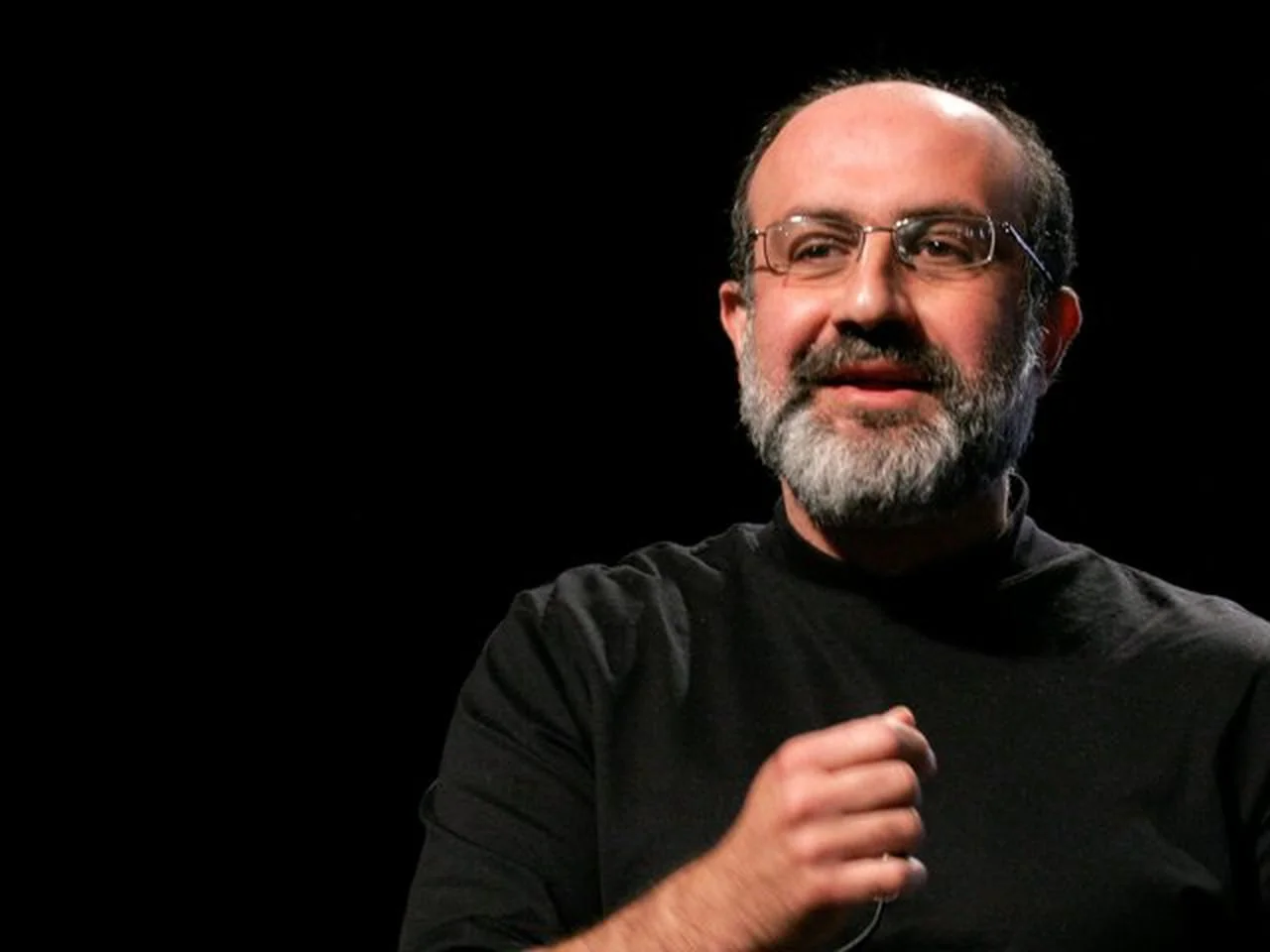
If I had to relive my life I would be even more stubborn and uncompromising than I have been

I stumbled across this commencement speech by Nicholas Nassim Taleb at the American University of Beirut a little while ago. Just a little over 17 minutes, do watch it. Some parts of the speech that struck a deep chord with me are transcribed below. 

"......I have a single definition of success: you look in the mirror every evening, and wonder if you disappoint the person you were at 18, right before the age when people start getting corrupted by life. Let him or her be the only judge; not your reputation, not your wealth, not your standing in the community, not the decorations on your lapel. If you do not feel ashamed, you are successful. All other definitions of success are modern constructions; fragile modern constructions."

"Success requires absence of fragility. I’ve seen billionaires terrified of journalists, wealthy people who felt crushed because their brother-in-law got very rich, academics with Nobel who were scared of comments on the web. The higher you go, the worse the fall. For almost all people I’ve met, external success came with increased fragility and a heightened state of insecurity. The worst are those "former something" types with 4 page CVs who, after leaving office, and addicted to the attention of servile bureaucrats, find themselves discarded: as if you went home one evening to discover that someone suddenly emptied your house of all its furniture."

"But self-respect is robust -- that’s the approach of the Stoic school, which incidentally was a Phoenician movement. (If someone wonders who are the Stoics I’d say Buddhists with an attitude problem, imagine someone both very Lebanese and Buddhist). I’ve seen robust people in my village Amioun who were proud of being local citizens involved in their tribe; they go to bed proud and wake up happy. Or Russian mathematicians who, during the difficult post-Soviet transition period, were proud of making $200 a month and do work that is appreciated by twenty people and considered that showing one’s decorations, or accepting awards, were a sign of weakness and lack of confidence in one’s contributions. And, believe it or not, some wealthy people are robust. But you just don’t hear about them because they are not socialites, live next door, and drink Arak baladi not Veuve Cliquot."

"If I had to relive my life I would be even more stubborn and uncompromising than I have been."

"One should never do anything without skin in the game. If you give advice, you need to be exposed to losses from it. It is an extension to the silver rule. So I will tell you what tricks I employ."

"Do not read the newspapers, or follow the news in any way or form. To be convinced, try reading last years’ newspaper. It doesn’t mean ignore the news; it means that you go from the events to the news, not the other way around." 

"If something is nonsense, you say it and say it loud. You will be harmed a little but will be antifragile – in the long run people who need to trust you will trust you." 

"When I was still an obscure author, I walked out of a studio Bloomberg Radio during an interview because the interviewer was saying nonsense. Three years later Bloomberg Magazine did a cover story on me. Every economist on the planet hates me."  

"I’ve suffered two smear campaigns, and encour-aged by the most courageous Lebanese ever since Hannibal, Ralph Nader, I took reputational risks by exposing large evil corporations such as Monsanto, and suffered a smear campaign for it. "

"Treat the doorman with a bit more respect than the big boss." 

"If something is boring, avoid it. Save taxes and visits to the mother in law. Why? Because your biology is the best nonsense detector; use it to navigate your life." 

"There are a lot of such rules in my books, so for now let me finish with a maxim. The following are no-nos"

  • Muscles without strength
  • Friendship without trust
  • Opinion without risk
  • Change without aesthetics
  • Age without values
  • Food without nourishment
  • Power without fairness
  • Facts without rigor
  • Degrees without erudition
  • Militarism without fortitude
  • Progress without civilization
  • Complication without depth
  • Fluency without content
  • And, most of all, religion without tolerance.

This is water


There are these two young fish swimming along, and they happen to meet an older fish swimming the other way, who nods at them and says, "Morning, boys, how's the water?" And the two young fish swim on for a bit, and then eventually one of them looks over at the other and goes, "What the hell is water?"

If at this moment you're worried that I plan to present myself here as the wise old fish explaining what water is to you younger fish, please don't be. I am not the wise old fish. The immediate point of the fish story is that the most obvious, ubiquitous, important realities are often the ones that are the hardest to see and talk about. Stated as an English sentence, of course, this is just a banal platitude-but the fact is that, in the day-to-day trenches of adult existence, banal platitudes can have life-or-death importance. That may sound like hyperbole, or abstract nonsense. So let's get concrete...

A huge percentage of the stuff that I tend to be automatically certain of is, it turns out, totally wrong and deluded. Here's one example of the utter wrongness of something I tend to be automatically sure of: Everything in my own immediate experience supports my deep belief that I am the absolute center of the universe, the realest, most vivid and important person in existence. We rarely talk about this sort of natural, basic self centeredness, because it's so socially repulsive, but it's pretty much the same for all of us, deep down. It is our default-setting, hard-wired into our boards at birth. Think about it: There is no experience you've had that you were not at the absolute center of. The world as you experience it is right there in front of you, or behind you, to the left or right of you, on your TV, or your monitor, or whatever. Other people's thoughts and feelings have to be communicated to you somehow, but your own are so immediate, urgent, real-you get the idea. But please don't worry that I'm getting ready to preach to you about compassion or other-directedness or the so-called "virtues." This is not a matter of virtue-it's a matter of my choosing to do the work of somehow altering or getting free of my natural, hard-wired default-setting, which is to be deeply and literally self-centered, and to see and interpret everything through this lens of self.

By way of example, let's say it's an average day, and you get up in the morning, go to your challenging job, and you work hard for nine or ten hours, and at the end of the day you're tired, and you're stressed out, and all you want is to go home and have a good supper and maybe unwind for a couple of hours and then hit the rack early because you have to get up the next day and do it all again. But then you remember there's no food at home-you haven't had time to shop this week, because of your challenging job-and so now after work you have to get in your car and drive to the supermarket. It's the end of the workday, and the traffic's very bad, so getting to the store takes way longer than it should, and when you finally get there the supermarket is very crowded, because of course it's the time of day when all the other people with jobs also try to squeeze in some grocery shopping, and the store's hideously, fluorescently lit, and infused with soul-killing Muzak or corporate pop, and it's pretty much the last place you want to be, but you can't just get in and quickly out. You have to wander all over the huge, overlit store's crowded aisles to find the stuff you want, and you have to maneuver your junky cart through all these other tired, hurried people with carts, and of course there are also the glacially slow old people and the spacey people and the ADHD kids who all block the aisle and you have to grit your teeth and try to be polite as you ask them to let you by, and eventually, finally, you get all your supper supplies, except now it turns out there aren't enough checkout lanes open even though it's the end-of-the-day rush, so the checkout line is incredibly long, which is stupid and infuriating, but you can't take your fury out on the frantic lady working the register.

Anyway, you finally get to the checkout line's front, and pay for your food, and wait to get your check or card authenticated by a machine, and then get told to "Have a nice day" in a voice that is the absolute voice of death, and then you have to take your creepy flimsy plastic bags of groceries in your cart through the crowded, bumpy, littery parking lot, and try to load the bags in your car in such a way that everything doesn't fall out of the bags and roll around in the trunk on the way home, and then you have to drive all the way home through slow, heavy, SUV- intensive rush-hour traffic, et cetera, et cetera.

The point is that petty, frustrating crap like this is exactly where the work of choosing comes in. Because the traffic jams and crowded aisles and long checkout lines give me time to think, and if I don't make a conscious decision about how to think and what to pay attention to, I'm going to be pissed and miserable every time I have to foodshop, because my natural default-setting is the certainty that situations like this are really all about me, about my hungriness and my fatigue and my desire to just get home, and it's going to seem, for all the world, like everybody else is just in my way, and who are all these people in my way? And look at how repulsive most of them are and how stupid and cow-like and dead-eyed and nonhuman they seem here in the checkout line, or at how annoying and rude it is that people are talking loudly on cell phones in the middle of the line, and look at how deeply unfair this is: I've worked really hard all day and I'm starved and tired and I can't even get home to eat and unwind because of all these stupid goddamn people.

Or, of course, if I'm in a more socially conscious form of my default-setting, I can spend time in the end-of-theday traffic jam being angry and disgusted at all the huge, stupid, lane-blocking SUVs and Hummers and V-12 pickup trucks burning their wasteful, selfish, forty-gallon tanks of gas, and I can dwell on the fact that the patriotic or religious bumper stickers always seem to be on the biggest, most disgustingly selfish vehicles driven by the ugliest, most inconsiderate and aggressive drivers, who are usually talking on cell phones as they cut people off in order to get just twenty stupid feet ahead in a traffic jam, and I can think about how our children's children will despise us for wasting all the future's fuel and probably screwing up the climate, and how spoiled and stupid and disgusting we all are, and how it all just sucks, and so on and so forth...

Look, if I choose to think this way, fine, lots of us do-except that thinking this way tends to be so easy and automatic it doesn't have to be a choice. Thinking this way is my natural default-setting. It's the automatic, unconscious way that I experience the boring, frustrating, crowded parts of adult life when I'm operating on the automatic, unconscious belief that I am the center of the world and that my immediate needs and feelings are what should determine the world's priorities. The thing is that there are obviously different ways to think about these kinds of situations. In this traffic, all these vehicles stuck and idling in my way: It's not impossible that some of these people in SUVs have been in horrible auto accidents in the past and now find driving so traumatic that their therapist has all but ordered them to get a huge, heavy SUV so they can feel safe enough to drive; or that the Hummer that just cut me off is maybe being driven by a father whose little child is hurt or sick in the seat next to him, and he's trying to rush to the hospital, and he's in a way bigger, more legitimate hurry than I am-it is actually I who am in his way. And so on.

Again, please don't think that I'm giving you moral advice, or that I'm saying you're "supposed to" think this way, or that anyone expects you to just automatically do it, because it's hard, it takes will and mental effort, and if you're like me, some days you won't be able to do it, or you just flat-out won't want to. But most days, if you're aware enough to give yourself a choice, you can choose to look differently at this fat, dead-eyed, over-made-lady who just screamed at her little child in the checkout line-maybe she's not usually like this; maybe she's been up three straight nights holding the hand of her husband who's dying of bone cancer, or maybe this very lady is the low-wage clerk at the Motor Vehicles Department who just yesterday helped your spouse resolve a nightmarish red-tape problem through some small act of bureaucratic kindness. Of course, none of this is likely, but it's also not impossible-it just depends on what you want to consider. If you're automatically sure that you know what reality is and who and what is really important-if you want to operate on your default-setting-then you, like me, will not consider possibilities that aren't pointless and annoying. But if you've really learned how to think, how to pay attention, then you will know you have other options. It will actually be within your power to experience a crowded, loud, slow, consumer hell-type situation as not only meaningful but sacred, on fire with the same force that lit the stars-compassion, love, the sub-surface unity of all things. Not that that mystical stuff's necessarily true: The only thing that's capital-T True is that you get to decide how you're going to try to see it. You get to consciously decide what has meaning and what doesn't. You get to decide what to worship...

Because here's something else that's true. In the day-to-day trenches of adult life, there is actually no such thing as atheism. There is no such thing as not worshipping. Everybody worships. The only choice we get is what to worship. And an outstanding reason for choosing some sort of God or spiritual-type thing to worship-be it J.C. or Allah, be it Yahweh or the Wiccan mother-goddess or the Four Noble Truths or some infrangible set of ethical principles-is that pretty much anything else you worship will eat you alive. If you worship money and things-if they are where you tap real meaning in life-then you will never have enough. Never feel you have enough. It's the truth. Worship your own body and beauty and sexual allure and you will always feel ugly, and when time and age start showing, you will die a million deaths before they finally plant you. On one level, we all know this stuff already-it's been codified as myths, proverbs, clichés, bromides, epigrams, parables: the skeleton of every great story. The trick is keeping the truth up-front in daily consciousness. Worship power-you will feel weak and afraid, and you will need ever more power over others to keep the fear at bay. Worship your intellect, being seen as smart-you will end up feeling stupid, a fraud, always on the verge of being found out. And so on.

Look, the insidious thing about these forms of worship is not that they're evil or sinful; it is that they are unconscious. They are default-settings. They're the kind of worship you just gradually slip into, day after day, getting more and more selective about what you see and how you measure value without ever being fully aware that that's what you're doing. And the world will not discourage you from operating on your default-settings, because the world of men and money and power hums along quite nicely on the fuel of fear and contempt and frustration and craving and the worship of self. Our own present culture has harnessed these forces in ways that have yielded extraordinary wealth and comfort and personal freedom. The freedom to be lords of our own tiny skull-sized kingdoms, alone at the center of all creation. This kind of freedom has much to recommend it. But of course there are all different kinds of freedom, and the kind that is most precious you will not hear much talked about in the great outside world of winning and achieving and displaying. The really important kind of freedom involves attention, and awareness, and discipline, and effort, and being able truly to care about other people and to sacrifice for them, over and over, in myriad petty little unsexy ways, every day. That is real freedom. The alternative is unconsciousness, the default-setting, the "rat race"-the constant gnawing sense of having had and lost some infinite thing.

I know that this stuff probably doesn't sound fun and breezy or grandly inspirational. What it is, so far as I can see, is the truth with a whole lot of rhetorical bullshit pared away. Obviously, you can think of it whatever you wish. But please don't dismiss it as some finger-wagging Dr. Laura sermon. None of this is about morality, or religion, or dogma, or big fancy questions of life after death. The capital-T Truth is about life before death. It is about making it to thirty, or maybe fifty, without wanting to shoot yourself in the head. It is about simple awareness-awareness of what is so real and essential, so hidden in plain sight all around us, that we have to keep reminding ourselves, over and over: "This is water, this is water."

Read More