• About
  • Body Hacks
  • Blog
  • my book
  • Connect
  • Menu

charles assisi

  • About
  • Body Hacks
  • Blog
  • my book
  • Connect
Image under Creative Commons by anokarina on Flickr

Image under Creative Commons by anokarina on Flickr

The Art Instinct

April 18, 2021

“You were right. I didn’t know what had hit me,” the teenaged daughter mumbled as she opened her eyes way past noon on a Sunday afternoon. I’d been waiting for her to wake up and pass verdict on South of the Border, West of the Sun by Haruki Murakami. I had bet in my head that it would be impossible for her to stop reading once she got started. This was a path I had trod more than 25 years ago and one I was intimately familiar with.

After recommending Night, an account of the holocaust by holocaust survivor Elie Wiesel, I thought she could do with a morally ambiguous love story. Night had been a gut punch for both of us, when we first read it decades apart. I recall feeling numb for days after reading it as a teen.

The book recommendations aren’t an attempt to wean the daughter off her streaming platforms. Nor am I trying to add misery to her already tough life in these strange times. Instead, I am hoping that experiencing these works of literature, among other things, will eventually teach her to question conventional wisdom.

It all began when I stumbled upon a copy of Crime and Punishment by Fyodor Dostoevsky on her bedside table. This copy dated back to my younger days. Whatever could have compelled her to give up binge-watching to invest her time in this, I wondered. “My friend said it’s an amazing book,” she said.

“But what do you think of it?” I countered.

Some hemming, hawing and a pregnant pause later, she admitted that she thought Crime and Punishment terribly boring and impossible to comprehend. We both laughed. I confessed that I had attempted to read it when I was about her age, because a friend had told me the book was a classic. I hadn’t been able to get through it either, but I’d been embarrassed to admit that then. A few attempts to plough through later, I gave up.

Now, critics have it that Crime and Punishment is among the greatest accomplishments in literary history. I’m sure there’s merit to what they say. But like the famed biologist EO Wilson, I’ve come to believe the time invested in the arts must serve a purpose — entertain, inform, transport. When I was as old as my daughter is now, it was writers such as Wiesel, Murakami, the evolutionary theories of Jared Diamond, the intellectual ferocity of Richard Dawkins and the sobriety of J Krishnamurti that engaged, challenged and transformed me most.

Perhaps the times have changed, or perhaps it was always so — that some are better served by looking back while others examine what is now and still others look to the future with wild surmises and extravagant hopes. If it weren’t so, there would be just one genre of literature, and music, and film.

Some are transported by Hariprasad Chaurasia’s flute, others by the compositions of Vivaldi, still others by the poetry of Bob Dylan. I discussed this with my daughter. She nodded her head. I’m unsure if it was in agreement or in silent exasperation that her father should still hold on to the ’70s. Eventually though, she must learn to discard convention and be true to herself. Because there is a difference between trying to challenge and elevate oneself, and just following the herd. Art is not enriching if it does not resonate. If the only reason one sticks with a book or stands before a painting is because popular opinion demands it, well, one might as well spend that time listening to the tunes of Taylor Swift.

First published in Hindustan Times on Sunday. All copyrights vest with HT Media
Comment
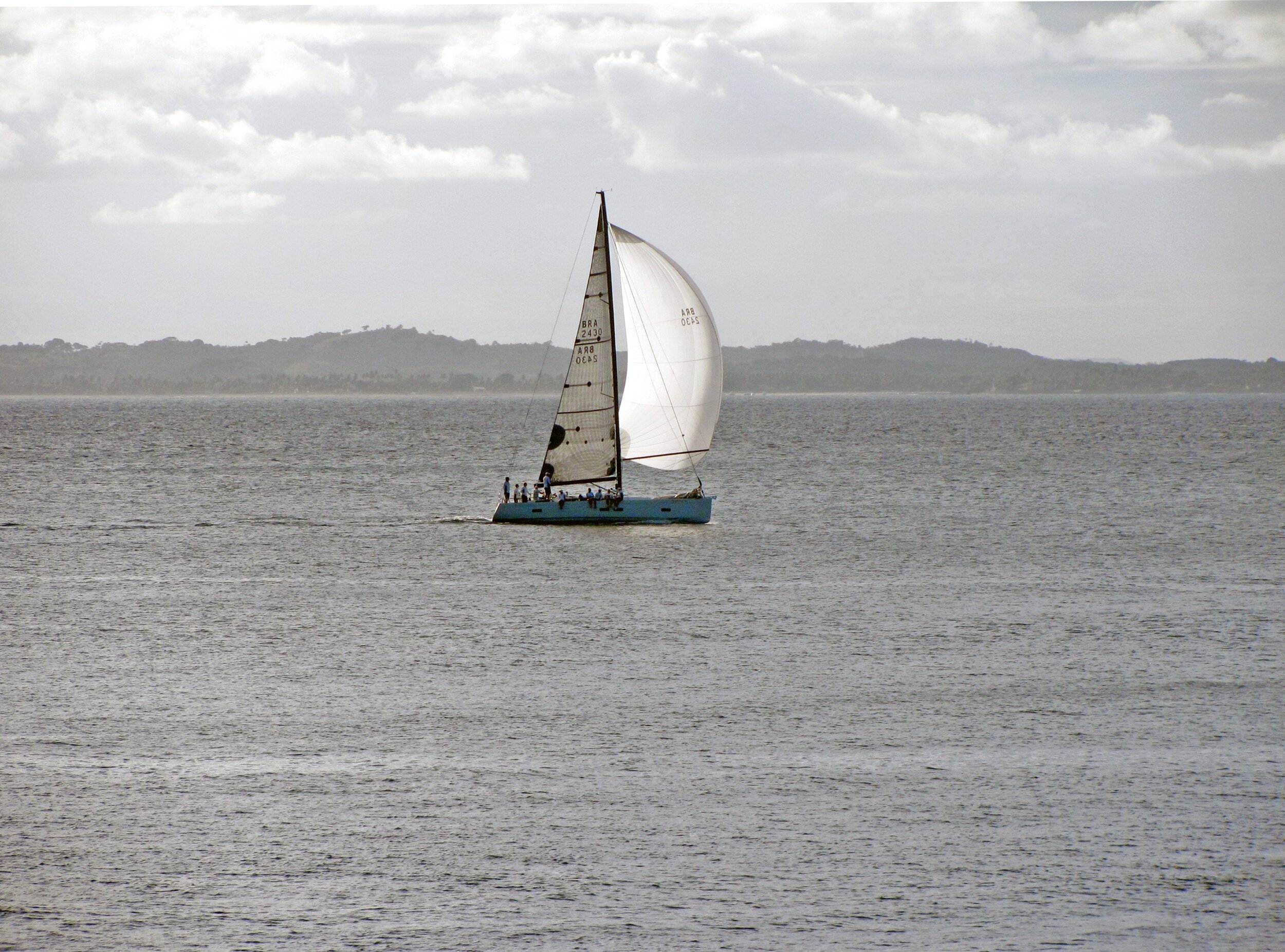
sea-boat-wind-vehicle-mast-sailing-905539-pxhere.com.jpg

Navigating the 40s

April 06, 2021 in Hindustan Times, Living

That I don’t fit the definition of a young man any longer hit home last week, when an innocuous tweet attracted vicious trolls and the invective hurled at me included descriptions that addressed me as Uncle. Sometimes, when you’re called Uncle in India, the line that separates respect from derision can be a thin one.

To place that in perspective, I have become used to friends of my kids addressing me as Uncle; I have nephews and nieces; random people such as harried delivery boys looking for directions in the neighbourhood address me as Uncle too. It is an honorific I use liberally as well. Every parent of a friend is addressed respectfully as Uncle or Aunty. For that matter, anybody who looks old enough and is unrelated must be addressed like this in the Indian scheme of things. That’s how everyone I know was raised — me included.

But this time, as the trolls deployed Uncle against me, their sense of derision sunk in. Because, much like them, I have used the term to signal to strangers that they are old and over the hill. “Nikal na, Uncle!” (Get lost, Uncle!) delivered at the right moment and in the right intonation in Hindi, can be devastating.

But just how did the trolls on Twitter conclude that I am an Uncle? All they could see on my profile was a thumbnail-sized image. It was time to examine myself more closely in the mirror.

t showed a man with a receding hairline who works hard to stay in shape. From being a night owl who could work 15 hours on a trot and then party all night, he has morphed into a teetotaler because he can’t handle the hangovers. And once a while, when he tells the missus he plans to meet up with the “boys”, she smirks. I think I now know why. When he gets back from meeting these buddies from his school days, all the stories he shares are rehashed ones, about pranks played on teachers, first crushes, the early years of struggle, and so on and so forth.

But the mirror insisted I think about the other updates conveniently tucked away in corners of my mind. These include narratives around lifestyle diseases such as hypertension and diabetes, bad marriages and messages of shock still exchanged about a friend’s sudden demise. When you think about it, these meet-ups and the sharing of these stories are actually meant to compel people such as me to acknowledge the passage of time, and to admit that I am a mortal creature in his mid-40s

But I don’t. Why? I suspect this is where the issue lies. Navigating the 40s isn’t easy. I’m not young. But I’m not old either. I’m abandoned. I have finally grown up.

My kids need me and my parents need me. I am in charge and supposed to have all the answers. This is scary. How am I supposed to have all the answers? When did I grow up? But grow up I did.

I am not as brash as I used to be in my 20s or 30s. Nor have I descended into the cantankerousness of many in the generation that raised me and my wife. In her 2018 book, There Are No Grown-Ups, Pamela Druckerman points out that all research has it that in our 40s we digest information more slowly than younger people do and are “worse at remembering facts”.

Having said that, she points to the upsides. “What we lack in processing power we make up for in maturity, insight and experience. We’re better than younger people at grasping the essence of situations, controlling our emotions and resolving conflicts. We’re more skilled at managing money and explaining why things happen. We’re more considerate than younger people. And, crucially for our happiness, we’re less neurotic.”

I couldn’t agree more. That also explains why I didn’t take the bait and put up a spirited fight against the trolls. I may have done that in an earlier avatar. This avatar had other things to do on a Valentine’s Day — such as live better and love better.

This piece was originally published in Hindustan Times on Sunday. All copyrights vest with HT Media.

Tags: LifeHacks, Living, Hindustan Times, India, Life
Comment
Picture under CCO from Pixy.org

Picture under CCO from Pixy.org

Ernest Hemmingway: 1954 Nobel Acceptance Speech

February 10, 2021 in Writing

Having no facility for speech-making and no command of oratory nor any domination of rhetoric, I wish to thank the administrators of the generosity of Alfred Nobel for this Prize.

No writer who knows the great writers who did not receive the Prize can accept it other than with humility. There is no need to list these writers. Everyone here may make his own list according to his knowledge and his conscience.

It would be impossible for me to ask the Ambassador of my country to read a speech in which a writer said all of the things which are in his heart. Things may not be immediately discernible in what a man writes, and in this sometimes he is fortunate; but eventually they are quite clear and by these and the degree of alchemy that he possesses he will endure or be forgotten.

Writing, at its best, is a lonely life. Organizations for writers palliate the writer’s loneliness but I doubt if they improve his writing. He grows in public stature as he sheds his loneliness and often his work deteriorates. For he does his work alone and if he is a good enough writer he must face eternity, or the lack of it, each day.

For a true writer each book should be a new beginning where he tries again for something that is beyond attainment. He should always try for something that has never been done or that others have tried and failed. Then sometimes, with great luck, he will succeed.

How simple the writing of literature would be if it were only necessary to write in another way what has been well written. It is because we have had such great writers in the past that a writer is driven far out past where he can go, out to where no one can help him.

I have spoken too long for a writer. A writer should write what he has to say and not speak it. Again I thank you.

Tags: Writing
Comment
wall graffiti.jpg

I dwell in possibilities

December 31, 2020

Calendars were designed for two reasons: To mark the passage of time, and to remind us to carve out time for self-reflection. As the Danish philosopher Søren Kierkegaard wrote in his journal, “Life can only be understood backwards; but it must be lived forwards.”

I remember being glad at the way my year started. Tuning out the sounds of debauchery, I woke up to the crisp morning air of January 1, 2020. In the adrenaline rush that followed my run, a voice in my head said, “This will be one of the best years of your life.”

The future will arbitrate that.

But even with everything I know now, I know that there is much to be grateful for. And much to regret.

My gratefulness didn’t translate into action, even as images of desperation were beamed into my living room amid the pandemic. I expressed my outrage over devices on all platforms. In hindsight, my outrage reflected my privilege — the privilege of the keyboard warrior. It is another thing altogether to effect change.

How is one to effect change? I remember asking that question of Arun Maira, former chairman of Boston Consulting Group (India) and former member of the Planning Commission. He gently suggested that I begin by listening to voices unlike mine. It took a while for the import of his advice to sink in. My instinct on hearing narratives that are ideologically opposed to my own is to lash out. When I’ve made the attempt to listen, however, I have been granted access to a perspective that I may otherwise not have encountered.

By way of example, there’s an old gentleman whom I chose to stay away from for a long time because I thought him a bigot. Some chance encounters led us on long walks and over time his narrative tumbled out. Born during colonial rule, Partition tore his family apart and compelled him to move to Bombay from Lahore, a city his heart continues to beat for. The animosity he bears to citizens there is an outcome of the scars his body acquired on the journey here.

It was easy to argue with him. Listening to him in silence was difficult. It is an acquired skill.

That I have the mental muscle to implement change is also obvious now. If someone had told me at the start of the year that I would have to work at the pace I now do, barely stepping out of the home yet finding ways to stay engaged with people and on top of things, I would have laughed them out of the room.

And yet I have managed, as have most others. And working from home has taught us to empathise with those in our homes and our lives that we had lost touch with in our race to get from place to place to place.

In the early days, one of the first things I did was quibble about how demotivating it was not to have access to my workplace and privacy. Until I looked at the kids. How traumatic must it be for them to not be at school and on the playgrounds with their friends, I thought. These are the most impressionable years of their lives. If I’d been asked to give up a whole year at school, I would have keeled over in horror. Each year there was precious. But these kids were compelled, and they rose to the challenge.

I next looked at those in my life a generation older. In the busy-ness of life, I hadn’t noticed — or perhaps hadn’t wanted to acknowledge — how much older and more fragile they had become. That was when the full import of the American writer Philip Roth’s words sunk in: “Old age isn’t a battle. Old age is a massacre.”

In each generation — mine, my parents’ and my children’s — I saw reflections of how wonderfully adaptive and resilient we as a species are.

Our minds and our lives had been scaffolded by rules and routine and yet when, overnight, we were forced to reimagine our world — individually and collectively — we did. Forced to wake up daily to the unpredictability and arbitrariness of a pandemic, we found ways to cope. And deep down, we discovered reserves of equanimity. “This too shall pass” is now an article of faith.

So as 2020 draws to a close, I prefer to dwell on how much we have to be grateful for, and hopeful about. Dwell on ways in which we can reach out to one another more effectively to extend help and hope.

This article was first published in Hindustan Times

Tags: LifeHacks, Hindustan Times
Comment
Steve Jobs by waldrayno on Pixabay

Steve Jobs by waldrayno on Pixabay

Follow your passion, is rubbish advice

November 16, 2020 in Hindustan Times, Living, Writing

My elder daughter is now a teen and considering her career options. The two of us are at loggerheads. Everyone around her tells her she must “follow her passion”.

I think that’s rubbish advice.

But to inspire her, there’s a cottage industry that thrives off recycling posters of Steve Jobs with “Follow Your Passion” plastered on them. All narratives have it that this is what Steve Jobs told students at Stanford in 2005. The 23,000 people in attendance gave him a standing ovation when he was done talking. The commencement speech went viral and I remember feeling goosebumps when I first saw the video.

How am I to argue against Steve Jobs? Even my kid won’t take me seriously.

May I submit then that the real import of his advice was lost on most people? His official biographer Walter Isaacson pointed out to the irony of it all in a conversation with the writer Cal Newport. Isaacson spent hundreds of hours with Jobs, including during the last year of his life, in 2011.

To cut a long story short, as a young man, Jobs was passionate about the liberal arts, and design. That is why he took courses on these themes when in college. He was passionate about travel and spirituality. That led him to goof off for a while as a backpacker in India.

Very soon though, it became clear to him that if he continued doing only what excited him, he would go nowhere. To get somewhere, he needed to find a purpose. In attempting to explain that to Isaacson, Jobs said, “The important point is to not just follow your passion but something larger than yourself.”

Once this was clear to Jobs, he went back to technology and computing — both of which contained elements of drudgery that he hated. In fact, before his brief stint of doing only what he loved, Jobs had already been fired from a technology start-up for lack of motivation.

But once he had figured out that personal computers could change the world, he wanted to be part of that transformation. That became his purpose. “It ain’t just about you and your damn passion,” Jobs would tell Isaacson years later. After Jobs found his purpose, he poured all of his passion into it. That makes sense.

When I think about it, I am passionate about the biosciences because that is what some very fine teachers at college initiated me into. I am beginning to get passionate about running. I am passionate about writing and would go batty if I couldn’t write.

But here’s the thing. Writing is the only one of those passions that I am willing to invest effort in. It’s one thing to be passionate about the biosciences; I could never actually do the time in the labs. It felt like drudgery. In the same vein, while I enjoy running, I don’t think I will ever run as effortlessly as friends who have dedicated years to the discipline.

In much the same way, every other person I meet claims they are passionate about writing and wants to write a book. I know they won’t. I’ve been writing for over 20 years. And I know the drudgery involved in writing a book. I do it because I find purpose in writing.

Passion is fleeting. Purpose takes time to discover, and even more time to build on. How am I to tell my daughter that? “Don’t just follow your passion.” Maybe it’ll work if I quote Jobs right.

This article was originally published by in the print edition of Hindustan Times on November 15, 2020.

Tags: Steve Jobs, Cal Newport, Hindustan Times, LifeHacks
Comment

At the Death Bed, Edvard Munch, Edvard Munch Museum, Oslo, Norway (Used under Creative Commons)

The moral case for a finite life

October 24, 2020 in Living, Hindustan Times

Four years after he died, dad’s grave was exhumed yesterday. His remains were placed in a niche and I wrote him an epitaph: “A gentle man who lived well and loved much rests here.”

A little over five years ago, the doctors asked my brother and me to decide if we wanted to continue with the life-support systems they had placed dad on. If unplugged, we were told, he might succumb away to the stroke that had felled him. If plugged in, he’d survive. But for how long and in what shape, they couldn’t tell. We desperately wanted him to live.

And so, in the toughest decision that either of us have taken yet in our lives, we asked that he be unplugged. Surprisingly, dad survived. Unfortunately, as a vegetable. Until, he died four years ago. If he were kept on life support, he might still have been around today. Who knows how else he may have surprised us?

Which is why, every once a while, some questions play themselves out in the back of my mind. 

  • Why did you pull the plug on him then?

  • Morally, what that the right thing to do?

  • Would you have pulled the plug on yourself?

The first question could be answered on the basis of the data points we were staring at then. Compounded by the family’s genetic history, which indicated a predisposition to strokes, his chances looked bleak to begin with. That he remained bedridden for over a year before dying was his misfortune — a random event.

On the morality of pulling the plug on him, the only way I can answer that one is by imagining my future narrative. Personally, I am deeply influenced by Ezekiel Emanuel, an American oncologist, bioethicist and writer. “…here is a simple truth that many of us seem to resist: living too long is also a loss,” he argued in an article titled ‘Why I hope to die at 75’, published in The Atlantic magazine in 2014. It’s a line that has stayed with me.

Perspective is needed here. Medicine has advanced significantly to increase our longevity. But what about our productivity, creativity, or ability to deal with disease past a certain age?

Data compiled by the Technical University of Denmark has it that scientists do all the “ground-breaking” work that earns them a Nobel Prize in their mid-40s. But they must wait 20 years or so for the Nobel. Emanuel goes on to submit that this phenomenon is true across other domains such as literature and music too. This is not to suggest older people do not do well. They do. But the fact is, our cognitive abilities decline as we age. And while stories exist of people who defy these narratives, they are the outliers. I am most likely not.

This is why I remind my wife often (and my older daughter too, now) that once I turn 65, if a major illness should strike me, I am not to be put on life support. Instead, my organs must be harvested so they can be transplanted into someone younger who needs a shot at life. Whatever else remains of the cadaver must be given to research because the only altar I worship at is that of science. 

Why 65? Because all data points I now have suggest I will be past my peak then. And that any exercise I engage in to extend longevity will drain their resources and cramp my life. I don’t like the sound of that. 

Dad would have hated it if he couldn’t step out with friends to have chai, sing songs to serenade mum every once a while, pay his own bills. That settles the question on the morality of pulling the plug on dad.

Tags: Hindustan Times, LifeHacks
Comment
Prev / Next

about me

I am a co-founder at Founding Fuel, a media and learning platform and co-author of The Aadhaar Effect: Why The World’s Largest Identity Project Matters.

The Polestar Award and Madhu Valluri Awards back my work up.

I am a columnist at Hindustan Times as well. My bylines have appeared at places such as Shaastra from IIT Madras and peer-reviewed journals like ACM that computing professionals look up to.

In earlier assignments, I worked as Managing Editor to set up the India edition of Forbes and as National Business Editor at Times of India.

Then there are my ‘teach- writing’ gigs which is much fun. Doing that with undergrads at St Xaviers College, Mumbai that is one bucket which offers much joy. And then there’s coaching thought leaders in the C-Suite that’s another bucket and is an altogether different ball game. It’s both challenging and sobering.

If you’ve wrapped your head around the idea that writing is a lifeskill, connect with me.


The archives

Featured
Jul 7, 2025
When the Pen Slipped from My Hand
Jul 7, 2025
Jul 7, 2025
Dec 7, 2024
Intel Outside
Dec 7, 2024
Dec 7, 2024
Nov 29, 2024
The Kiss
Nov 29, 2024
Nov 29, 2024
Sep 1, 2024
The Happiness Equation
Sep 1, 2024
Sep 1, 2024
Aug 3, 2024
AI images and the 'Diversity Error'
Aug 3, 2024
Aug 3, 2024
Jul 29, 2024
The Fighter Still Remains
Jul 29, 2024
Jul 29, 2024
Jul 28, 2024
The Great Indian Telco Pivot
Jul 28, 2024
Jul 28, 2024
Jul 23, 2024
Why I write
Jul 23, 2024
Jul 23, 2024
Jul 21, 2024
That Teen Spirit
Jul 21, 2024
Jul 21, 2024
Jul 20, 2024
The Trump Card
Jul 20, 2024
Jul 20, 2024