
This guy Santosh Pandit is bloody hilarious. Watch the video and you'll know why. My saying anything is pointless.
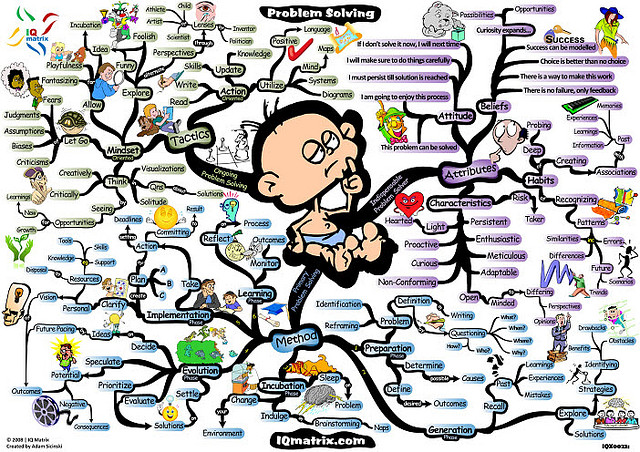
You are the problem
At the end of the day, fried chicken doesn’t jump out of buckets on its own to choke our arteries. That is why, as resolutions go, this is as good a time as any to make one—that in our long-term interests, we will consume information deliberately, much like we choose to consume healthy food.
To do that though, let’s begin at the beginning and admit that the problem doesn’t lie with information arbitrators like journalists. It lies with you. But if popular public discourse on social media is anything to go by, media houses are brothels where journalists barter self-interest at the altar of public interest. That is why everybody now turns to pulpits from which the truth apparently emerges—like next generation digital media outfits that include Google, Facebook andTwitter.
But fact is, our minds have become corpulent, obese and lazy. Sifting facts from coloured opinion has become difficult. If you think this a sour journalistic rant, consider some numbers from www.payscale.com—a website that compiles global statistics on salaries and current jobs on offer.
- The median annual salary of an Indian journalist working in the news genre is a little below 3 lakh. To earn this money, the bloke has to pound the streets, shamelessly tap all of his sources, and convince the editor why his story ought to be carried in the newspaper or magazine he works for.
- As against this, his counterpart who has spent a similar number of years in the public relations (PR) business earns an annual median salary of 20 lakh. His job is to convince the journalist why the views of a client he represents are pertinent ones. To do that, he earns a multiple of six times the average journalist. Clearly, his incentives are higher and the resources at his disposal superior.
- Incidentally, an editor, the journalist’s boss, with at least 20 years of experience behind him, earns an annual median salary of 10 lakh—half that of a PR professional with considerably fewer years of experience behind him.
The disparity can be understood when viewed at from a publisher’s perspective. To fill the pages of a daily newspaper or magazine, they have to deploy a few hundred, if not thousands of people across various levels. Because the economics of publishing in India is a perverted one, publishers have to price their titles below what it costs to produce them. To make up the deficit, they are almost entirely dependent on fickle advertising revenues. This translates into a reluctance to pay journalists competitive salaries. In the face of such disparities, it doesn’t take rocket science to figure who has the upper hand.
Now, much has been written about how the economics of the news business is changing dramatically with the emergence of the Internet. So much so, the arguments sound clichéd—that news is now easier to distribute, paper is being eliminated, and traditional printing presses are giving way to cheap server farms with unlimited capacities. As theories go, when the cost of overheads are reduced, profits will be higher and everybody stands to benefit. And eventually, quality content will emerge. But theories are just
that—theories. The truth lies someplace else.
Infatuated by promises of untold wealth, publishers of all kinds swarmed the online content landscape and hoped to write the epitaph for traditional publishers. They haven’t. At least, not yet. But what they have managed to do is to create churnalism, the bastard child of journalism. This term was first used by BBC journalist Waseem Zakir to describe what journalists do when they copy and paste what is dished out to them by PR practitioners, and at best modify it mildly to cover their tracks.
All evidence suggests churnalism is rampant. For instance, at the time of writing this article, the Press Information Bureau (PIB) had put out a release on 29 December 2014, around the Prime Minister approving amendments to the Land Acquisition, Rehabilitation and Resettlement Act. A Google search revealed 244 news outlets, both mainstream and digital, had used it ad verbatim.
If more mundane evidence is needed, consider this. On 25 September, a press release distribution firm called NewsVoir put out a quote by Rana Kapoor, chairman of Yes Bank Ltd, about what he thought of the Prime Minister’s Make in India campaign. Hungry journalists and aggregators latched on to it and 56 news outlets reproduced it faithfully—without having spoken to or authenticated its veracity with Kapoor.
Churnalism doesn’t require journalists or news outlets with feet on the street. What it depends on are content farms of the kind originally pioneered byAOL.com, Clay Johnson writes in his book The Information Diet of a leaked document called The AOL Way. It contains instructions on how the entire content arm of AOL should operate.
“According to this plan,” writes Johnson, “each editor should use four factors to decide what to cover: traffic potential, revenue potential, turn-around time, and at the bottom of the list, editorial quality. All editorial content staff are expected to write 5 to 10 stories per day, each with an average cost of $84, and a gross margin from advertising of 50 percent.”
Content farms of these kinds need people with different skill sets. Because editorial quality is not at a premium, they make do with content writers.Payscale.com data shows Indian content farms pay their writers an annual median of 2 lakh—even lower down the pecking order than journalists.
This is because what content farms need more of are data scientists who can trawl the web to find what is it people are looking for. Information in hand, these researchers know exactly what biases people hold, what content is needed to fortify their biases, and then feed them more of whatever it is they are craving for. Which is why, their average salaries can go as high as 18 lakh—pretty close to that of a PR professional. They have figured that apart from headlines on celebrities and bizarre stories, if content consists of opinions that tilt to the extreme political right or left wings, it gets consumed faster. This is because commentaries that emerge from both these sides are inevitably shrill and panders to perversity. Neutrality be damned.
That is why highly opinionated news anchors, who indulge in, say, Pakistan-bashing or pander to so-called Indian interests, are among the most popular. To that extent, it isn’t the outlet disseminating news that is to be blamed, but the corpulent consumer who doesn’t have the mental muscle to make an informed choice.
The most compelling global example of a corporation that understands this pattern and deploys it effectively is Fox News in the US. Viewers of this channel with decidedly right wing views refuse to believe anything put out by any other outfit. Johnson writes, “Fox News spends 72% of its budget on program expenses (expenses tied to specific programs like host salaries) and 27.8% on administrative expenses (things like newsrooms). CNN, on the other hand, spends 56% of its expenses in the administrative category, and 43.9% on program expenses. CNN has a total staff of 4,000 people working in its studios and 47 bureaus. Fox News has just 1,272 members of its staff in just 17 bureaus.”
“The strategy is simple: it’s cheaper to pay one media personality a two million dollar salary than it is to pay 100 journalists and analysts $40,000 a year. What’s better, people like hearing their beliefs confirmed more than they like hearing the facts.”
In the digital universe, this problem is amplified. Because data can be harvested effectively, most of us live in a filter bubble dominated by the likes of Facebook, Twitter and Google.
On Facebook, for instance, you have maybe a few hundred friends and subscribe to dozens of groups. But inevitably, the algorithms that power Facebook figure out whose feeds you like the most by computing the number of likes you hit. Inevitably, the numbers of people who populate these feeds stay in the double digit. This ties in neatly with social psychologist Robin Dunbar’s hypothesis—or the Dunbar Number as it is called—that the number of meaningful relationships a human being can have does not exceed 150.
Twitter does something more insidious. A pointer at its Help Centre says: “When we identify a Tweet, an account to follow, or other content that’s popular or relevant, we may add it to your timeline. This means you will sometimes see Tweets from accounts you don’t follow. We select each Tweet using a variety of signals, including how popular it is and how people in your network are interacting with it. Our goal is to make your home timeline even more relevant and interesting.”
And if you take time out to notice the auto complete feature on Google, it almost feels surreal. How in the devil’s name does the search engine know what’s on your mind before you’ve even fed it in? Once again, this is a function of extraordinarily clever data scientists who have harvested enough from your search history to hazard an informed guess on what is it you’re looking for.
Between news sources that feed our biases, the likes we hit on Facebook, Twitter’s algorithms that connect us to people we may be interested in and Google’s auto complete features, there is no room for autonomous choice—unless you proactively seek diversity.
Howard Gardner, an American developmental psychologist at Harvard University, has a simple hypothesis. The world we live in is a ridiculously simple place to find people who agree with you. But there is a downside to that. Because everybody agrees with you, prejudices that exist in your mind are reinforced. It is incumbent on us, therefore, to actively seek people who think and behave differently from how we do.
On a practical note, every once a while, instead of using Google as the search engine of choice, give DuckDuckGo (www.duckduckgo.com) a try. That is because unlike Google, which populates results based on your past searches, Duckduckgo doesn’t require you to log in nor does it keep track of what you searched for. What you get, therefore, are answers most relevant to your query at any given point in time, and free from your own prejudices.
On Twitter, try following people whose views you don’t agree with. And every once a while, try hitting likes on Facebook on updates you may not agree with. Over time, you will find homogeneity giving way to diversity.
Finally, consider paying for quality content. Creating quality requires quality resources. If the content you are paying for is dependent on advertising for sustenance, inevitably, it will have to capitulate in favour of those who hold the purse strings. For that, once again, you have nobody else to blame, but you. Eventually, what you are is what you seek.
This article was originally published in Mint on January 2, 2014. All rights vest with the newspaper & no parts may be reproduced without permission
The Road Not Taken

Two roads diverged in a yellow wood,
And sorry I could not travel both
And be one traveler, long I stood
And looked down one as far as I could
To where it bent in the undergrowth;
Then took the other, as just as fair,
And having perhaps the better claim,
Because it was grassy and wanted wear;
Though as for that the passing there
Had worn them really about the same,
And both that morning equally lay
In leaves no step had trodden black.
Oh, I kept the first for another day!
Yet knowing how way leads on to way,
I doubted if I should ever come back.
I shall be telling this with a sigh
Somewhere ages and ages hence:
Two roads diverged in a wood, and I—
I took the one less traveled by,
And that has made all the difference.
~ Robert Frost
How will you measure your life?
K. Ram Kumar, who sits on the board of directors at ICICI Bank and heads the group’s human resource function, is an interesting man to talk with about pretty much anything. He comes from a school of thought that firmly believes everybody ought to get a kick up their backsides in the 40s. Else, he says, nobody will rethink priorities and ask questions around what you ought to do as opposed to what you are currently doing.
This kick, he points out, should be serious—like getting fired from your job just when you’re close to the top. Or for that matter, getting superseded at work by somebody nowhere as competent as you are. Gut-wrenching as it may be, chances are, when events like these occur, it compels you to ask tough questions.
For instance, if you were doing something you didn’t enjoy and love, why did you do it? Even assuming that was not the case, why did you put in 80-hour work weeks? How do you look your spouse and children in the eye and acknowledge they were ignored because you placed work above all else? Why did you ignore personal growth at the altar of your career?
These are tough questions. “But inevitably people put away asking these until tomorrow,” says Vinayak Chatterjee, chairman at Gurgaon-based Feedback Infrastructure Services. He is one of those rare creatures, who, like Ram Kumar have spent an awful amount of time thinking through to avoid the metaphorical kick on the backside. But most importantly, when it does come and hit in the gut, do you have the personal equity to ride through a storm?
Building equity of this kind can be an incredibly tough ask. The question is when and where do you begin. Chatterjee thinks you ought to start by asking yourself the most basic one: What will make me happy?
The first time, he recalls, asking that question was when he was doing his summer training at Pond’s India. Training done, he took on an offer the company made him. Six months later, he resigned. “I realized selling cosmetics was not my calling.” Some thinking later, he decided the infrastructure business was where he’d be happy. “Rejection was my choice. Acceptance of what gives me joy followed later.”
In first asking this fundamental question, rejecting what he had on hand, and thinking through what would eventually make him happy, Chatterjee acquired a persona—or as he says, “in very loose terms, a personal brand”.
A persona, in his dictionary, is not fame—but the uniqueness every individual possesses and is presented to or perceived by others. It is often substituted for the term personal branding. He isn’t entirely comfortable though with how an individual’s persona and personal branding are used as interchangeable terms. “Because,” he cautions, “the brand is not the target. The target is what you want to do with your life.”
A caveat though—it is not entirely possible to ignore personal branding.Timothy Ferris, best-selling writer and “a shameless self-promoter” as described by critics, writes, “Personal branding is about managing your name—even if you don’t own a business—in a world of misinformation, disinformation, and semi-permanent Googlerecords. Going on a date? Chances are that your ‘blind’ date has googled your name. Going to a job interview? Ditto.”
That is where life coaches like Rajeev Raju comes in. Until very recently, he used to sit on the board of directors at Deutsche Bank and played key strategic roles at the bank’s advisory and analytics functions across various locations. Since then, he has moved on to set up Gravitas Consulting because he finds people interesting above all else. His proposition is that pretty much anything an individual does is because they want to influence outcomes. Therefore, he says, you ought to understand the nature of influence and try to tame the beast.
“At my workshops, when I ask people, why do you go to work everyday, not a single person in the audience tells me I go to work to gain influence,” he says. But, in attempting to discover your persona, it is important to understand “everything you do is about gaining influence”, he says. “Every little thing you do, from getting your child to eat something, your wife to watch a movie with you, or to create something bigger than yourself, you need to influence.”
By way of example, he speaks of Ramakant Achrekar, Sachin Tendulkar’s coach. “He convinced Sachin potential is on his side. Achrekar’s authority and influence came from observing how Sachin plays the game, asking him why did he do what he did, pointing out what he could possibly do, and then leaving Sachin alone to play the balls as it came to him on the field. Achrekar didn’t go out to bat. But his influence is there for all to see.”
But acquiring influence alone as a tool for personal branding is a rather shallow way of looking at things in the long run, argues Chatterjee. The more important thing is reaching to a place where there is no difference between your public and personal selves. Else, dichotomies creep into your persona. And this is where he thinks problems exist if you think of building a personal brand with the explicit intention of impressing the external world.
That is why he talks dismissively of makeover consultants who exist to advise people on what and how they ought to build personal brands.
This includes everything from how an individual appears in public to the kind of noises they make in polite company and obsessing over metrics such as the numbers of followers on Twitter or friends on Facebook to measure influence.
Makeover consultants of such kinds have left one of India’s largest businessmen with interests in diverse sectors across the world frustrated. For all the professional successes, his personal brand—as perceived by a majority of employees and common people—trusted advisors told him wasn’t pretty. They told him he was sniggered at behind his back; and that he ought to engage the services of a global makeover firm to project him in decent light.
After the consultants took over, it was only a matter of time before the man acquired a veneer of sophistication. His ill-fitting suits gave way to well-tailored ones. His accent got polished and the rougher edges he’d acquired in the rough and tumble of business were smoothened to make way for a man who appeared and sounded thoughtful. Public appearances were carefully calibrated and the sceptre of ruthlessness he always carried was passed on to lieutenants to handle. Be that as it may, he continues to be viewed suspiciously. It remains unknown whether the services of his advisory firm have been retained or terminated.
“It doesn’t give me great comfort to hear that,” says Chatterjee. “If I don’t snap at a client, I don’t see any reason why I ought to snap at my wife. I don’t see that as a positive. You exude your natural behavioural pattern. The issue here is, are you putting on an air? Are you trying to put on something you are not? Being your true self is the true test of a brand.”
Such dichotomies, Chatterjee says, exists because people often think of themselves as a product that ought to be branded and marketed well.
Product branding, he explains, is about selling something. And it is often times at variance with what a human actually is. Getting to be an accomplished human being is the outcome of something you do distinctively. It evolves over a lifetime of pursuing what you believe in. “There is no point in building a personal brand consciously. That is too commercial and you have to guard against it. That forced measure of acquiring a brand is not good, because the best brands are built over a lifetime.”
Jeff Bezos, the founder of Amazon.com, summed it all up wisely: Your brand is what people say about you when you are not in the room.
This article was first published in Mint on December 26, 2014. No parts of this article may be reproduced without permission from the publisher
The Hinduism versus Hindutva debate
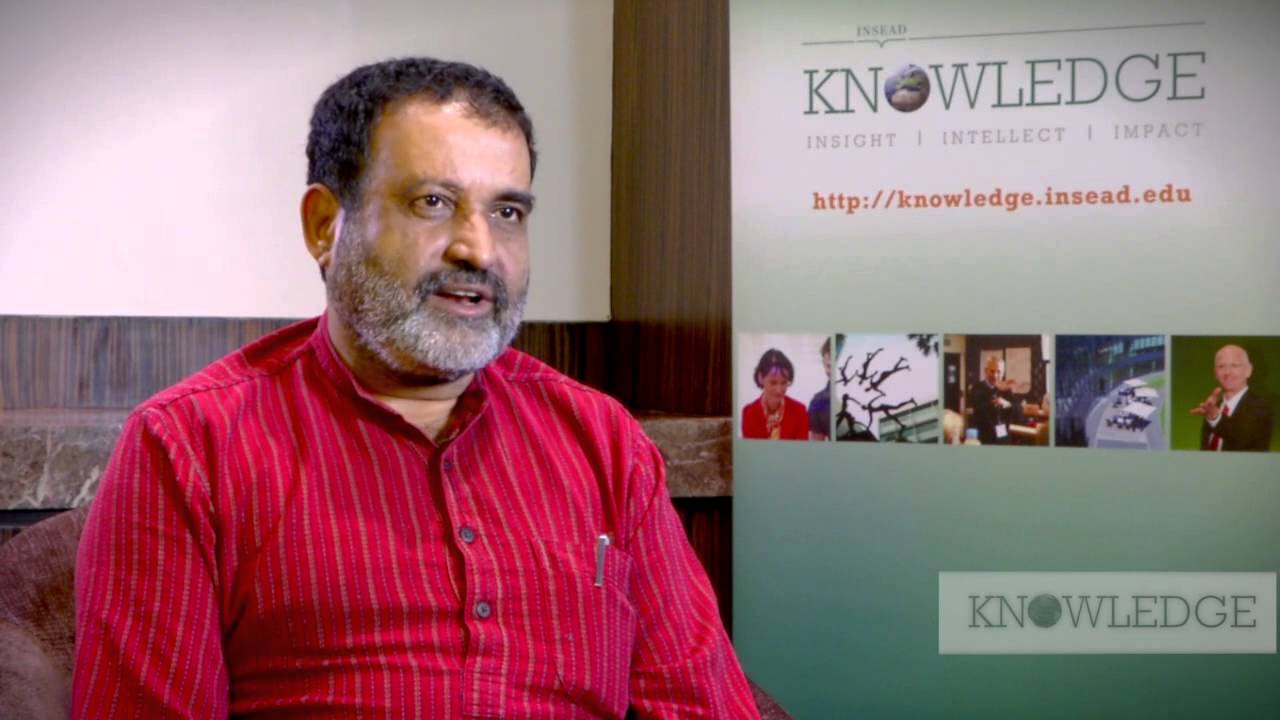
Mohandas Pai
A blog post in Economic Times by TV Mohandas Pai, chairman of Manipal Global and a former board member at Infosys caught my attention. I thought his voice one for the saner ones that has emerged from a vociferous right-wing led by a bunch of loonies and their high decibel campaigns to convert Christians and Muslims back to the Hindu fold--or ghar wapsi as now they call it.
While for most part loony elements across all faiths are best left alone, these are the kind of times that call for introspection. To that extent, Pai is right in criticising evangelical Christian groups that have been on overdrive for a long time in their proselytizing efforts--to convert the pagans if you will. For a long time, I've watched with mild amusement at times, and indignation at others as preachers from both Christianity and Islam attempted to wean non-believers to their faith. And these are very sophisticated operations. As Pai writes in his post.
"There is a very sophisticated operation in place by the evangelical groups, with a clear target for souls, marketing campaigns, mass prayer and fraudulent healing meetings. Evidence is available in plenty on videos on YouTube, social media, press reports, and on the ground. Pastors have been openly tweeting about souls converted, and saving people from idol worshippers. Some pastors have tweeted with glee about converts reaching 60 million, declaring a target of 100 million, and have also requested for financial support for this openly. Violence in some areas due to this has vitiated the atmosphere. The traditional institutions of both denominations are losing out to the new age evangelicals with their sophisticated marketing, money and legion of supporters from the West. One can almost classify these groups as hyper-growth startups – with a cost per acquisition, a roadmap for acquiring followers, a fund-raising machine, and a gamified approach (with rewards and incentives) to “conquering” new markets."
But that said, the rise of "Hindutva" is an uncomfortable one as well. This is because I think of Hindutva as defined by current political rhetoric abhorrent, its perpetrators despicable, and an idea that ought to be rejected outright by practitioners of Hinduism.
Allow me put that into perspective. While I am no authority on the scriptures, like anybody who has cursorily been through the Rig Veda, the oldest of the Vedas, I find the Nasadiya Sukta or “Hymn of Creation”, in the 10th chapter or Mandala both intriguing and inspiring:
“But after all, who knows, and who can say
whence it all came and how creation happened?
the gods themselves are later than creation,
so who knows truly whence it has arisen?
Whence all creation had its origin,
he, whether he fashioned it or whether he did not,
he, who surveys it all from highest heaven,
he knows—or maybe even he doesn’t know
Implicit to these verses is an acknowledgement that it is entirely possible god does not exist. And even if god exists, does this creature completely appreciate and understand all there is to about creation? To my mind, what these verses do is urge the reader to probe deeper, develop a scientific temperament and engage in an intense philosophical inquiry into the nature of our existence.
Then there are parts of Hindu scriptures that come across as retrograde and demand reason be set aside, much like monotheistic religions with claims to divine origins demand. But these are dealt with by the likes of Gandhi, an avowed believer in Hinduism as a religion. “My belief in the Hindu scriptures does not require me to accept every word and every verse as divinely inspired. I decline to be bound by any interpretation, however learned it may be, if it is repugnant to reason or moral sense,” he wrote in the Aspects of Hinduism.
But when placed in contemporary settings, Hinduism, which places a premium on liberty above all else, is under threat. Current political discourses and societal conversations terrify me. Hinduism has been hijacked and Hindutva has taken over.
While the meaning of Hindutva can be debated ad nauseam, it now comes across as an ideology that seeks to establish the hegemony of Hindus and the Hindu way of life. And hegemonies by their very nature insist violence has its way.
If more recent evidence is needed the word Hindutva has indeed been bastardized, consider this. While the word has been around for a while, an nGram search on Google Books reveal when “Hindutva” first gained traction in the mid forties, it culminated in Gandhi’s assassination, stayed in public domain for a while, and then conceded ground to Hinduism. When the word started to raise its head again beginning the mid eighties and overtook Hinduism in the early nineties, it led to the demolition of the Babri Masjid in 1992 and communal riots ensued. The graph has, since then, been on the upswing and India lives under a constant specter of violence.
Ahimsa (non violence) and himsa (violence) have for long co-existed uneasily in Hinduism. Those, who subscribe to deploying violence, like advocates of Hindutva often times do, seek refuge in the Bhagavad Gita and Krishna’s exhortations to a devastated Arjuna that he take up arms in a dharma yuddha—a war fought to defend justice for the security and well being of a community.
A closer examination of Krishna’s discourse though on dharma yuddha reveals it does not sanction violence to seize the assets of another community, or to gain power through conquest and control of others. Battles fought on these turfs, Krishna tells Arjuna, are the primary sources of greed and evil. Equally important, in a dharma yuddha, the opponent is not demonized and there is complete absence of rhetoric that accompanies hatred and contempt.
But Hindutva is very different from the kind of Hinduism Krishna preaches, and the one I, like many Indians have been weaned on and live by.
As personal beliefs go, I am an atheist. But that said, I refuse to listen to extreme voices from either the Left or the Right. Instead, I think more saner voices ought to emerge from both camps, like Mohandas Pai, whom I haven't met, but comes across in his writings as part of the liberal Right as so many of my friends are.
The Art of Living

Atul Gawande
At the appointed hour, Atul Gawande answers the phone at his hotel room in Bengaluru, where he is on tour to promote his most recent book Being Mortal. He is polite and succinct to a fault.
Five weeks ago, this column dwelt on man’s quest for immortality. If an inquiry be conducted into the nature of man’s inevitable mortality, Gawande is the man to pick for it. He knows how to conduct such inquiries with the precision of a surgeon, the compassion of a writer and the outlook of a philosopher. Perhaps that is because he is a trained surgeon, award-winning writer and student of philosophy. That is also why his book comes across as a manifesto for medical practitioners who deal with the dying, a manual for the living on conversing with death, and a guide with pointers to the art of living.
Our conversation begins with some reflections on faultlines in contemporary medicine. For instance, the aggressive world view that argues ageing is a disease that ought to be fought and fended off. “The problem is,” Gawande says, “as doctors, we often experience pain, frailty and dying as failures of our skills—or ones where we feel our skills are irrelevant.” This, he points out, is because the human mind is such that it is pleased when it spots a problem that can be fixed or made substantially better.
The human body, on the other hand, has to deal with devastating ailments such as dementia or terminal illnesses, which cannot be wished away. While it is important that medicine learns to get more competent and helpful at dealing with these, it cannot until it lets go of the mentality that mortality is a disease. Instead, he argues gently, we ought to accept “death is not a failure. Death is normal. Death is part of life”.
What we ought to recognize instead is that we are gradually arriving at new ways of dying, not all of which are good. To put that into perspective, 50 years ago, Gawande points out, most people died at home. This was because healthcare didn’t have much to offer the dying. But as it evolved, at least in the West, over 80% of people now die in institutions and facilities surrounded by strangers.
While most people in the heart of India still die at home, prosperity has translated into a large number of people moving into institutions, hooked to life-extending machines and suffering pangs of separation from home. Add to this the trauma that accompanies pain and hopelessly limited access to narcotic medications like morphine. “It is a hard life. But this is the kind of dying that is happening,” says Gawande.
The question that arises then is, how do we live and die well?
Gawande’s father, Atmaram, he reminisces, is a good example of somebody who got the best of both worlds. Before death came calling (from cancer), he had the wisdom to ask of himself what his priorities were. Among things that topped the list was his social life. He had a dinner party every week. Having a circle of friends around was important to him as part of the meaning of life. “If you took that away, then it amounted to trying to extend his life by sacrificing his autonomy. It was clear he didn’t want to do that.”
But the structures imposed by modern medicine place safety for the elderly over autonomy. As this conflict plays itself out and medical treatment takes over, it also takes away the things important for existence. For instance, the ability to have an intact brain, or to be awake, or for some people, simply the ability to eat. In all of these cases, medicine demands you sacrifice all that you value for a little more time. So much so that it is now accepted wisdom. You can’t eat what you want to because it may cause pain and in the interest of safety, but this joy ought to be taken away.
What is often missed out is that people have priorities and values other than just surviving another day. Those differ from person to person. Because Gawande’s father had prioritized, he was clear he didn’t want to go through more surgery, radiation or chemotherapy. Instead, he wanted to go home. Even as the family supported him with pain control medications, Atmaram Gawande focused on what he wanted—a good life in the remaining time he had. It lasted all of four months. But he got the best of both worlds.
The reality is that giving people autonomy to make these decisions, in general, doesn’t shorten their life. On average for the population, if anything, it lengthens their life. Gawande argues that there is research to indicate that as people get older, they actually suffer lower rates of depression and anxiety than others in society. They are happier and content. But when they are put into institutions, their lives are no longer their own. They live under rules somebody else imposes, get depressed, witness severe decline and lose the will to live.
As ideas go, this is a difficult one to consume. For instance, what if you have somebody in the family who has dementia and doesn’t know where he is or who the caregiver is? Do you still keep this person at home? “You keep looking for what they want,” says Gawande, “because even in the worst of situations, people express themselves. And one of the joys is in simply eating.”
Eighty-five year old patients may be prohibited from having anything but puréed food because they may choke. Alzheimer’s patients may be stealing cookies and hoarding them. This may sound like morally ambiguous territory. But Gawande is clear. “You let them have the cookies. If their life is reduced to the point that the one joy they have is from eating, then you as a family member should have the ability to say, they should be allowed to have the cookies if they want to. If they choke, they choke.”
This ambiguous territory gets even more muddled when you are witness to a loved one going through suffering or misery so great, you think they’re better off dead. But at times like these, do you pull life support? Do you proactively assist their dying when there is no hope of doing anything better?
“So if you have somebody who has cancer, like my father who had it in his brain and his spine, the pain from the tumour in his spine was so severe that he was immobilized and incapacitated and made him miserable. Then you could say, well, you should get him assisted dying.”
That said, Gawande files a caveat. “It alarms me, if what we do is provide a method of assisted death rather than first making sure people have access to basic pain medications. We have to get those systems in place as a first step and then find ways to provide possibilities for people who choose to end their own lives.”
The cheapest and most effective drug to alleviate pain is morphine. The problem, though, is a complete misunderstanding of what the drug can possibly do. There are laws in place that regulate how it is used. But many doctors and nursing homes shy away from the drug because it is seen as a horribly addictive narcotic substance. What makes it worse still is that on the rare occasions morphine is prescribed, people in pain and their families give up hope because it is perceived as a palliative—something that is administered when all hope is lost.
But hope is a relative term. Gawande says people who live well are the ones who have come to terms with the fact that their times are limited. And almost always, it is because they have had time to think about it in advance.
Having accepted that, it is then possible to live the good life. But it is for an individual to define what constitutes the good life. When probed on that, Gawande says “I was really struck by the philosopher Josiah Royce, who argued people have an intrinsic need to search for themselves bigger than the self.”
Royce argued that the thing an individual is willing to sacrifice his life for is what is bigger than the self. It could be loyalty to friends, love for your children, commitment to your country, the urge to serve a community, an ideal you worship or a god you believe in.
To illustrate that point, Gawande asks a rhetorical question. “Imagine you are told one hour after you die, the entire world will be destroyed, including everybody you know. Do you care?” All of the many thousands of people he asked the question said they care. The next question that emerges is: Why do you care if you’re gone? Because your life has no meaning if the rest of the world is destroyed. Implicit to that answer is that you live for something bigger than yourself. “Just because you end up in a wheelchair does not mean you cannot have a purpose, loyalties or contributions to things most meaningful to you.”
By way of example, Gawande talks of a woman he met who was found abandoned on the streets, infected with maggots. After being treated, bathed and fed, the volunteers who got her to the nursing home put her to work. She chose to work in the kitchen. She liked it. She had a purpose. She had a role. Having that role made her happy and made it the place she wanted to be in.
The medicalized version of mortality, though, insists that you get into a wheelchair when you are in a hospital. “That is when people feel empty because there is no respect or purpose left in that phase of life.”
“For me,” Gawande says, “purpose is being able to continue to converse and have dialogues with people and to keep on writing and contributing in some way. Maybe I will change my mind as time goes on. But it’s the dialogue and mental preparation that matters. Death is out of our control. It is not dignified. It is never pretty. But it is okay. The key is giving whatever hand you are dealt with that chance to have something still worth living for.”
But modern medicine is such that it makes dying a prolonged event. It allows illnesses to be diagnosed early and then live with it for months, if not years. What it cannot take away is the inevitable feeling that you are in decline. As much as it provides an opportunity to explore whether your life can be extended and made better, efforts ought to be made to articulate what you want to be alive for and what you will not sacrifice.
And in that understanding lies the art of living. People who are able to navigate that road are those who have had crucial conversations with people they care about. Unfortunately, death is not something most people like have conversations around. But Gawande insists it must be had—both with the self, and the immediate family—at a time when an individual is in full control of all faculties.
A few of those questions open the door to asking somebody their fears, worries, hopes and priorities if time is short. “I think these are normal conversations we need to have instead of treating them as extraordinary ones with our friends, family and not just doctors.”
But even that done, the answers won’t come easy. Because as Gawande writes in his book, “Even more daunting is the courage to act on the truth we find. The problem is that the wise course is so frequently unclear. For a long while, I thought that this was simply because of uncertainty. When it is hard to know what will happen, it is hard to know what to do. But the challenge, I’ve come to see, is more fundamental than that. One has to decide whether one’s fears or one’s hopes are what should matter most.”
This article was first published in Mint on December 19, 2014. All copyrights vest with the newspaper and this cannot be reproduced without permission from the publishers